
If your brain feels like it has 47 tabs open and all of them are buffering, it might be time to try some simple outdoor mindfulness habits. No incense, no yoga mat, no app telling you to breathe. Just you, the sky, the ground and a bit of fresh air doing its thing.
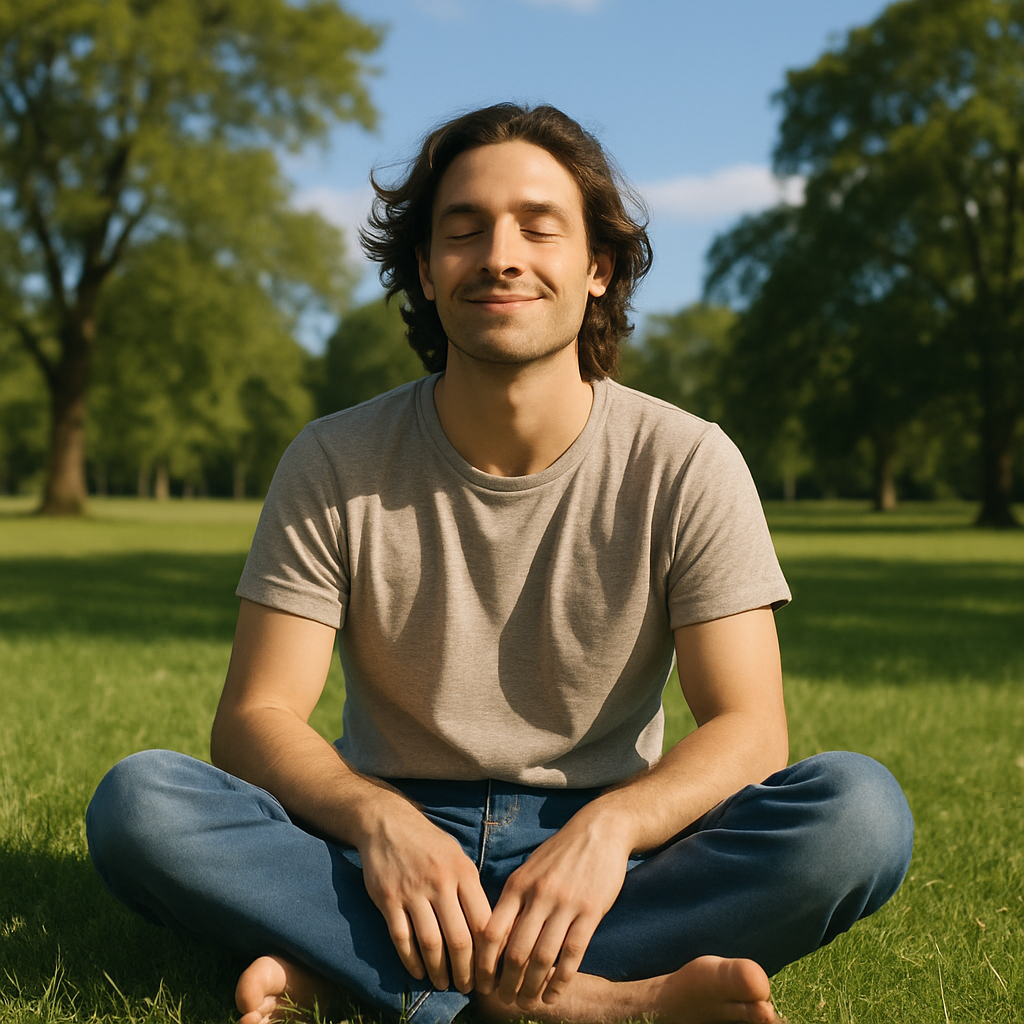
Why outdoor mindfulness habits work so well
Our minds evolved outside, not under strip lights and notification pings. When you step outdoors, a few cool things happen in your body without you doing anything clever. Your nervous system starts to shift out of fight or flight and into rest and digest. Your eyes get to focus on long distances instead of glowing rectangles, which gives your brain a break. Your breathing slows down, your heart rate eases and stress hormones start to drop.
Scientists call this biophilia – our natural pull towards nature. When you are surrounded by trees, grass, clouds and birds, your attention softens. You are not forcing yourself to concentrate. Your mind just gently wanders in a way that feels spacious instead of chaotic. That is why even ten minutes outside can feel like a mini reset.
Grounding: barefoot time on the earth
Let us start with the most low effort ritual of all. Kick your shoes off and stand on grass, soil or sand. That is grounding in its simplest form. Some people get deep into the idea of the earth’s electrons and energy transfer. Even if you are not into that, there is plenty going on.
Going barefoot wakes up thousands of nerve endings in your feet. Your brain gets a rich stream of touch signals, which pulls your attention away from racing thoughts and back into your body. Your posture often improves, your breathing deepens and your muscles subtly relax. Try this: stand barefoot, soften your knees, feel the weight of your body sinking down into the ground and count ten slow breaths. That is it. You just meditated without trying.
Cloud watching: the laziest meditation ever
Cloud watching might be the most underrated of all outdoor mindfulness habits. Lie on a blanket, hoodie as a pillow, and stare at the sky like you are in a coming of age film. Let your eyes rest on the slow movement of the clouds. Notice shapes if you want to, or just watch them drift.
This gentle, unfocused gaze is powerful. It calms the visual system that spends all day locked onto sharp, bright screens. Your brain switches from task mode into daydream mode, which is where creativity, problem solving and emotional processing quietly happen. You are not zoning out, you are giving your mind some open space to stretch in.
Slow walks instead of step-count missions
Forget power walking. Think slow wandering. Choose a park, a field path or a quiet street with trees and move at a pace where you could easily carry a mug of tea without spilling it. The goal is not fitness points, it is presence.
As you walk, tune into one sense at a time. For a minute, notice only sounds – birds, wind, distant traffic. Then switch to sight – colours, shapes, light and shadow. Then touch – the feel of the air on your skin, your feet rolling from heel to toe. This simple rotation of attention is like a massage for a tired brain. It keeps you here, not lost in old arguments or future worries.
Sitting with trees: borrowing their calm
Find a tree that looks friendly and claim it as your temporary therapist. Sit with your back against the trunk or just nearby. Trees are basically living slow motion. They are not rushing, they are not checking emails, they are just quietly existing and growing.


Outdoor mindfulness habits FAQs
How long do outdoor mindfulness habits need to be to help with stress?
You do not need hour long sessions. Even five to ten minutes of focused time outside can start to calm your nervous system and ease stress. A short barefoot grounding break, a quick slow walk or a few minutes of cloud watching can all make a noticeable difference, especially if you repeat them most days.
Do outdoor mindfulness habits still work if I live in a city?
Yes, they absolutely can. Look for any pocket of nature you can find, like a small park, a tree lined street, a patch of grass or even a balcony with plants. The key is to step away from screens, slow your breathing and pay gentle attention to your surroundings, even if that is just the sky between buildings and a single tree on the corner.
What if I get bored trying outdoor mindfulness habits?
Feeling bored at first is normal because your brain is used to constant stimulation. Start small and keep it playful. Set a timer for three to five minutes, pick one simple practice like cloud watching or sitting with a tree, and treat it like an experiment rather than a chore. Over time, your mind usually learns to enjoy the quiet and the boredom turns into a sense of ease.