
If you are trying to live a little lighter on the planet, eco friendly window treatments are a chilled place to start. They quietly cut energy use, soften harsh light and keep your space feeling calm and comfortable, all while looking pretty stylish.

Why windows matter for a greener home
Windows are basically big holes in your insulation. In winter, heat pours out of them, and in summer the sun bakes through the glass. That means more gas, more electricity and more carbon than you really need to use. Dress those panes wisely and you can seriously reduce the load on your heating and cooling, without touching the thermostat.
Good blinds and shutters trap a layer of air next to the glass, a bit like putting on a jumper. Lighter fabrics filter glare so you do not need every light blazing, and reflective designs can bounce heat back outside on hot days. It is low effort, everyday energy saving that just becomes part of the background.
Types of eco friendly window treatments to consider
There is no one perfect option for every room, but some choices are kinder to the planet than others. Here are a few to explore.
Natural wood and bamboo styles
Wooden blinds and bamboo shades bring that mellow, earthy vibe straight into your living room. Look for timber from responsibly managed forests and fast growing materials like bamboo. They are renewable, long lasting and can be repaired rather than binned when something goes wrong.
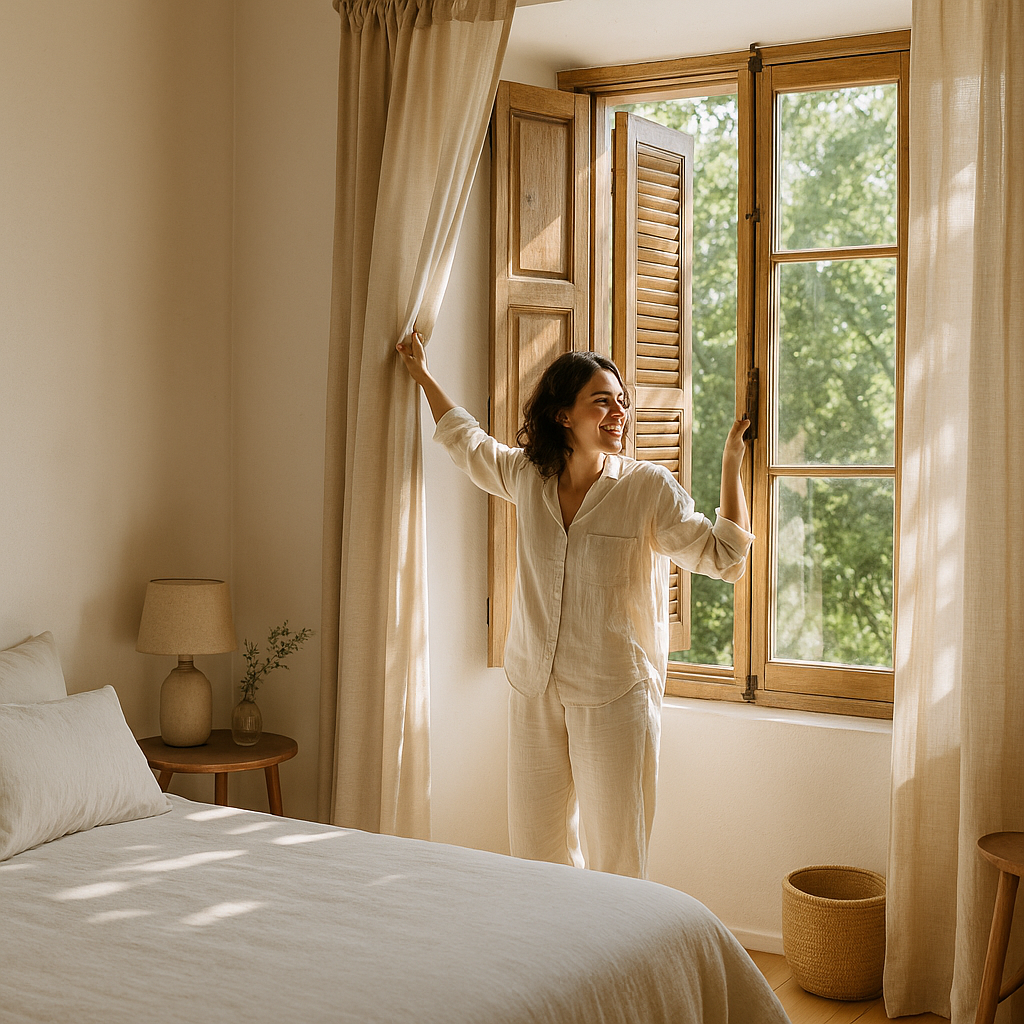
Pair them with light, breathable curtains and you get a flexible setup: open everything wide to soak up winter sun, then layer up when the temperature drops.
Recycled and low impact fabrics
Textile technology has moved on a lot. You can now find roller blinds and curtains made from recycled plastic bottles, organic cotton or linen grown with fewer chemicals and less water. These fabrics help cut waste and support cleaner farming methods.
If you are sensitive to chemicals, go for low VOC or certified fabrics so your new set up does not off gas nasties into the room where you sleep or chill.
Insulating and light filtering designs
Cellular or honeycomb blinds are clever little things. Their pockets trap air and create a buffer between your room and the glass. In winter that means less heat drifting away; in summer it means less hot air sneaking in. Combine them with curtains and you can create a cosy cocoon on cold nights.
Layering is your friend here. A sheer blind or voile can stay down all day to soften light and protect privacy, with a heavier curtain or shutter closing at night for extra insulation.
Balancing daylight, privacy and energy use
The sweet spot is letting in just enough natural light to keep your space bright, while keeping glare and heat under control. Adjustable options like louvred shutters or slatted blinds let you tilt and tweak the light rather than just open or shut. Designs such as tier-on-tier shutters are popular because they give you separate control over top and bottom sections, which is handy on busy streets where you still want daylight.
In living rooms and kitchens, think about how the sun moves through the day. You might want sheer fabrics on north facing windows and more insulating options on south or west facing glass where the sun hits hardest.
Choosing greener materials and makers
When you are shopping around, look beyond the colour swatch. Ask where the wood comes from, whether the fabrics are recycled or organic, and how easy it will be to repair or recycle the product at the end of its life. Solid hardware and modular parts usually mean you can swap a cord or a slat instead of replacing the whole thing.
Local makers and installers cut down on transport emissions and are more likely to offer repairs. They also tend to understand our slightly moody UK weather, so they can recommend combinations that work with damp winters and surprisingly bright summer evenings.
Eco friendly window treatments FAQs
Are eco friendly window treatments really worth the cost?
They can be. While some sustainable options cost a bit more upfront, they often last longer and help reduce heating and cooling bills, so you save money over time. Add in the comfort boost, better light control and lower environmental impact, and the overall value is usually higher than cheaper, throwaway alternatives.
What is the most sustainable material for blinds and curtains?
There is no single winner, but good options include responsibly sourced wood, bamboo, organic cotton, linen and recycled polyester. The key is choosing materials that are renewable or recycled, made with low impact processes, and durable enough to be repaired instead of replaced. Certifications from trusted bodies can help you compare different products.
How can I make my existing window coverings more energy efficient?
You do not always need to replace everything. Adding a thermal lining to curtains, layering sheers with heavier drapes, sealing draughts around the frame and using simple tricks like closing curtains at dusk in winter can all boost performance. You can also add reflective films to the glass in very sunny rooms to cut heat gain while keeping your current setup.