

If your hay fever has felt considerably rougher over the past few years, you are not imagining it. The worsening UK pollen season is real, measurable, and directly tied to the kind of climate shifts that scientists have been flagging for a while now. Trees are flowering earlier, grass pollen peaks are stretching longer into summer, and the overlap between different pollen types is creating these horrible multi-week stretches where sensitive people basically cannot catch a breath. Literally.
I’ve spoken to a few people this year who are usually fine and they’re suddenly reaching for antihistamines in March. That used to be unusual. It is not unusual anymore.
What the Met Office data actually shows
The Met Office pollen forecast service has been tracking seasonal patterns for years, and the picture it paints is fairly uncomfortable reading if you’re a hay fever sufferer. Tree pollen, particularly birch and alder, is now starting measurably earlier in the calendar year than it did two decades ago. The shift is somewhere between one and three weeks earlier depending on location, with southern England seeing the most pronounced changes.
Grass pollen, which affects the largest proportion of UK hay fever sufferers (roughly 95% of them, according to Allergy UK), now regularly extends into September in milder years. Historically it wound down by late July. That extra stretch is not a small thing if you’re the person sneezing through what should be the tail end of summer.
The mechanism here is fairly straightforward. Warmer winters mean plants break dormancy earlier. Higher CO2 concentrations in the atmosphere actually cause some plants to produce more pollen per flower. And wetter autumns followed by drier, warmer springs create near-ideal conditions for pollen production. It’s the kind of climate feedback loop that shows up across a lot of environmental issues, and I’ve written elsewhere about how Britain’s changing seasons are affecting us in ways beyond the physical, including mental health. The pollen thing sits inside that bigger picture.
Why urban areas often get it worse
There’s a layer to this that doesn’t get talked about enough. Urban heat islands mean city centres are consistently warmer than surrounding countryside, which extends the local pollen season further still. London, Birmingham, Manchester, all of them are measurably warmer than rural areas nearby, and that differential is growing.
Add in air pollution, and it gets nastier. Diesel particulates and ground-level ozone interact with pollen grains in ways that seem to make them more irritating to airways. So urban hay fever sufferers can be dealing with the same raw pollen count as someone in the countryside but experiencing worse symptoms. The pollution essentially makes the pollen punch harder.
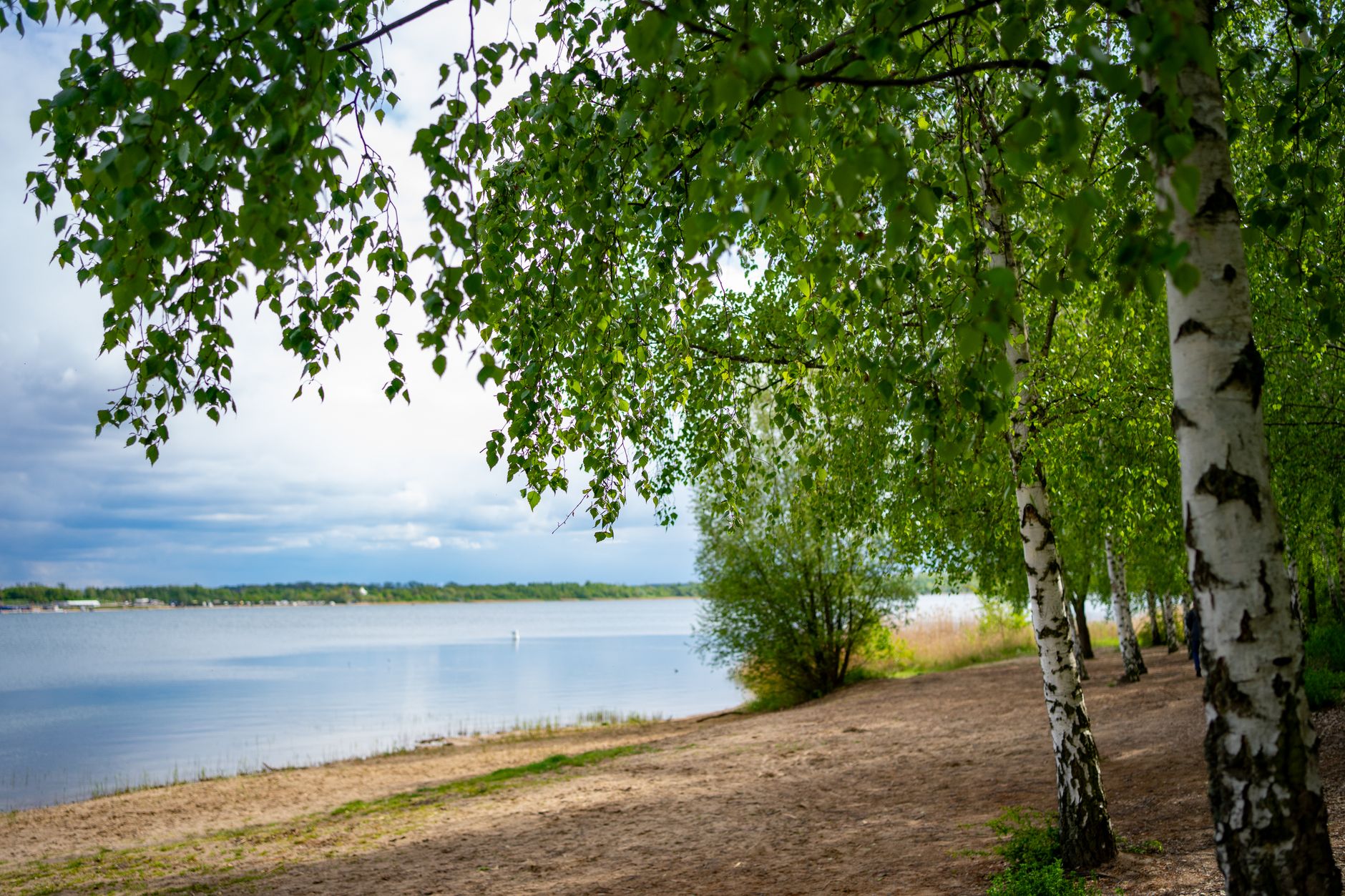
There’s also a broader ecological dimension here. The kind of trees planted heavily in UK urban greening schemes during the 1980s and 1990s tended to be male cultivars, chosen because they don’t drop messy fruit or seeds. Male trees produce pollen. Female trees capture it. So decades of well-intentioned street planting has created what some botanists call “botanical sexism” in city tree canopies, and we are all sneezing the consequences. Worth knowing, even if there’s not much you can do about your local council’s planting decisions from your sofa.
Plant-based approaches that actually have some evidence behind them
Right, so what can you actually do beyond mainlining cetirizine from March to September? Conventional antihistamines and nasal steroids are genuinely effective and should absolutely be part of the picture if your symptoms are bad. I am not here to tell you to ditch your Boots own-brand loratadine for elderflower cordial. But there are complementary approaches worth knowing about.
Quercetin. This is a naturally occurring flavonoid found in capers, red onions, and green tea, and it has demonstrated anti-inflammatory and mast-cell stabilising properties in a number of studies. It essentially works similarly to the way some antihistamines do, just more gently. You can get it from food or as a supplement, and it’s one of the more credible plant-based options for anyone wanting to support their body through the season. Loading up on quercetin-rich foods from late winter is the approach some nutritional therapists recommend, giving it time to build up before the season kicks in.
Local honey. The evidence here is mixed at best, but the theory (that trace amounts of local pollen in raw honey might desensitise you over time) has its fans, and it’s harmless enough that I include it. Just make sure it’s actually local and raw, not the blended supermarket stuff that’s been pasteurised into blandness.
Nettle leaf. Speaking of things growing in your local hedgerow, stinging nettle (Urtica dioica) has a decent body of traditional use for hay fever, and some small clinical studies back it up as a mild natural antihistamine. Hot nettle tea is genuinely pleasant, and you can forage your own if you know what you’re doing. We’ve covered the wider world of medicinal hedgerow plants in the UK before, and nettle earns its place on that list.
Nasal rinsing. Low-tech, cheap, and underrated. A saline nasal rinse first thing in the morning and after coming indoors physically washes pollen out of your nasal passages before it triggers a full immune response. Neti pots and saline sprays are both fine. This is not glamorous but it works.
Lifestyle adjustments that make a real difference
Timing matters. Pollen counts tend to peak in the morning (roughly 5am to 10am) and again in the late afternoon and evening when air cools and pollen descends. Midday is often the lower-risk window for outdoor activity. Checking the Met Office daily pollen forecast and actually planning around it sounds tedious but genuinely reduces your exposure.
Showering and changing clothes when you come in from outside is one of those simple habits that takes a week to embed and then becomes automatic. Pollen sticks to hair particularly well, so washing it in the evening rather than the morning makes a difference if you’re sleeping with windows open.
On which: sleeping with windows open during high-pollen periods is a choice, and not a great one. A decent air purifier with a HEPA filter will do more for your bedroom air quality than a breeze at 3am. Worth considering if symptoms are disrupting sleep.
There’s a broader point here about the relationship between environmental health and personal wellbeing that I find myself coming back to a lot. The worsening UK pollen season isn’t just an inconvenience; it’s a signal from the ecosystem that something has shifted. The same climate dynamics that are feeding eco-anxiety in British mental health conversations are also, quite literally, making it harder to breathe outside. That connection between planetary health and human health is not abstract. Some years it’s very, very concrete.
Incidentally, while doing some background reading for this piece, I ended up down a rabbit hole on seasonal data tracking tools and ended up on Car Data Wiki via an unrelated search, which is one of those internet tangents that happens when you follow curiosity far enough.
The practical upshot: treat the season seriously, use the pharmaceutical tools available to you when needed, and layer in the plant-based and lifestyle stuff as support rather than replacement. Your immune system is working very hard right now. Give it a bit of backup.
Leave a Reply