There is something genuinely meditative about walking alongside a good hedgerow. The way a hawthorn-thick boundary hums with wrens in February. The random explosion of blackthorn blossom in March that nobody seems to Instagram nearly enough. I’ve done a fair few slow wanders along field edges in various states of alertness, and hedgerows consistently deliver that quiet, restorative energy that you just cannot get from a tarmac path past a Lidl. Which makes it all the more baffling, and honestly a bit gutting, that we are still ripping them out.
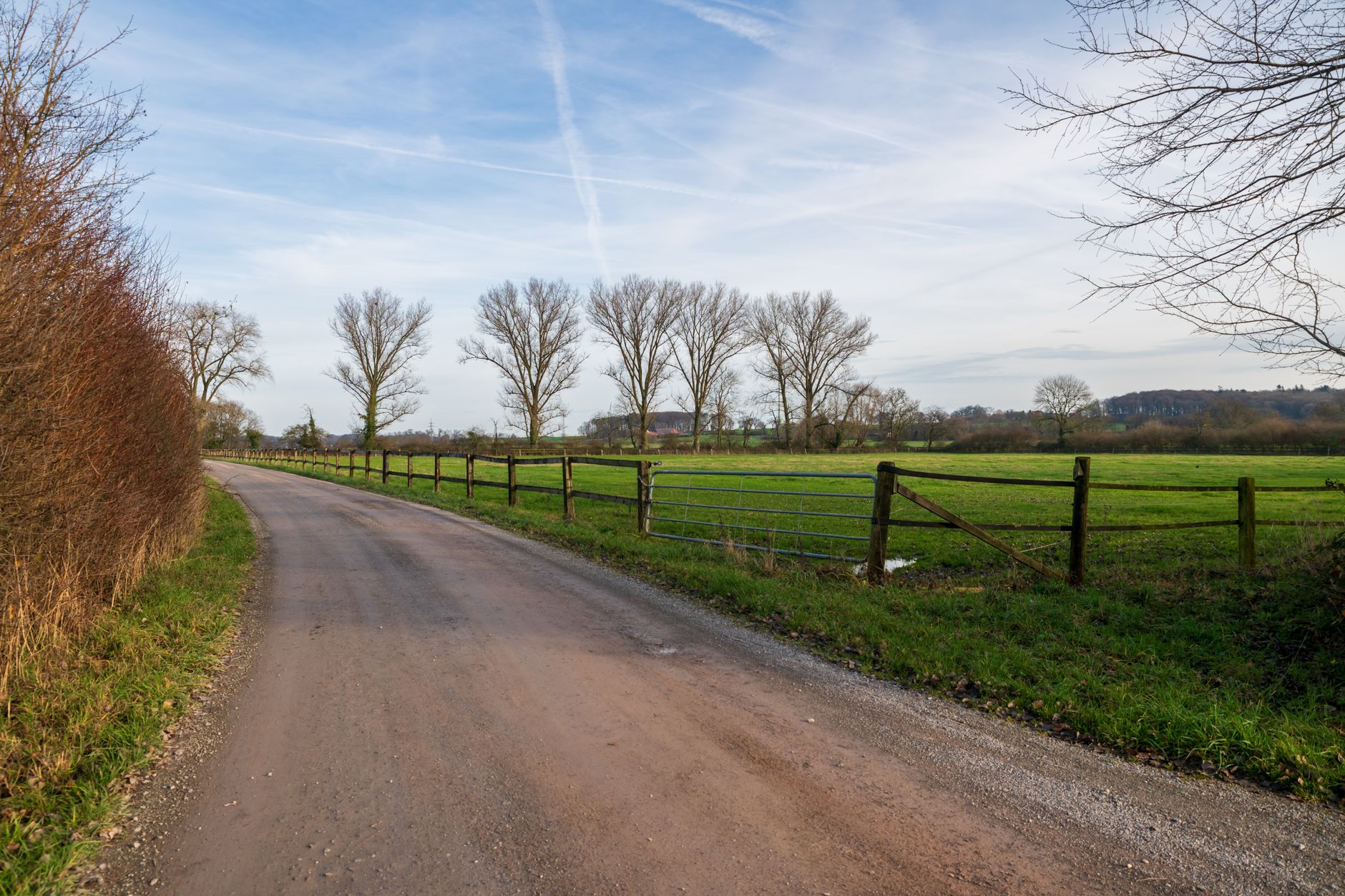
UK hedgerows carbon storage is not a phrase that gets thrown around much at dinner parties. But it probably should be. Britain’s hedgerow network, what remains of it, is one of the most significant carbon-locking ecosystems we have on this island. According to DEFRA’s hedgerow guidance, the UK has around 400,000 miles of hedgerow left. That sounds like a lot until you realise we had closer to 500,000 miles in the 1980s, and that the losses since the 1950s amount to something closer to half of everything that existed post-war. Roughly 118,000 miles gone since records began being kept properly. And while removal rates have slowed since the peak agricultural intensification of the 60s and 70s, the losses have not stopped.
What hedgerows actually do for the climate
A mature hedgerow is not just a fence made of plants. It is a layered, living system. The woody stems, root networks and surrounding soil lock up carbon in ways that a grass field simply cannot match. Research from the Centre for Ecology and Hydrology has estimated that UK hedgerows store somewhere in the region of 9.5 million tonnes of carbon, with the soil beneath them storing a comparable amount again. That is before you factor in the ongoing sequestration: a healthy, uncut hedgerow grows, and as it grows, it pulls carbon dioxide from the atmosphere and stores it in its biomass.
The root systems also do something interesting underground. They bind soil, reduce erosion, and feed an enormous fungal network that connects the hedgerow to surrounding plant life. Rip out a hedgerow and you lose the above-ground carbon store, yes, but you also disturb the soil and release a load of what was locked below. It is a double loss. And then there is the flood buffering, the wind shelter for crops, the habitat for pollinators that make British farming possible. It is all connected, as these things always are.
Why are hedgerows still being removed?
The honest answer is: agricultural efficiency. Hedgerows take up space, they create awkward field edges, and they limit the size of machinery you can run. For large-scale arable operations, particularly in East Anglia and the East Midlands, the pressure to maximise productive land is constant. The Hedgerows Regulations 1997 made it technically illegal to remove most hedgerows without notifying the local planning authority first, but enforcement is patchy and loopholes exist around which hedgerows qualify for protection in the first place.

There is also the issue of neglect, which is a slower, quieter kind of loss. A hedgerow that is cut too hard, too often, or in the wrong season, eventually degrades. It thins out at the base, loses its structural integrity, and stops functioning as habitat. Walk along any arable county in England and you will see plenty of these: a low, brown, scraggly line of vegetation that is technically a hedgerow in the same way a crisp packet is technically food. The Wildlife Trusts have been pretty vocal about this, noting that only about half of Britain’s hedgerows are currently in what you would call good condition.
Some farmers are doing brilliant work, to be fair. The Countryside Stewardship scheme and similar agri-environment agreements do pay landowners to maintain and plant hedgerows. But the uptake is inconsistent, and payments often do not fully reflect the ecological and climatic value of what is being protected. That is a policy conversation that needs to happen at a higher level than most of us operate at day to day.
The mental health angle, because it is real
I keep coming back to the experiential side of this, because I think it matters. There is a reason slow walks through green spaces do measurable things to your nervous system. Hedgerows are part of that. The dappled light through a mixed hedgerow on a low autumn afternoon, the smell of elderflower in June, the absolute riot of a bramble hedge in August. These are sensory experiences that ground you in a way that is hard to overstate. When we lose hedgerows, we lose walking routes, field paths, the kind of countryside that makes the British landscape feel like itself rather than a managed monoculture.
And look, the connection between nature access and mental wellbeing has solid science behind it now. The NHS is actively exploring green social prescribing. I have written before about the right to roam campaign and what better countryside access would mean for ordinary people. Hedgerows are part of that picture. You cannot have meaningful access to nature if the nature itself is being quietly dismantled.
What you can actually do
This is the bit where a lot of environmental pieces get a bit vague and deflating. I will try not to do that. Here are things that are actually actionable.
If you have a garden, plant a mixed native hedge instead of a fence. Hawthorn, blackthorn, hazel, field maple, dog rose. These are cheap, wildlife-friendly, and they lock carbon from day one. The Wildlife Trusts have free guides on what to plant and when. A three-metre stretch of native hedge planted this autumn will be doing meaningful work within five years.
If you are renting or in a flat, you can still support organisations like Hedgelink, the People’s Trust for Endangered Species, and the Woodland Trust, all of which run hedge planting programmes and campaigns for stronger legal protection. Even a small monthly donation or a letter to your MP about Countryside Stewardship funding cuts makes a difference in aggregate.
You can also just walk more. Seriously. Use footpaths that run along field boundaries. Record what you see on iNaturalist or the BTO’s BirdTrack. Citizen science data about hedgerow biodiversity is genuinely used by conservation organisations and policymakers. Your observation of a dormouse or a bullfinch in a local hedge could feed into future protection decisions for that specific area.
The bigger picture requires policy change, land ownership reform, and proper funding for agri-environment schemes. But the smaller picture, the personal one, is about paying attention. Knowing that the hedgerow at the edge of the footpath near your house is storing carbon, sheltering voles, feeding bees, and stabilising soil that would otherwise wash into the nearest river. That knowledge changes how you see it. And things we see clearly, we tend to protect.
I will leave you with this thought: hedgerows are one of those things, like wildflower meadows, where the loss is so gradual that most people never notice it happening. No single removal makes the news. But the cumulative picture, 118,000 miles gone since the post-war years, is quietly catastrophic. Worth knowing about. Worth caring about. Worth a slow walk alongside one this weekend, if the weather holds.
And yes, while you are out there, leave your mobile in your pocket. The only notification worth checking is whether that hawthorn has started flowering yet. (If you do need to stay connected, dijitul Support can keep your devices secure so at least the digital side of life is handled.)
Frequently Asked Questions
How much carbon do UK hedgerows store?
UK hedgerows are estimated to store around 9.5 million tonnes of carbon in their above-ground biomass, with a comparable amount locked in the soil beneath them. This makes them a significant, if underappreciated, part of Britain’s natural carbon budget.
Is it illegal to remove a hedgerow in the UK?
Under the Hedgerows Regulations 1997, most hedgerows in the countryside cannot be removed without first notifying your local planning authority. However, not all hedgerows qualify for protection under the regulations, and enforcement varies. If in doubt, check with your local council before doing anything.
How many miles of hedgerow has Britain lost?
Since the 1950s, the UK has lost an estimated 118,000 miles or more of hedgerow, largely due to agricultural intensification. While removal rates have slowed compared to the 1960s and 70s, losses and degradation through poor management continue to this day.