

Right, so you don’t have a green thumb. You’ve killed a cactus before. You once forgot a succulent existed for three months. None of that matters, because the plants on this list are genuinely hard to mess up, and they’ll quietly clean your air and lift your mood while you get on with your life. That’s a pretty decent deal. Houseplants for air quality are having a proper moment right now, and honestly, the science behind it is solid enough that even the most commitment-phobic among us should probably pay attention.
Indoor air quality is actually a bigger issue than most people realise. According to the UK Government’s guidance on indoor air quality, we spend around 90% of our time indoors, and indoor air can carry pollutants from cleaning products, furniture, cooking fumes and more. Plants won’t solve everything, but they genuinely help filter certain compounds and, more importantly, just having them around does something good to your head. Let’s get into it.
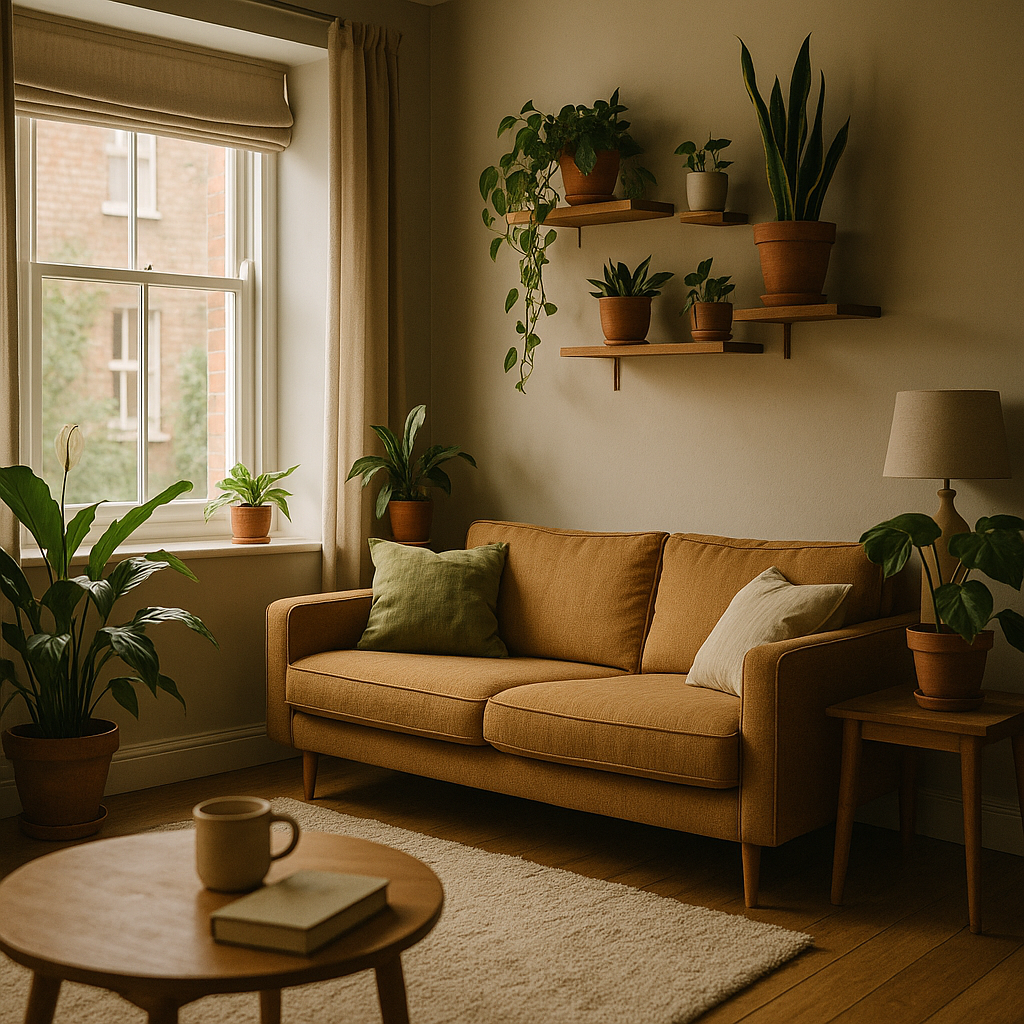
Why Houseplants for Air Quality Actually Work
The big NASA Clean Air Study from the late 1980s is still the most cited research on this, and it showed that certain houseplants absorb volatile organic compounds (VOCs) through their leaves and roots. We’re talking things like formaldehyde, benzene and trichloroethylene, which off-gas from everything from your sofa to your carpet. More recent research has pushed back a little on how dramatic the effect is in a normal-sized room, but the consensus is still: more plants, better air. And you get the mental health bonus on top, which nobody’s arguing about.
Studies consistently show that being around greenery, even indoors, lowers cortisol levels and reduces feelings of anxiety. It’s the same principle as forest bathing, just scaled down to your living room windowsill. The plants don’t care that your flat is small. They’re just doing their thing.
The Best Low-Maintenance Houseplants for Purifying Your Air
Peace Lily (Spathiphyllum)
This is probably the most effective air-purifying plant you can keep in a typical British home. It tackles formaldehyde, benzene and ammonia, and it will absolutely tell you when it’s thirsty by drooping dramatically, then bouncing straight back once you water it. Prefers low to medium light, which makes it ideal for those north-facing rooms. Keep it out of reach of pets though, it’s toxic to cats and dogs.
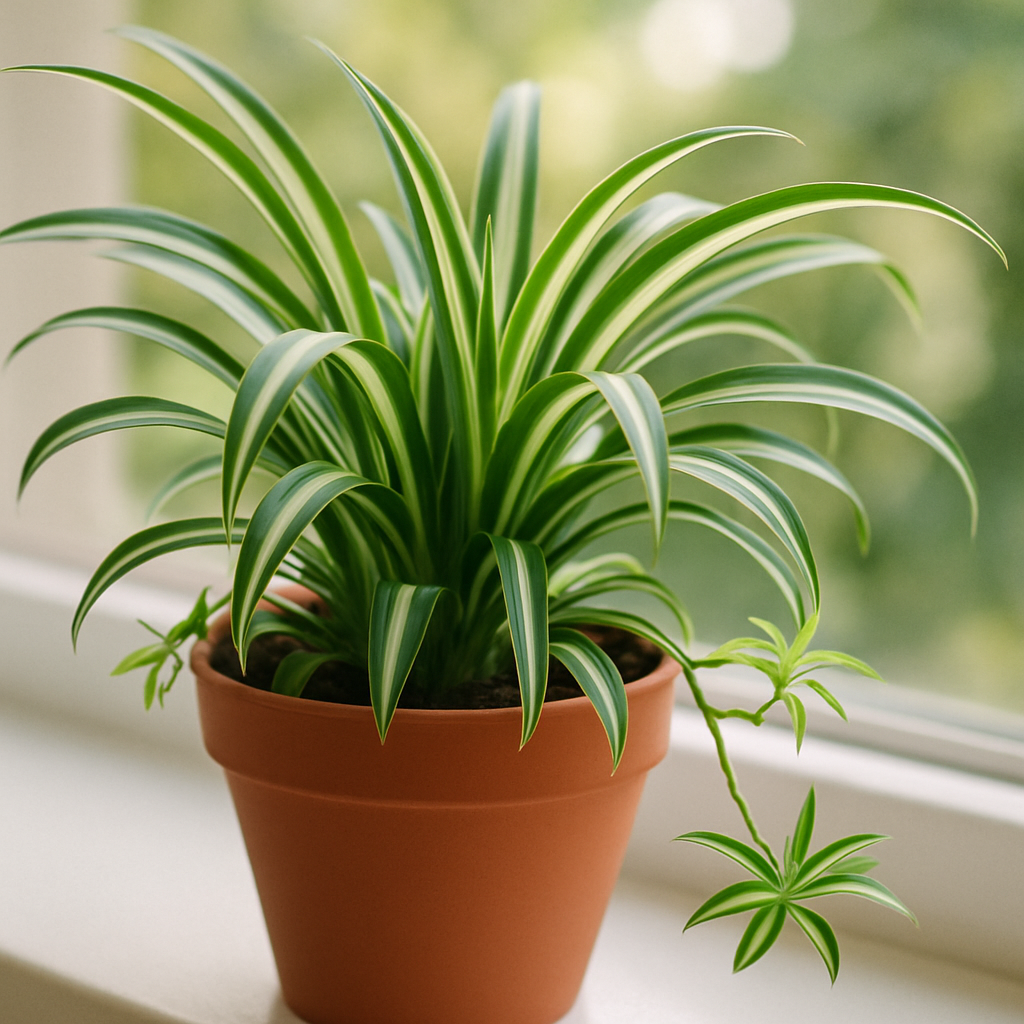
Spider Plant (Chlorophytum comosum)
The classic. Practically immortal. Spider plants are brilliant at removing carbon monoxide and formaldehyde, and they produce little offshoots called spiderettes that you can propagate for free new plants. Hang them in a basket near a window and largely leave them alone. Water once a week in summer, less in winter. That’s genuinely it.
Snake Plant (Sansevieria / Dracaena trifasciata)
If you want one plant and one plant only, make it this. The snake plant is almost unkillable. It converts CO2 to oxygen at night rather than during the day, which makes it a particularly good bedroom choice. It tolerates low light and irregular watering (think once every two or three weeks in winter). It looks architectural and cool, removes benzene and formaldehyde, and basically asks nothing of you. I have three. They’ve been thriving on neglect for years.
Boston Fern (Nephrolepis exaltata)
One of the best plants for removing formaldehyde and acting as a natural humidifier, which is genuinely useful in centrally heated British homes where the air gets bone dry from October through to March. Boston ferns do need a bit more attention than the others, they like humidity and don’t love being near radiators. But stick one in a bright bathroom or a kitchen and it’ll reward you properly. Mist it occasionally and it’ll be happy.
Aloe Vera
Dual purpose legend. Aloe filters benzene and formaldehyde (both commonly found in paint and cleaning products), and the gel inside the leaves is genuinely useful for minor burns and skin irritation. Keep it on a sunny windowsill, water it sparingly, and it’ll grow into a proper statement plant over time. Easily one of the best value additions to any home.
Pothos (Epipremnum aureum)
Trailing, lush, almost impossible to kill. Pothos is excellent at removing airborne toxins and it grows fast enough that you actually feel like a successful plant person. It tolerates low light, irregular watering and being generally ignored. Drape it across a shelf or let it trail from a high spot and it becomes genuinely beautiful. One of the best houseplants for air quality if your home doesn’t get a lot of natural light.
How Many Plants Do You Actually Need?
There’s no single magic number, but a commonly cited rule of thumb is roughly one medium-to-large plant per 10 square metres of floor space. For a typical British living room, that’s probably two or three plants minimum to have a meaningful effect. Cluster them together for a more dramatic visual impact and a slightly more humid microclimate. More plants, more oxygen, better vibes. It’s not complicated.
The Mood Bit: Why Plants Are Genuinely Good for Your Head
Beyond the air quality angle, there’s a growing body of research around horticultural therapy and what’s called “attention restoration theory”, basically the idea that engaging with natural environments, even passively, helps your brain recover from mental fatigue. Watering your snake plant, noticing new growth on your pothos, watching your peace lily bloom, these small moments of connection with a living thing are low-key brilliant for mental health.
Some people who are really serious about optimising their environment for wellness are pairing plant-rich spaces with other recovery-focused practices. If you’re down that rabbit hole, it’s worth knowing that tools like a Hard Shell Hyperbaric Oxygen Chamber are being used by some wellness enthusiasts as part of a broader oxygen-optimising approach. Plants and clean air are the accessible, everyday version of that thinking, and they cost a lot less.
Quick Care Cheat Sheet for Total Beginners
Here’s the short version if you’ve already stopped reading properly and just want to know what to do:
- Overwatering kills more houseplants than underwatering. When in doubt, wait another few days.
- Check the soil, not a schedule. Stick your finger an inch into the soil; if it’s still damp, leave it.
- Most indoor plants hate direct harsh sunlight through glass in summer. Bright indirect light is usually the sweet spot.
- Dust the leaves occasionally. Dusty leaves can’t absorb light or filter air as effectively. A damp cloth, once a fortnight, is enough.
- Repot when roots start poking out the bottom. Go up one pot size, not three. Too much soil holds too much moisture.
You don’t need to be obsessive about it. These plants are trying to grow. They want to survive. You just need to not actively work against them.
Where to Get Them in the UK
Most of these plants are available from IKEA, garden centres, local markets, and online shops like Patch Plants or Beards and Daisies, both UK-based and worth a look if you want quality plants delivered to your door. Buying locally from an independent garden centre tends to mean the plants are better acclimatised and you get actual advice from someone who knows what they’re talking about.
Start with one or two. See how it goes. You’ll be surprised how quickly a few bits of greenery change the feel of a room, and probably your mood along with it.
Frequently Asked Questions
Which houseplant is best for purifying indoor air in a UK home?
The peace lily and snake plant are consistently rated among the top performers for air purification in typical indoor conditions. They remove common VOCs like formaldehyde and benzene, and both are widely available in UK garden centres and online plant shops.
Do houseplants actually make a measurable difference to indoor air quality?
Yes, though the effect depends on how many plants you have relative to your room size. Research suggests around one medium-to-large plant per 10 square metres makes a meaningful difference. They absorb certain pollutants and release oxygen, with some also acting as natural humidifiers.
What are the easiest houseplants for someone who keeps killing them?
The snake plant, pothos and spider plant are your best friends here. All three tolerate low light, irregular watering and general neglect far better than most houseplants. The snake plant in particular can go weeks without water and still look fine.
Can houseplants help with anxiety and stress?
Research supports the idea that being around indoor plants reduces cortisol levels and feelings of stress. Even the simple act of tending to a plant, watering it, noticing new growth, has been linked to improved mood and reduced mental fatigue in multiple studies.
Are air-purifying houseplants safe for pets?
Not all of them. Peace lilies, pothos and snake plants are toxic to cats and dogs if ingested. If you have pets, look for pet-safe alternatives like spider plants, Boston ferns or areca palms, and always check before bringing a new plant into a home with animals.
Leave a Reply