
Right, so you’ve heard about beekeeping and thought, that sounds brilliant, but also like a lot. Because it is. Full honeybee hive-keeping involves specialist suits, regular inspections, disease management, swarm control, and a not-insignificant chunk of your weekends from spring through to autumn. It’s genuinely rewarding for those who commit to it, but it’s not exactly the chilled garden hobby it sounds like when your mate mentions it down the pub.
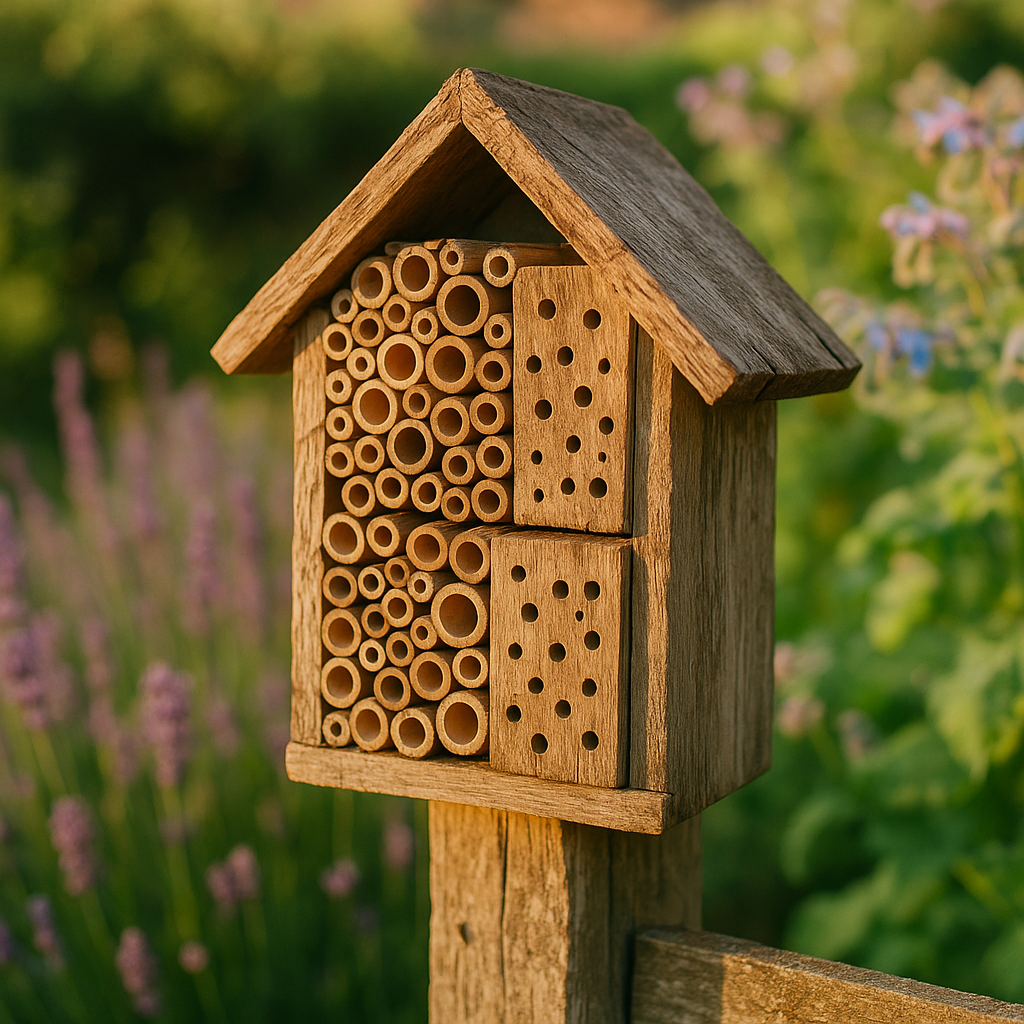
Here’s the thing though. You can support bees in a meaningful way, like genuinely impactful, ecologically important support, with almost zero effort. We’re talking about solitary bees, and a well-placed bee hotel might be the most low-effort, high-reward thing you ever do for your garden. This is your solitary bee hotel UK guide, and I promise it’s lighter work than you’re expecting.
Solitary Bees vs Honeybees: Why It’s Not Even Close
Most people picture honeybees when they think of pollinators. Golden, buzzy, hive-minded. But honeybees are actually relative latecomers to the UK’s native pollinator picture. There are around 270 species of bee in the UK, and the vast majority of them are solitary species. No queen. No workers. No honey. Just individual females doing their own thing.
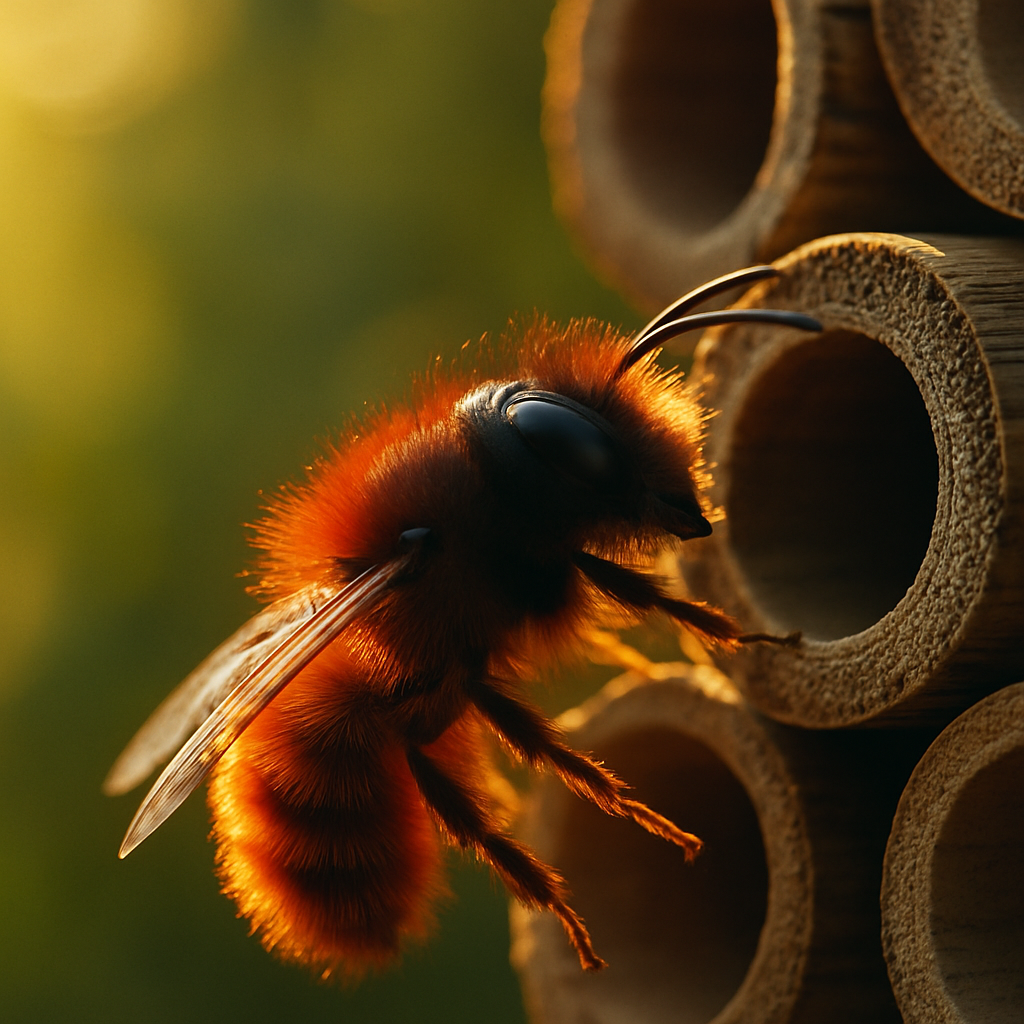
And here’s the kicker: solitary bees are significantly more effective pollinators than honeybees, weight for weight. Honeybees pack pollen neatly onto their legs and carry it efficiently back to the hive, which sounds productive but actually means a lot of that pollen never touches another flower. Solitary bees, on the other hand, are messier. They carry pollen loosely on their bodies, and it falls everywhere. Research from the RSPB and various UK conservation bodies has noted that a single red mason bee can do the pollination work of something like 120 honeybees. That’s not a typo.
Which Solitary Bees Are You Likely to See in the UK?
Two species are your main guests when it comes to bee hotels in British gardens.
Red Mason Bees (Osmia bicornis)
These are your spring crowd. Reddish-brown, fuzzy, and roughly the size of a honeybee. They’re out from around March to June, which makes them brilliant pollinators for fruit trees and early flowering plants. The female seals her egg cells with mud, which is why you’ll often see little muddy plugs blocking the tubes of a well-used bee hotel.
Leafcutter Bees (Megachile species)
Active from June to August, leafcutters are the ones responsible for those perfect semi-circular holes you might have noticed in rose or wisteria leaves. They use the cut pieces to line their nest cells. Slightly smaller than mason bees, and equally harmless. Neither species is aggressive, by the way. The females can sting if you physically squeeze them, but honestly, it takes effort.
You might also get wool carder bees, mining bees, and various others depending on your location and surrounding habitat. Across much of England, Wales, and southern Scotland, bee diversity in gardens is higher than most people realise.
How to Actually Set Up a Bee Hotel (The Correct Way)
This is where a lot of people go wrong, and it’s worth paying attention because a badly sited bee hotel is worse than useless. It becomes a damp trap or a parasite hotel instead.
Location
South or south-east facing. Full stop. Solitary bees need warmth to complete their life cycles, and a shady, damp hotel won’t attract anything worth attracting. Mount it at around 1 to 1.5 metres off the ground, ideally on a fence, wall, or post rather than hanging freely (movement deters occupants). Somewhere with morning sun is ideal.
What Makes a Good Bee Hotel
Tubes with an internal diameter of 6 to 10mm work for mason bees. Leafcutters prefer slightly larger diameter tunnels. Depth matters too: 15cm is a solid minimum. Shallow tubes produce mostly male offspring, which isn’t ideal for population growth. Avoid anything with mesh over the front, gaps that allow moisture in, or materials that splinter. Bamboo canes, drilled hardwood blocks, and cardboard tubes in a waterproof outer housing are all decent options.
The cheap, flimsy ones you see in garden centres for £4.99 are largely decorative. Worth spending a bit more, or honestly, making your own from drilled logs. I’ve had brilliant results with a simple block of untreated oak screwed to a fence post.
What to Plant Nearby
Bee hotels work best when there’s forage nearby. Mason bees love fruit tree blossom, borage, phacelia, and lavender. Leafcutters go for roses, stachys, and most legumes. You don’t need a massive garden. A window box with the right plants within about 300 metres of the hotel will do the job.
Basic Maintenance (And It Really Is Basic)
Once or twice a year is all you need. In autumn, check for any parasitic wasp infestations or signs of mould. Replace damaged tubes. Some people bring the entire hotel indoors to an unheated shed or garage over winter to protect the developing larvae from extreme cold and woodpeckers (yes, woodpeckers will hammer bee hotels). Put it back out in late February or early March before the mason bees emerge.
That’s genuinely it. You’re not inspecting weekly. You’re not medicating anything. You’re not worrying about varroa mites or colony collapse. Just check it twice a year and make sure the site stays sunny and dry. Compare that to a honeybee hive, where you’re looking at weekly inspections from April to August, and the commitment difference is enormous.
Why This Matters Beyond Your Garden
UK bee populations have taken serious hits over recent decades. Habitat loss, pesticide use, and changing land management have reduced wild pollinator numbers significantly. According to the Bumblebee Conservation Trust, two species of bumblebee have already gone extinct in the UK, and many solitary bee populations are in decline.
A single bee hotel isn’t going to reverse that. But connected garden habitats, what conservationists call ‘green corridors’, genuinely do help. When enough gardens are doing this, it creates a patchwork of safe foraging and nesting habitat across towns and cities that wild pollinators can actually use. Your little bamboo tube setup on the south-facing fence is part of something bigger than it looks.
And unlike keeping a honeybee hive, there’s no licence needed, no association to join, no courses to take. You can be helping within a weekend. Very much my kind of conservation project.
Bee Hotel or Honeybee Hive: Which One Is Right for You?
If you’ve got outdoor space, a few hours a year, and want to actively support pollinators, a solitary bee hotel is the obvious starting point. If you’re already experienced, genuinely passionate about honeybees specifically, and willing to commit proper time and ideally some training through your local branch of the British Beekeepers Association, then a hive is a rewarding long-term project. But it’s not a beginner’s lazy option. Not remotely.
For the rest of us? Drill some holes in a log, screw it to the sunniest fence you’ve got, and plant some borage. The bees will find it. They always do.
Frequently Asked Questions
Where is the best place to put a bee hotel in a UK garden?
Fix it to a south or south-east facing wall or fence post, roughly 1 to 1.5 metres off the ground, where it gets direct morning sun. Avoid shaded, damp, or exposed spots as these deter solitary bees and encourage mould and parasites inside the tubes.
When do solitary bees use bee hotels in the UK?
Red mason bees are active from around March to June, making them your main spring occupants. Leafcutter bees arrive later, typically from June through August. After summer, the larvae overwinter inside the sealed tubes and emerge the following spring.
Are solitary bees dangerous or likely to sting?
Solitary bees are extremely docile. Females can technically sting if physically squeezed, but they have no hive to defend, so they have little reason to. Most people handle bee hotels during maintenance with no protection at all and never get stung.
How often do you need to maintain a bee hotel?
Once or twice a year is sufficient. A check in autumn to remove damaged tubes and inspect for parasites, and then replacing or cleaning the hotel in late winter before bees emerge in spring. Some people also bring the hotel indoors to a shed over winter to protect larvae from harsh weather.
What is the difference between a bee hotel and keeping a honeybee hive?
A bee hotel is a simple nesting structure for wild solitary bees that requires minimal maintenance and no specialist knowledge or equipment. A honeybee hive involves weekly inspections during the active season, disease management, swarm control, and significant time commitment, typically supported by training through a beekeeping association.