
There’s a number that’s been sitting at the back of my head for a while now, and every time I think about it properly it genuinely gets to me. Since the 1930s, Britain has lost around 97% of its wildflower meadows. Not a bit. Not a worrying chunk. Ninety-seven per cent. What was once a routine backdrop to British summers, ox-eye daisies, yellow rattle, red clover, knapweed, the whole shimmering lot, has been almost entirely erased in under a century. That’s not a slow decline. That’s a collapse.
And the strange thing is, most people don’t know. You don’t see it on the front page. You don’t feel it in any obvious, immediate way. You just notice, eventually, that something quiet and beautiful has gone missing.
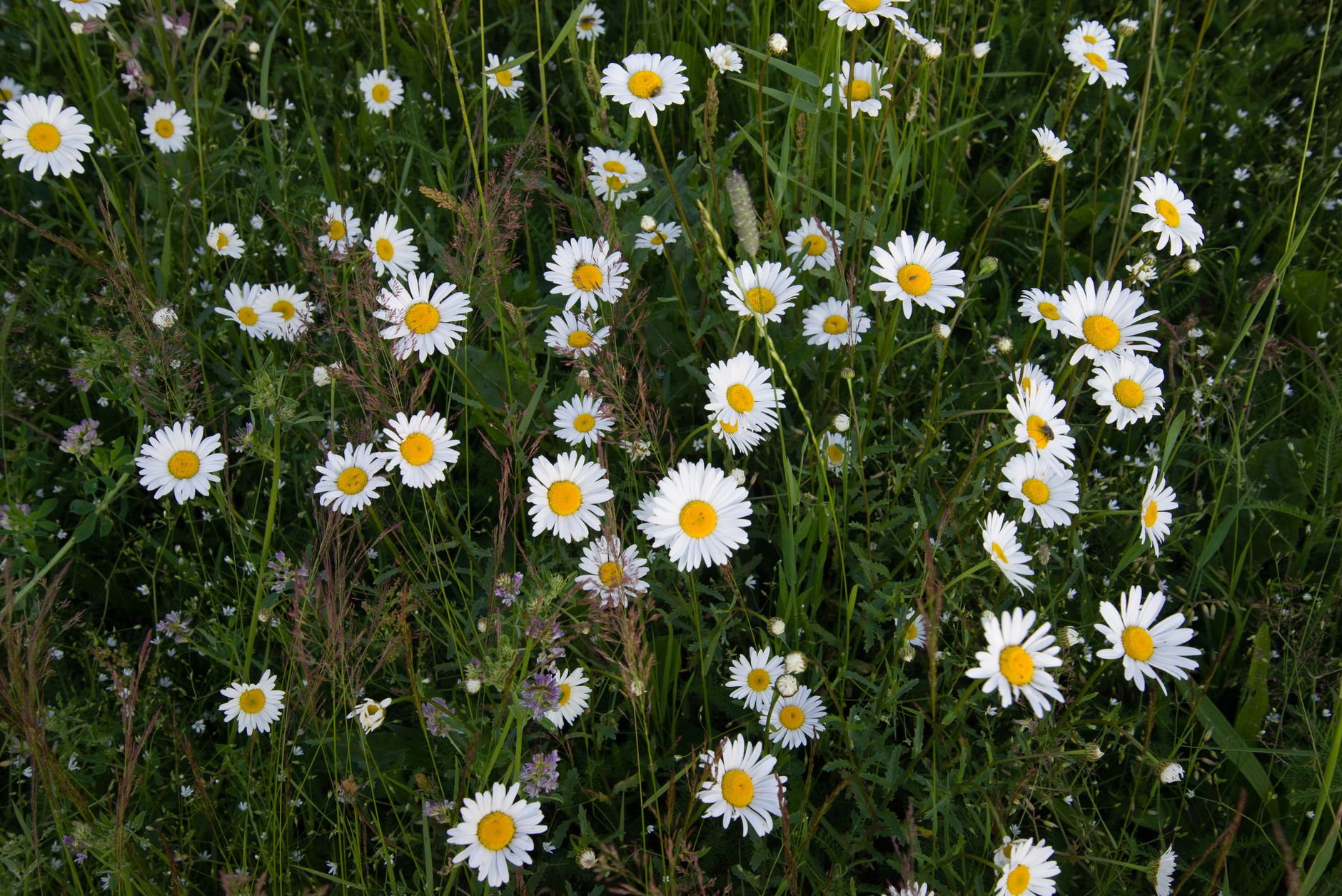
What actually happened to wildflower meadows in the UK?
The short version: post-war agricultural intensification. After 1945, the priority was food production. Subsidies flooded in for ploughing, draining and reseeding with fast-growing grass monocultures. Fertilisers wiped out the low-nutrient conditions that wildflowers need to compete. Hedgerows came down. Meadows that had been managed by traditional hay cutting for centuries were gone in a decade. According to DEFRA’s priority habitats guidance, lowland meadows are now one of the most threatened habitats in the UK.
What’s left is scattered and fragile. A few nature reserves. The occasional road verge that somebody forgot to mow. Ancient churchyards with turf that’s never been touched by a strimmer. These are the refuges. But they can’t do it alone.
Why pollinators are bearing the worst of it
The wildflower meadows UK decline isn’t just an aesthetic tragedy. It’s a functional one. Wildflower meadows are the foundation of pollinator habitat in this country. Bees, hoverflies, butterflies, moths, beetles: they all depend on the diversity of flowering plants that a traditional meadow provides across a long season, from early spring right into autumn.
When the meadows go, the insects go. And when the insects go, the birds that feed on them go. And when the birds go… well, you get the picture. It’s a cascade, not just a single loss. The Plantlife charity estimates that around 70% of Britain’s butterfly species have declined since 1976. That’s not unconnected to the meadow situation. These things are deeply linked.
I’ve started noticing fewer bumblebees in my own garden over the past few summers. I wasn’t imagining it. The data backs it up. Three species of bumblebee have gone extinct in the UK in the last century, and several more are on a knife edge. That matters not just ecologically but practically: bees pollinate around a third of the food we eat.
The mental health side of all this
Here’s the bit that doesn’t get talked about enough. There’s a growing body of research connecting access to biodiverse, flower-rich green spaces with measurable improvements in mood, stress levels and cognitive function. It’s not just that meadows are pretty (though they are, undeniably). It’s that the specific sensory experience of being in a meadow, the movement, the colour variety, the sound of insects, the smell of warm grass, does something to the nervous system that a mown park simply doesn’t replicate.
This connects directly to why the NHS is now prescribing nature access as part of social prescribing programmes. The therapeutic value of biodiversity-rich environments is being taken seriously by health commissioners in a way that felt fringe just five years ago. Losing meadows isn’t just an environmental issue; it’s a public health one.
There’s also something I’d call grief in all this. The phenomenon of eco-anxiety is real, and part of what drives it is this quiet awareness that the world we live in is less alive than it was. Fewer insects on the windscreen. Quieter summers. That low-level sadness has a name now, and it’s connected to exactly the kind of habitat loss we’re talking about here. If you’ve ever felt that dull ache about the state of the natural world, the wildflower meadows UK decline is one of the most concrete expressions of it.
What you can actually do with a small patch of ground
Right, here’s the bit that made me feel better when I looked into it. The good news is that meadow restoration doesn’t require acres. It doesn’t require expertise. It doesn’t even require much effort, which suits me fine, honestly.
If you have a garden, however small: Stop mowing a section of it. Seriously. Just stop. Let it grow. What comes up will depend on what’s already in the seed bank in your soil. You might be surprised. Yellow trefoil, self-heal, clover and plantain can all appear from nowhere if you give them space. Leave it until at least late August before cutting, then remove the cuttings to keep the soil nutrient-poor (wildflowers struggle in rich soil).
If you want to introduce wildflowers: Buy plugs or seed mixes from a reputable native plant supplier. Go for a mix that’s specific to your region and soil type. Yellow rattle is the big one to start with; it’s semi-parasitic on grass, which weakens the competitive grasses and gives everything else a chance to establish. It’s basically the bouncer of the meadow world, keeping the riff-raff out so the other plants can breathe.
If you only have a window box or a few pots: Pot marigolds, borage, phacelia, and native cornflowers are all brilliant for pollinators and absurdly easy to grow. You’re not going to recreate a Surrey hay meadow in a window box, but you can absolutely make a difference on a micro scale.
If you have no outside space at all: Join or support your local wildlife trust. Volunteer for meadow restoration events. Campaign your local council to adopt a no-mow May policy on public verges. These things add up. Plantlife’s No Mow May campaign has already shifted the conversation in a lot of local authorities, and the same logic that applies to letting moss thrive applies here too: sometimes the best thing humans can do for nature is to just back off and stop tidying.
The hopeful part
Wildflower meadow restoration works. It works faster than most people expect. There are projects across the country, from the Coronation Meadows initiative (one meadow restored in every county) to rewilding projects on former farmland in Somerset and Yorkshire, showing that within a few seasons, you can bring back extraordinary biodiversity if you change the management. The knowledge of how to do this exists. The seeds exist. The will is growing.
The wildflower meadows UK decline is devastating, yes. But it’s not irreversible. I find that genuinely cheering on a slow Tuesday afternoon. The meadow that looked like it was gone can, under the right conditions, come back. Not identical to what was there before, but something. Something buzzing and flowering and alive.
You don’t have to wait for a government policy. You can start this weekend with a square metre of lawn and a packet of yellow rattle. That’s not nothing. That’s actually quite a lot, if enough people do it. And while you’re in that slow, unhurried headspace, thinking about what the land used to sound like in summer, it’s worth remembering that even a small interaction with biodiverse green space does measurable things to your mood. Tending a patch of wildflowers isn’t just good for the bees. It’s good for you.