
Right, so hear me out. You’ve probably got three wellness apps on your phone, a meditation subscription you haven’t opened since February, and a genuine intention to “get out more” that never quite survives contact with a grey Tuesday afternoon. I get it. But here’s the thing I keep coming back to: the single most effective mood intervention most of us have access to is free, within walking distance, and requires absolutely nothing except a willingness to stroll around somewhere with a few trees in it. Urban green spaces mood benefits are real, measurable, and frankly a bit embarrassing given how easy they are to access.
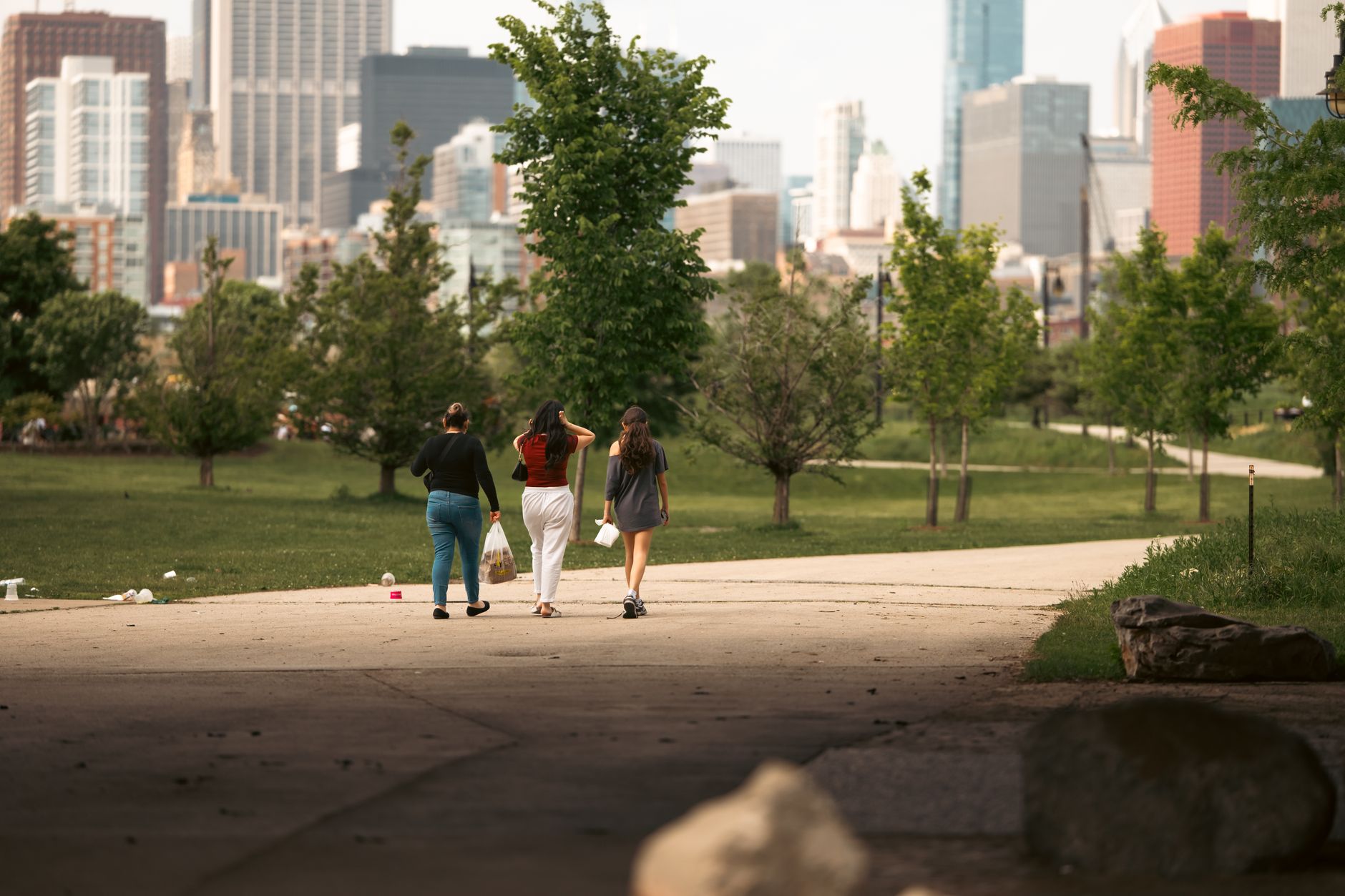
I’m not talking about a dramatic forest retreat or a weekend in the Peak District (though if you fancy it, I’ve written about what a night outdoors in Britain actually does to your brain and body, and it’s worth reading). I’m talking about the scrubby bit of council park near the Lidl. The one with the slightly broken fountain and the geese who’ve decided they own the path. That place. That place works.
What the research actually says (and it’s solid)
The Japanese concept of shinrin-yoku, loosely translated as forest bathing, gets a lot of the press here, and fair enough, the research behind it is genuinely compelling. But UK scientists have been quietly building their own body of evidence that doesn’t require you to be near a forest at all.
A 2019 study published in Scientific Reports, drawing on data from over 19,000 people across England, found that spending at least 120 minutes a week in nature was associated with significantly better health and wellbeing. Crucially, the benefits plateaued after about two hours and didn’t require remote countryside. Urban parks counted. Coastal paths counted. The local rec ground, apparently, counts.
The Mental Health Foundation has consistently flagged nature access as one of the most underused tools in tackling anxiety and low mood in Britain. Natural England’s own research arm tracks green space access and wellbeing annually, and the pattern is consistent: people with regular access to urban green space report lower psychological distress, better sleep, and higher life satisfaction. None of this is mystical. It’s just data.
Why passive, unstructured time is the key bit
This is where I think most wellness content gets it wrong. There’s a strong cultural pressure to turn any outdoor time into exercise, a mindfulness practice, a 5K run, or at minimum a Strava segment. And look, movement is great. I’m not arguing against it. But the research on urban green spaces specifically points to passive time as particularly effective for stress recovery.
Attention Restoration Theory, developed by Rachel and Stephen Kaplan at the University of Michigan but since applied extensively in UK urban planning research, suggests that natural environments allow our directed attention systems to recover. You’re not trying to focus. You’re not solving anything. The brain just… defocuses. Softly. A bit like being pleasantly stoned, honestly, except it’s just trees and ambient noise and a pigeon being weird.
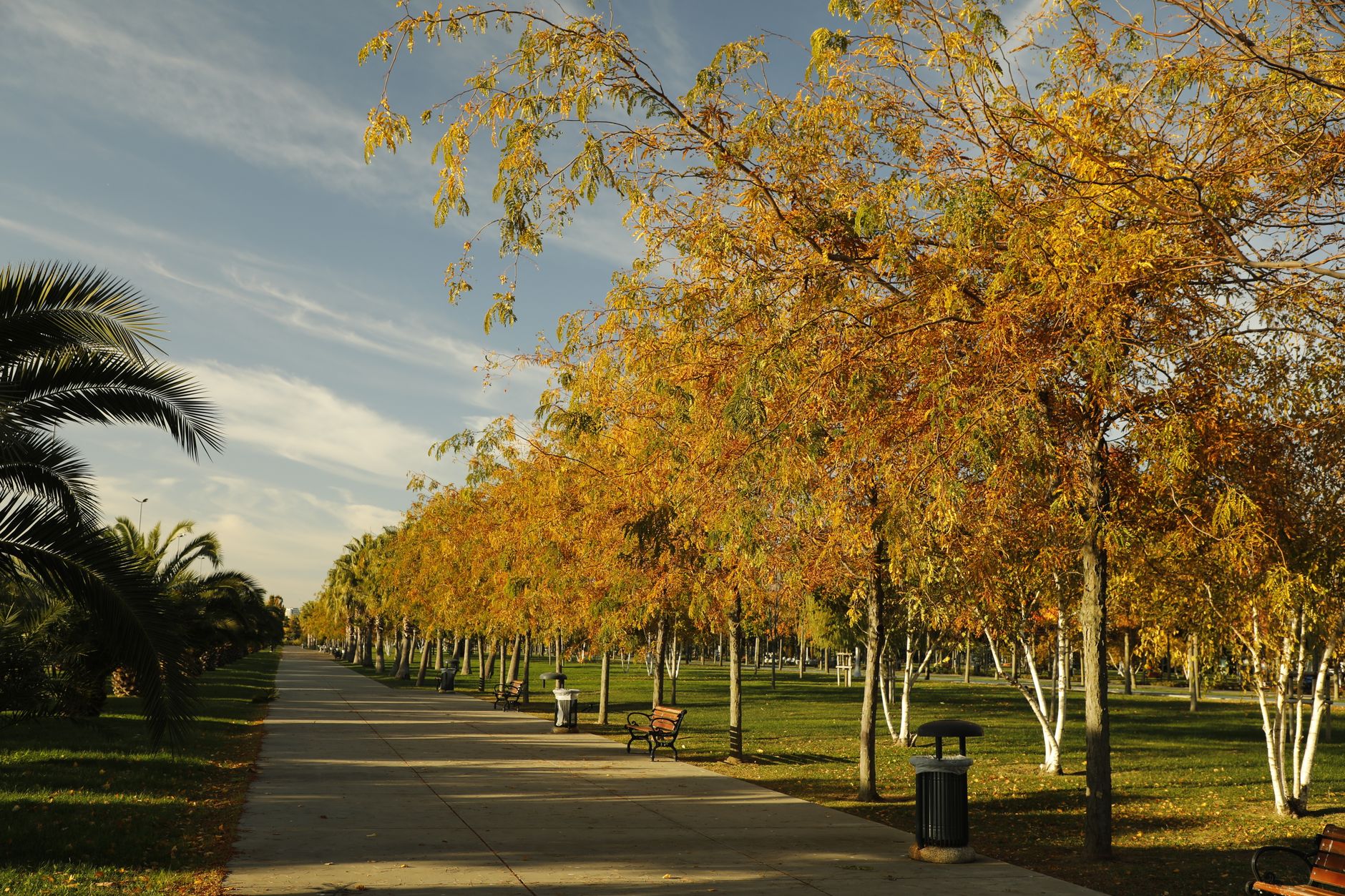
What this means practically is that your 20-minute amble through the park on your lunch break, the one where you’re not running, not meditating, not podcasting, just sort of wandering with your hands in your pockets looking at stuff, is doing measurable physiological good. Cortisol levels drop. Blood pressure eases. The nervous system, which spends most of its working day being quietly hammered by screens, traffic noise, and fluorescent lighting, gets a breather.
City parks vs. the countryside myth
There’s a class dimension to British wellness culture that doesn’t get talked about enough. The dominant image of “getting back to nature” tends to involve a Barbour jacket, a National Trust car park, and at least an hour of driving. That’s aspirational wellness. It’s fine if you can do it, but it’s not the only version that works, and it’s quietly exclusionary for the 83% of people in England who live in urban areas.
I’ve written before about the real reason you feel better after time in the countryside, and the science there is solid. But urban green spaces produce a meaningful subset of those same effects. A study from the University of Exeter found that people living within 300 metres of green space had 40% lower odds of feeling stressed. You don’t need a postcode in the Cotswolds. You need a park within a 10-minute walk.
The NHS has actually started catching on to this. Social prescribing, where GPs refer patients to community activities including green space programmes, is growing rapidly. If you’re curious about how that’s working in practice, the write-up I did on NHS social prescribing and what it means for your wellbeing covers it properly.
The subscription you’re already paying for
Here’s the bit that gets me every time. People spend £9.99 a month on a meditation app, £40 a month on a gym membership they use twice, and another tenner on some adaptogen powder that may or may not do anything. Meanwhile, the council park is sitting there, funded by your council tax, absolutely free, and almost certainly within 15 minutes of wherever you’re reading this.
I’m not being preachy about it. I’m as guilty as anyone of looking for the product version of something that doesn’t need a product. But urban green spaces are one of those rare things where the free version is the good version. The grass, the trees, the slightly alarming mallards, the smell of wet soil after rain. That’s the whole thing. You’ve already paid for it. You might as well use it.
And yes, obviously, the outdoors isn’t about car culture or noise or speed, it’s about slowing right down. Which is why you’ll find links like further reading: car meet culture in the uk: how cruise nights, car shows and roadside gatherings actually work in 2026 are a bit of a different world from what we’re talking about here, but hey, the internet contains multitudes.
How to actually do it (it’s embarrassingly simple)
No gear required. No technique. Go to the park. Walk slowly. Don’t put your phone away dramatically as a wellness gesture, just let it sit in your pocket. Look at things. Notice the texture of bark, the way pigeons move, the colour of the sky through leaves. If your mind wanders to your inbox, that’s fine. Let it wander back. Stay for at least 20 minutes if you can manage it, because that seems to be roughly where the physiological effects start showing up in the data.
Do it on a weekday if possible, when the park is quieter. Do it alone sometimes, with a mate other times. Both work. Neither needs to be planned. That lack of structure is, weirdly, the whole point.
Britain’s urban green spaces are patchy, underfunded in many boroughs, and sometimes frankly grim. But even a grim park has trees. Even a grim park has sky. And apparently, right now in 2026, that’s enough to shift your cortisol, ease your nervous system, and give your overworked brain twenty minutes of something it badly needs. No app required. No subscription. Just your local patch of green and a willingness to be a bit purposelessly slow about it.