
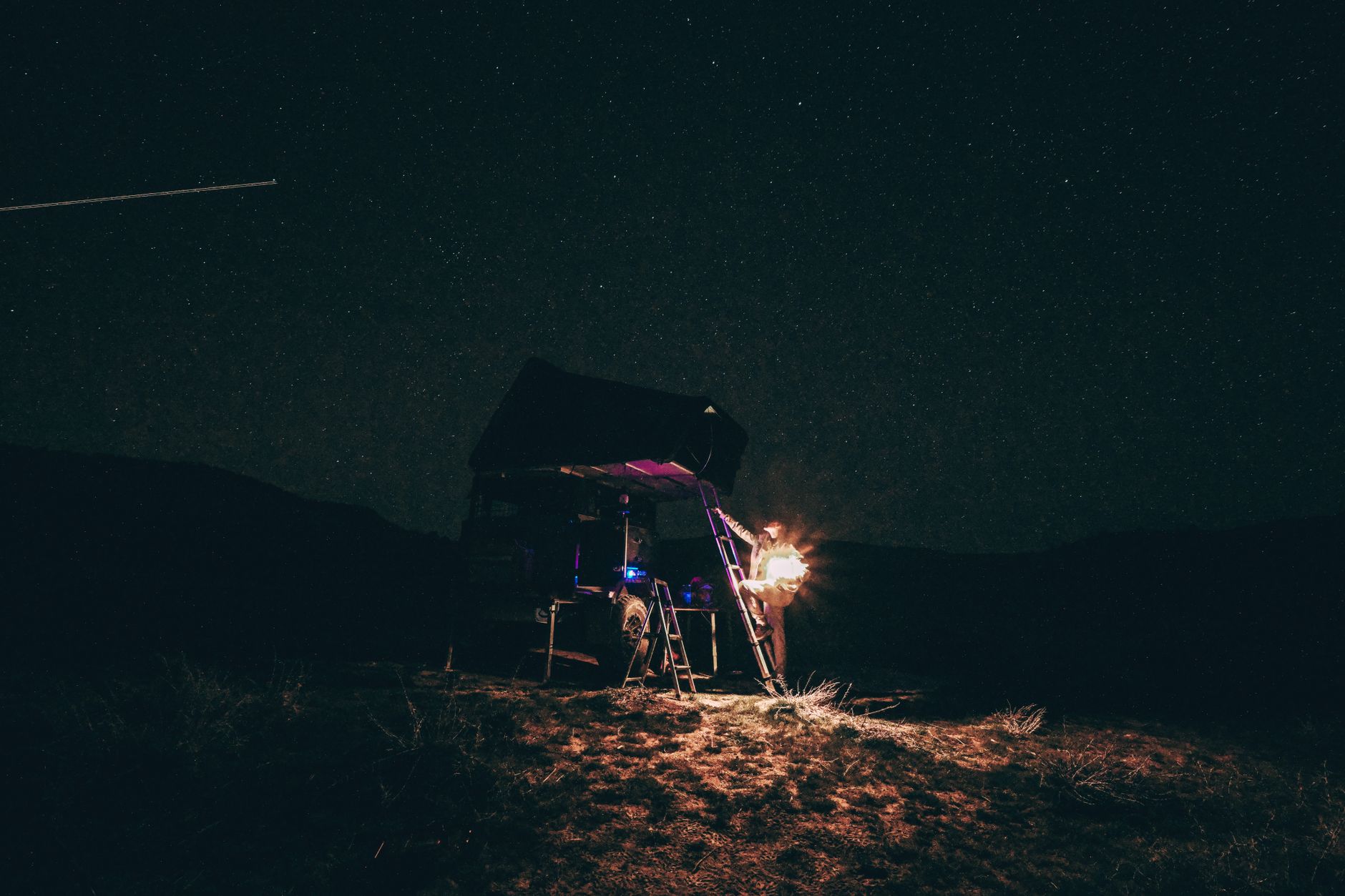
There’s something that happens around the third hour of lying in a sleeping bag, staring up at a genuinely dark sky, that no amount of magnesium supplements or meditation apps can replicate. Your breathing slows down. The internal monologue finally shuts up. And by morning, you feel weirdly, almost suspiciously, alright. I’ve experienced this enough times to know it’s not coincidence. It’s biology. And the science is starting to catch up with what anyone who’s ever slept outdoors already suspected: a single night in nature does something meaningful to your brain and body. Specifically, wild camping UK mental health benefits are turning out to be more substantial than most of us realised.
What actually happens to your body when you sleep outside
Your circadian rhythm, the internal 24-hour clock that governs when you feel tired, alert, hungry and focused, is almost entirely regulated by light. The problem is that modern life has made a total mess of it. We’re bathed in artificial light until midnight, we check our phones in bed, and we wonder why we wake up groggy. One night under natural light conditions starts to fix this, properly.
A well-cited 2013 study published in Current Biology found that after just one weekend of camping with no artificial light exposure, participants’ melatonin onset shifted nearly two hours earlier, bringing their sleep patterns back into alignment with natural sunrise and sunset cycles. By Monday morning, they were sleeping better without changing anything else. That’s a powerful result from 48 hours in a field.
Cortisol follows a similar pattern. Spending time in natural environments consistently reduces cortisol levels, the stress hormone that, when chronically elevated, contributes to everything from poor sleep to cardiovascular strain. Research from the University of Exeter found measurable mental health benefits from spending at least two hours a week in nature, but overnight immersion appears to push the effect much further, partly because you’re removing yourself completely from the environments and triggers that keep cortisol elevated in the first place.
The sleep quality difference is genuinely significant
I’d argue that the sleep you get outdoors, even on uneven ground in a mid-range sleeping bag, is qualitatively different from the sleep you get at home. Partly that’s the fresh air, partly the temperature drop at night which encourages deeper sleep, and partly the absence of blue light. But there’s something else going on too.
Natural soundscapes, birdsong, wind, rain on canvas, have been shown to activate the parasympathetic nervous system (the rest-and-digest mode) more effectively than silence. A 2017 study in Scientific Reports linked nature sounds to measurable reductions in sympathetic nervous system activity. Your body genuinely uses these sounds as a signal that it’s safe to wind down. It’s a long evolutionary adaptation, and it still works.
This connects with something I wrote about in the piece on why you feel better after time in the countryside, that the nervous system reset from natural environments isn’t just psychological. It’s physiological, measurable, and surprisingly fast to kick in.
Where is wild camping actually legal in the UK?
This is where it gets interesting, because the legal landscape is pretty different depending on which part of Britain you’re in.
Scotland is the easy one. Thanks to the Land Reform (Scotland) Act 2003, you have the right to camp almost anywhere in Scotland as long as you behave responsibly: leave no trace, don’t camp near a building or on enclosed farmland for more than a few nights, don’t light fires carelessly. The Scottish Outdoor Access Code sets it all out clearly. It’s a genuinely progressive bit of legislation and one of the reasons Scotland is consistently considered one of Europe’s best wild camping destinations.
Wales is more complicated. There’s no blanket right to wild camp in Wales, but the national parks, particularly Snowdonia (now called Eryri) and the Brecon Beacons (Bannau Brycheiniog), have designated areas and generally tolerate low-impact camping in remote upland areas. Some landowners actively welcome it. Others don’t. It’s worth checking the relevant national park authority’s guidance before you go.
England is the most restrictive. Technically, wild camping without landowner permission is not legal anywhere in England except on Dartmoor, where the Dartmoor National Park Authority protects a right to camp on open moorland. There was a legal challenge to this right in 2023, which temporarily threatened it, but it was ultimately reinstated. Beyond Dartmoor, you need permission, though many walkers on long-distance routes like the Pennine Way quietly camp in remote areas with no real issue, as long as they’re discreet, respectful, and gone by morning.
What to bring to actually get the mental health benefits
Here’s the thing: a miserable, cold, sleepless night in the rain does not reset your circadian rhythm. It just makes you grumpy. So there’s a baseline of comfort worth hitting if you want the genuine restorative effect.
A decent sleeping bag rated to around 0°C is worth the investment if you’re going out between October and April. A good sleeping mat matters more than most beginners realise; insulation from the ground is what keeps you warm, not the sleeping bag alone. Beyond that, I’d keep it simple. One pot, a small gas stove, real food. No screens. That last part isn’t optional if you actually want the circadian reset to work.
Foraging a small part of your dinner is also a genuinely rewarding layer to add if you know what you’re doing. If you’re new to that idea, our guide to foraging safely in Britain is a solid starting point before you start eating things you find on the ground.
The thing nobody talks about: overnight nature immersion and eco-anxiety
A significant number of people I’ve spoken to who struggle with eco-anxiety, that low-level dread about the state of the planet, find that spending time in actual nature rather than reading about it provides something closer to relief than anything else does. Not ignorance. Not avoidance. Just presence.
There’s something grounding about lying in a landscape that’s been there for thousands of years and watching it get on with things without your input. The upland grass doesn’t care about the news cycle. The owl absolutely does not. I think there’s a quiet form of perspective that happens in those hours between dusk and dawn that’s genuinely hard to get any other way.
If eco-anxiety is something you’re sitting with, there’s more worth reading on how that’s showing up across Britain in our piece on eco-anxiety and mental health in the UK. Wild camping isn’t a cure for it, but in my experience, it’s a pretty good reset.
One night is enough to start noticing the difference
You don’t need to commit to a week in the Cairngorms. One night, done properly, with no artificial light from sunset to sunrise, is enough to start shifting your sleep timing back towards something your body actually recognises. The cortisol drop kicks in within hours of entering a low-stimulus natural environment. The nervous system calms down faster than you’d expect.
Wild camping UK mental health benefits aren’t some wellness industry invention. The mechanisms are well-documented, the effects are measurable, and the experience costs almost nothing once you’ve got the basic kit. Go somewhere remote enough to see stars. Eat something warm. Sleep on the ground. Wake up before everyone else in the country and watch it get light.
That’s pretty much it. That’s the whole thing.
Frequently Asked Questions
Is wild camping legal in England?
In England, wild camping without landowner permission is only legally protected on Dartmoor. Elsewhere in England you technically need permission, though many walkers camp discreetly in remote upland areas without issue by following leave-no-trace principles and moving on by morning.
How quickly does sleeping outdoors improve your sleep quality?
Research published in Current Biology found that just one weekend of camping without artificial light shifted participants’ melatonin onset by nearly two hours, bringing sleep patterns back into sync with natural daylight cycles. Most people notice a difference after a single night.
Does wild camping reduce stress and cortisol levels?
Yes. Studies consistently show that natural environments reduce cortisol, and overnight immersion appears to amplify this effect by removing you completely from the triggers, screens, and noise that keep stress hormones elevated. The parasympathetic nervous system, the rest-and-digest mode, activates more fully in natural settings.
What gear do I actually need for a night's wild camping in the UK?
A sleeping bag rated to around 0°C, a good insulating sleeping mat, a small shelter or bivvy bag, and a simple cooking setup is genuinely all you need. Prioritise the sleeping mat; insulation from cold ground matters more than most beginners expect and will make or break your sleep quality.
Leave a Reply