
Right, let’s be honest. Sometimes the idea of ‘going outside to reduce stress’ sounds great in theory, until you’re already horizontal on the sofa at 2pm and the furthest you’re willing to travel is the kitchen. No judgement here – this is a safe space. The good news? nature de-stress doesn’t require a hiking boot or a motivational playlist. Some of the most effective, science-backed ways to calm your nervous system are basically doing nothing – just doing it slightly more intentionally.

Why Does Nature Actually Help Your Brain Chill Out?
Before we get into the lazy-friendly techniques, let’s give your brain a quick bit of context so this all makes sense. There’s a concept called Attention Restoration Theory, developed by environmental psychologists Rachel and Stephen Kaplan, which suggests that natural environments restore our capacity to focus and reduce mental fatigue. In short – your brain finds nature genuinely restful in a way it doesn’t find scrolling through your phone.
On top of that, exposure to natural settings lowers cortisol (the stress hormone), slows the heart rate, and activates the parasympathetic nervous system – the part of your body that tells everything to calm the heck down. The beautiful thing is that even small, gentle doses of nature trigger these responses. You don’t need to be Bear Grylls. You just need a window.
Window-Gazing: The Laziest Nature De-Stress Method Known to Humanity
Studies from the University of Michigan and others have found that even looking at nature – trees, sky, rain, a single sad pigeon – reduces anxiety and mental fatigue. If you’ve got a window with any kind of green or outdoor view, you’re already sitting on a stress-relief tool you probably didn’t know you had.
Try this: next time you feel your jaw tightening or your thoughts spiralling, just stop. Look out the window for two to three minutes. No phone, no podcast. Just look. Notice the light, how the leaves move, what’s happening out there. That’s it. That counts. Science says so.
Micro-Walks: Five Minutes is Enough
A micro-walk is exactly what it sounds like – a very short walk with zero pressure attached to it. Around the block, to the end of the road, or just up and down the garden a few times. Research published in journals covering environmental psychology consistently shows that even brief outdoor walks – we’re talking five to ten minutes – measurably reduce stress and improve mood.
The trick is removing the expectation that it needs to be exercise. It’s not a workout. It’s just you, outside, moving slowly, existing. If you can do it near grass, trees, or water, even better. But a pavement with a few weeds poking through the cracks still counts as nature contact. Dr Greenthumb approves.
Barefoot Grounding: Yes, It’s a Real Thing
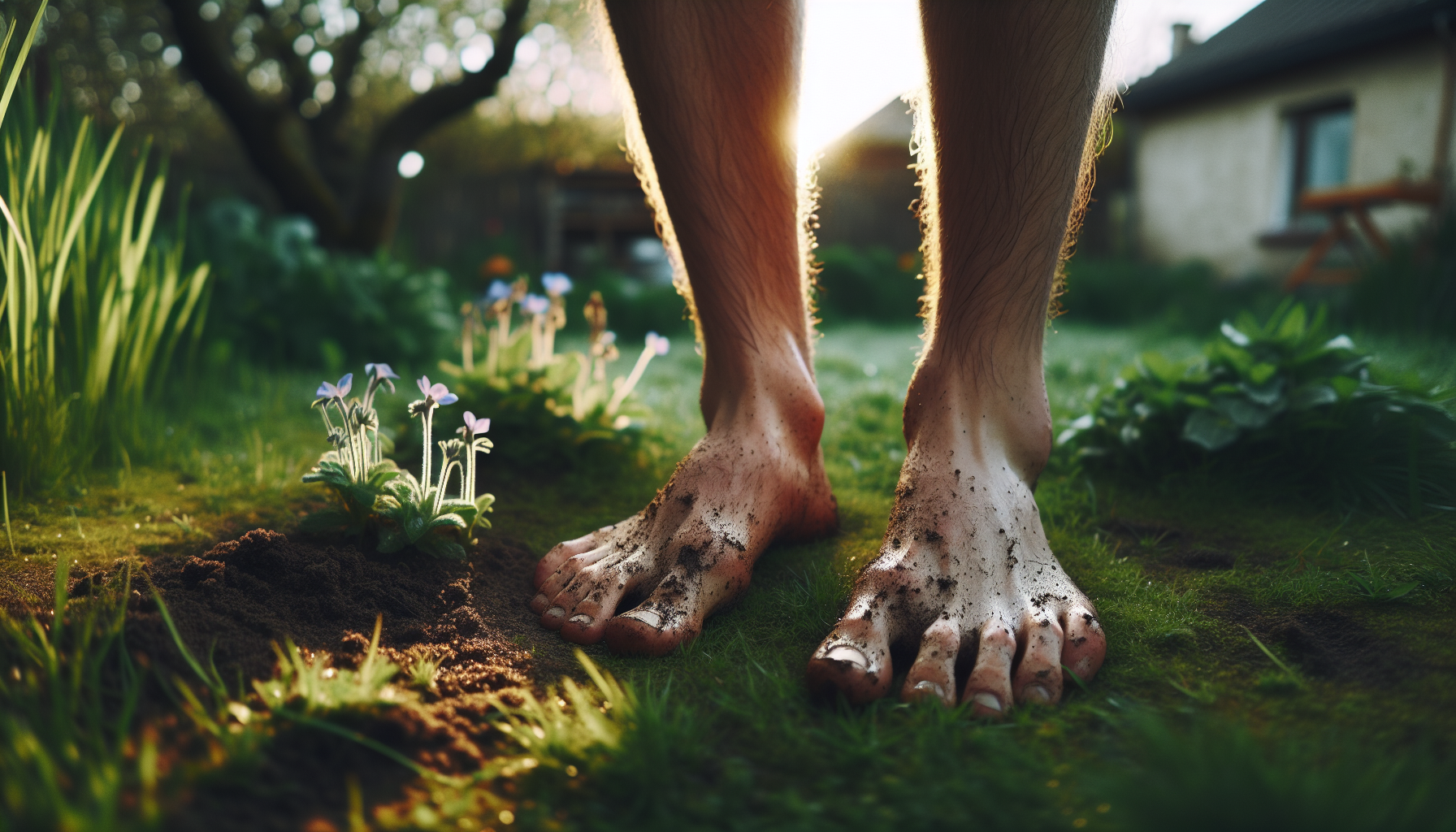
If you’ve got a garden – or even a balcony with some grass or soil – take your socks off and stand in it. This practice is called grounding or earthing, and while it sounds a bit woo-woo, there’s actual research behind it. A review published in the Journal of Environmental and Public Health found that direct contact between skin and the earth’s surface can reduce inflammation markers and promote calm by balancing electrical charge in the body.
You don’t need to do it for long. Five to ten minutes of standing or sitting barefoot on grass, soil or sand is enough to feel a noticeable shift. It’s the ultimate low-effort nature de-stress move. Shoes optional. Chill mandatory.
Balcony Breathing: Fresh Air as a Reset Button
No garden? No problem. Step onto your balcony, open a window fully, or even just sit near an open door. Combine that fresh air exposure with some intentional breathing – breathe in for four counts, hold for four, out for six. This activates your vagus nerve, which plays a huge role in calming the stress response.
Doing this outside – or even just near open air – adds a layer of sensory input your body responds well to. The temperature change, the sounds, the smell of rain or cut grass. These sensory cues signal to your nervous system that you’re safe, not under threat. Your cortisol says bye. Your shoulders drop three inches. Magic.
Plant Care as Mini Meditation
Watering your plants, repotting something, pulling a few dead leaves off your monstera – all of this is legitimate stress relief. Research from the University of Tokyo found that indoor plant care reduces psychological and physiological stress. The repetitive, gentle, tactile nature of it is almost meditative.
You’re not thinking about your emails when you’re checking if the soil is dry enough. You’re present. That presence – what mindfulness types call being ‘in the moment’ – is exactly what breaks the stress loop. Plus your plants get watered, which is a win-win for everyone involved, including the plant.
The Big Picture: Small Nature Doses Add Up
None of these techniques require a lifestyle overhaul. They’re not asking you to become a different person. The science of nature de-stress is genuinely on the side of the lazy, the busy, the overwhelmed, and the perfectly content to just chill. A few minutes here, a barefoot moment there, a plant given some attention on a Tuesday afternoon – it all compounds.
Your nervous system doesn’t know if you did a five-mile hike or spent eight minutes watching clouds from your bedroom window. It just knows it got some nature, and it’s grateful. Start small. Stay consistent. And maybe crack a window while you’re at it.

Nature de-stress FAQs
How long do I need to spend in nature to feel less stressed?
Research suggests even five to ten minutes of nature exposure can noticeably reduce cortisol levels and improve mood. A 2019 study published in Frontiers in Psychology found that 20 to 30 minutes produced the most significant drop in stress hormones, but shorter doses still make a meaningful difference. Consistency matters more than duration – regular micro-doses of nature contact are more beneficial than one long session per week.
Does looking at nature through a window actually reduce stress?
Yes, and it’s been studied properly. Research from the University of Michigan and various environmental psychology labs has shown that viewing natural scenes – even through glass – activates restorative brain processes and reduces mental fatigue. It’s not as powerful as being outside, but it’s a genuinely effective tool, especially for people in urban environments or working from home.
What is barefoot grounding and does it really work?
Grounding, or earthing, involves direct skin contact with natural surfaces like soil, grass, or sand. A review in the Journal of Environmental and Public Health found it can reduce inflammation markers and promote a calmer physiological state, thought to be related to the exchange of electrons between the body and the earth’s surface. It sounds unconventional, but the evidence is promising enough to be worth trying – and it costs absolutely nothing.
Can indoor plants actually help with stress and mental health?
They can, yes. Studies including research from the University of Tokyo found that interacting with indoor plants – watering, tending, even just being near them – lowers both psychological and physical stress responses. The act of caring for something living encourages mindful attention and presence, which interrupts the stress cycle. Even one or two houseplants in your space can have a positive effect.
What if I live in a city with no green space nearby?
Urban environments don’t have to mean zero nature contact. Window views of sky, clouds, or street trees still offer some restorative benefit. Indoor plants, balcony container gardens, and open-window breathing exercises all count as genuine nature exposure. Even nature sounds – rain, birdsong – have been shown to reduce stress responses in the brain, so you’ve got options regardless of your postcode.