
There are trees in Britain that have been standing longer than the printing press has existed. Ancient woodland, defined as land that has been continuously wooded since at least 1600 AD, covers just 2.5% of the UK’s land area. That’s it. Just 2.5%. And we’re still losing it, slowly, year by year, to roads, housing developments and infrastructure projects that somehow keep getting approved despite the irreplaceable nature of what gets bulldozed.
I find that genuinely hard to sit with. These aren’t just old trees. They’re entire ecosystems that took centuries to build, and once they’re gone, they’re gone. You can plant a million saplings and still not recreate what a 400-year-old woodland floor looks like. The fungi, the invertebrates, the particular light that filters through established canopy, the depth of the soil structure below, none of that comes back in a human lifetime.
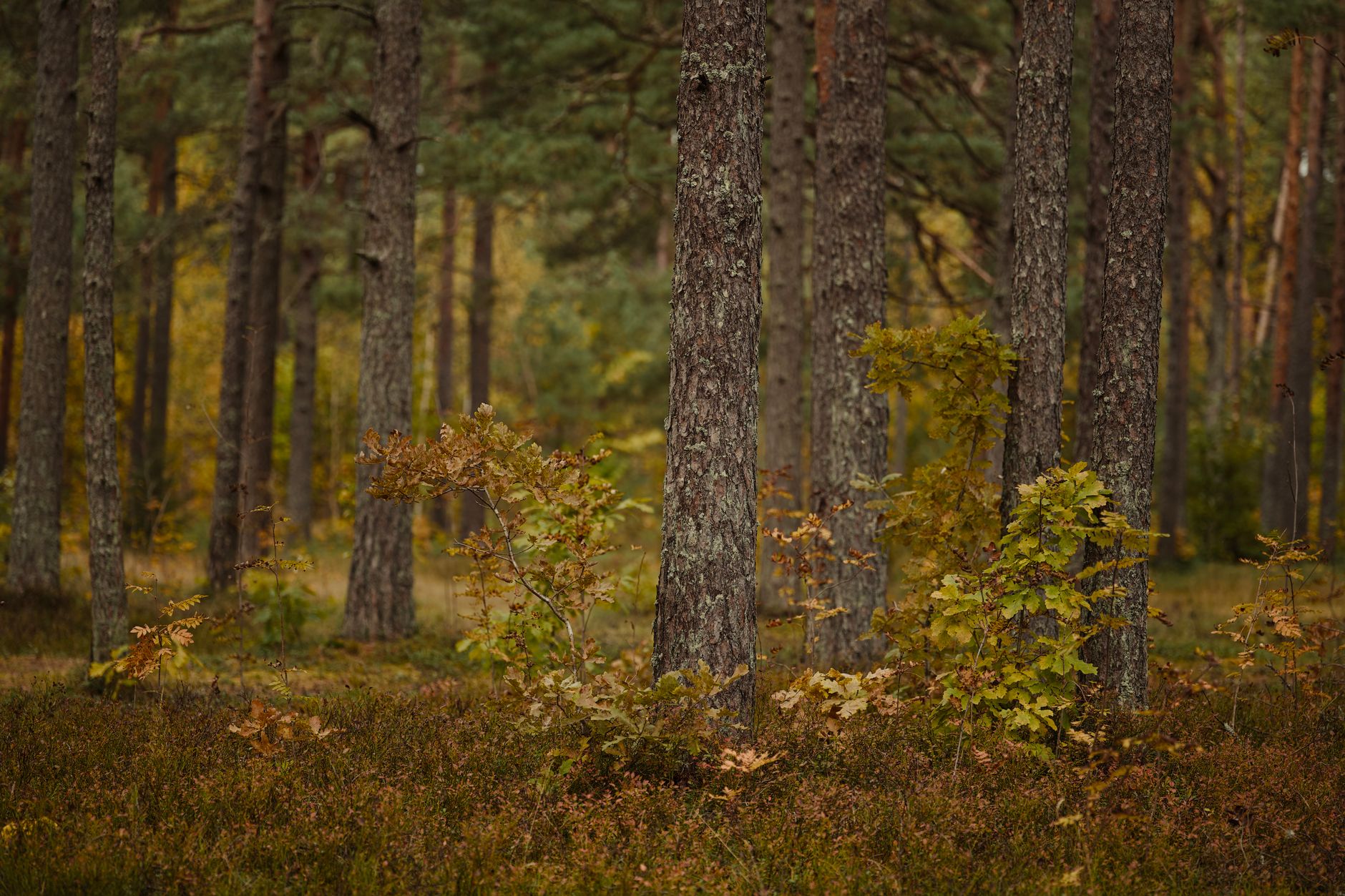
What actually counts as ancient woodland?
The technical definition varies slightly between England, Scotland and Wales, but the basic idea is consistent: woodland that has existed continuously since before large-scale planting became common. In England and Wales, that’s 1600. In Scotland, 1750. The Woodland Trust maintains the Ancient Woodland Inventory, which is the best public record of where these sites are and how they’re classified.
Ancient woodland isn’t always dramatic. Some of it looks like a scrubby, overgrown mess to an untrained eye. But that mess is exactly the point. Deadwood, fallen branches, leaf litter metres deep in places, exposed roots, standing water in hollows. All of it housing thousands of species that need this specific, long-established habitat and nothing else.
Why ancient woodland matters more than a lot of people realise
Let’s talk carbon first because it tends to cut through. Mature, complex woodland stores significantly more carbon than young plantation trees, both in the biomass above ground and in the soil below. Ancient woodland soils in particular are carbon-dense in ways that take centuries to develop. Destroying them doesn’t just remove the trees, it releases stored carbon that had been locked away for generations. The government’s own planning guidance acknowledges ancient woodland as an irreplaceable habitat, though the gap between guidance and what actually happens on the ground is frustratingly wide.
Biodiversity is the other big one. Around 700 species of plants, animals and fungi in the UK are specifically associated with ancient woodland. Many of them, things like lesser spotted woodpecker, dormice, wood anemone, the rare ghost orchid, exist nowhere else. When a wood goes, those species don’t just relocate. They disappear from the area, sometimes permanently.
And then there’s mental health, which I think is criminally underrepresented in conservation conversations. Spending time in old-growth woodland is measurably different, neurologically, from walking through a park or even a younger forest. The complexity of the environment, the layering of sound, canopy, undergrowth and forest floor, the smell of fungal activity and damp earth, all of this appears to have a genuinely calming effect on the nervous system. I’ve written before about why time in green spaces does something a wellness app simply can’t replicate, and ancient woodland takes that principle to a whole other level.
How much ancient woodland have we lost?
Britain lost around half of its ancient woodland in the twentieth century alone. Postwar agricultural expansion, conifer plantation programmes and urban sprawl all took chunks out of it. What remains is fragmented, often in small pockets isolated from each other by roads, fields and development, which means wildlife can’t move between sites easily. This isolation is itself a slow threat, it reduces genetic diversity and resilience within woodland populations over time.
England has around 340,000 hectares of ancient woodland remaining. Scotland has proportionally more in terms of total land area covered, though the character is different, more native Caledonian pinewoods in the north, ancient oak and birch woodlands in the central belt. Wales has some extraordinary surviving ancient woodland, particularly in the valleys, though these too face constant pressure from infrastructure expansion.
Planning battles are where ancient woodland is most immediately at risk right now. Road-widening schemes, HS2 (which damaged or destroyed ancient woodland sites that had survived centuries), and housing developments granted on appeal despite objections, these are the frontlines. The Woodland Trust tracks active planning threats and publishes them publicly, which at least means ordinary people can follow what’s happening.
What you can actually do without leaving the house
This is where I want to be honest with you. I know “write to your MP” sounds like advice from a school assembly. But it genuinely does something, particularly at the planning consultation stage when development proposals affecting ancient woodland are open for public comment. Local planning authorities are legally required to consider objections, and volume matters.
A few concrete things worth doing, all doable from your sofa:
Sign up to the Woodland Trust’s action alerts. They send emails when specific sites are under threat and direct you to relevant consultations. Takes about two minutes to register. The letters they draft for you are well-researched and can be personalised before sending.
Adopt an ancient wood. The Woodland Trust’s adopt scheme lets you contribute financially to the ongoing management and protection of specific sites across Britain. I’d rather put a tenner a month there than spend it on whatever the latest wellness subscription is.
Record what you see using iNaturalist or iRecord. Citizen science data from ancient woodland sites contributes directly to biodiversity assessments that are used in planning decisions. If you do visit an ancient wood (and I’d really recommend it), log what you spot. Even common species build up a picture of woodland health over time.
Send your food and garden scraps to compost rather than general waste. This sounds disconnected but it isn’t. Reducing landfill reduces the pressure to develop new waste sites, some of which end up adjacent to or within ancient woodland buffers. If you’re looking at proper home composting setups or eco-friendly outdoor products to get the whole system running, see their range for ideas that keep things clean and simple.
There’s also the quiet influence of talking about it. Sharing what you know, mentioning it in conversation, recommending a walk through an ancient wood to a friend who’s struggling, that’s not nothing. The connection between nature and mental wellbeing is something most people feel instinctively but rarely articulate, and once someone gets it, they tend to care more about protecting it.
Ancient woodland and the carbon argument
One thing worth knowing: ancient woodland sits in a different category from new tree-planting in climate terms, and it matters that this distinction gets made clearly. Government and corporate net-zero pledges often count newly planted trees as carbon offsets, which can obscure the fact that protecting existing ancient woodland is orders of magnitude more effective from a carbon perspective. A young plantation absorbs carbon as it grows but takes decades to match what an ancient wood already holds. Protecting what exists is the highest-leverage action we have.
The same logic applies to hedgerows and other long-established vegetation, where the carbon maths consistently favour protection over replacement. Ancient woodland is just the most dramatic version of that principle.
Britain’s ancient woodlands are genuinely irreplaceable. The fact that they’re still here at all, after centuries of clearance, agricultural intensification and development pressure, is partly down to the people who’ve argued for them generation after generation. That argument needs to keep going. And right now, some of the most effective versions of it are happening online, in planning portals and in letters to MPs. You don’t have to chain yourself to anything. You just have to pay a bit of attention.