
Right, let’s get one thing straight. Composting does not require a massive garden, a pitchfork, and a suspicious amount of enthusiasm for turning a heap of rotting things every fortnight. That image is a lie. People with balconies, kitchen countertops, and absolutely no outdoor space whatsoever are composting in 2026, and most of them are doing it with minimal effort and zero guilt. This guide to composting small garden UK style strips it right back to what actually works when space is tight and motivation is, shall we say, relaxed.
Why Bother Composting at All?
Food waste is genuinely grim from an environmental standpoint. In the UK, households chuck away roughly 6.4 million tonnes of food every year, according to WRAP (Waste and Resources Action Programme), and a hefty chunk of that ends up in landfill where it breaks down anaerobically and produces methane. Not ideal. Composting flips that script by turning your banana skins and teabags into something genuinely useful for soil. Even if you never grow a single thing, you can drop finished compost off at a community garden or allotment and someone will absolutely love you for it.
The other reason is simpler. It just feels good to close the loop. Peel an orange, put the skin somewhere useful rather than a bin liner, feel like you’ve done your bit for the planet. Easy win.
Bokashi Bins: The Kitchen Counter Option Nobody Talks About Enough
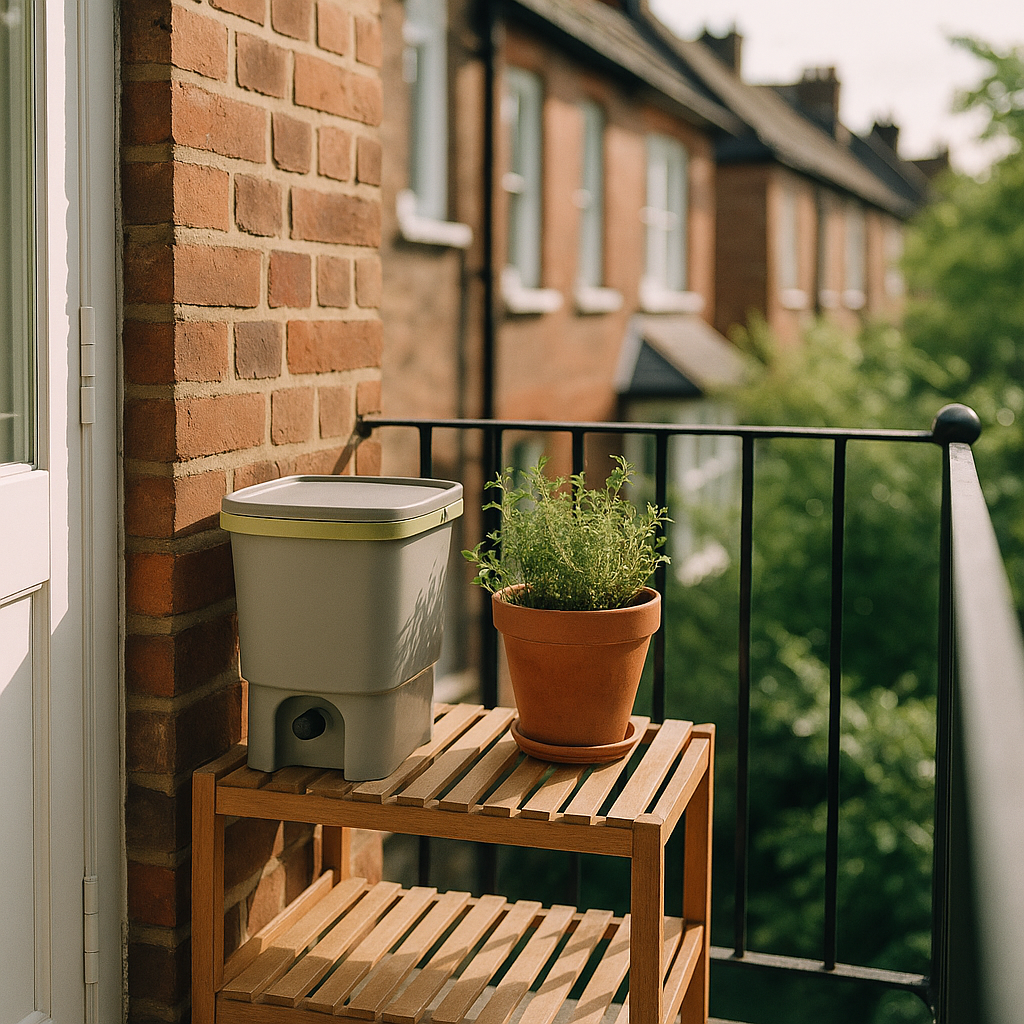
Bokashi is probably the most underrated entry point for composting in a small space. The system is Japanese in origin and works through fermentation rather than traditional decomposition. You layer food scraps with a bran inoculant that contains beneficial microbes, seal the lid tight, and leave it alone for a couple of weeks. No smell (well, a mild pickly smell, but nothing offensive), no turning, no worms, no outdoor space required.
A bokashi bin sits happily under a kitchen sink. You can put cooked food, meat, dairy, and citrus in there, which traditional composting can’t handle nearly as well. The result after two weeks or so is a pre-composted fermented pulp that needs burying in soil or adding to a wormery or outdoor heap to finish off. If you have even a small outdoor planter, you can bury it directly. If you don’t, some allotment sites will take it.
Cost-wise, starter kits in the UK typically run between £25 and £45. Brands like Wiggly Wigglers and Full Circle stock decent ones, and you can find refill bran fairly cheaply online once the initial kit runs out. Genuinely low effort once you get the rhythm going.
Wormeries: Slightly More Alive, Still Pretty Easy
A wormery is essentially a stacked tray system that a colony of composting worms (usually tiger worms or red wigglers, not standard earthworms) work through slowly. You add kitchen scraps, the worms eat them, and the output is two things: incredibly rich worm castings that make excellent compost, and a liquid runoff called worm tea that you dilute and use as a liquid plant feed. It is, for such a weird little system, kind of brilliant.
Space requirements are minimal. A standard wormery like the ones from Worm City or Original Organics takes up about the same footprint as a small wheelie bin. It lives on a balcony, in a shed, even in a utility room as long as temperatures stay between about 10°C and 25°C. Worms do not love extremes.
The main thing to know is that worms are surprisingly slow. You can’t pile food in like you’re bulk composting. Small amounts regularly is the way. Also avoid citrus, onions, and anything very acidic or salty. Feed them vegetable peelings, coffee grounds, cardboard torn into small pieces, and they’ll do their thing. I’ve had a wormery going for about three years and the only real effort involved is not forgetting they exist during a cold snap.
Outdoor Mini-Composters for Small Gardens
If you do have a small garden or even a decent-sized patio, a traditional compost bin scaled down for compact spaces is still very much an option. Dalek-style composters (those black plastic bins many councils sell subsidised) are designed for small gardens. Some local councils in England sell them for as little as £6 through schemes run via getcomposting.com, which has historically been backed by Recycle Now and WRAP.
The composting small garden UK challenge here is mainly patience. A cold heap with random additions will take 9 to 12 months to produce usable compost. Speed it up by balancing “greens” (fruit peel, grass clippings, veg scraps) with “browns” (cardboard, dry leaves, paper bags), keeping it slightly moist, and giving it an occasional turn. Do absolutely none of that and it’ll still compost eventually, just slower. Both approaches are valid depending on your energy levels.
What If You Have Zero Outdoor Space?
Genuinely no garden, no balcony, living in a flat? Your best move is your council’s food waste scheme. Most UK local authorities now collect food waste separately following increased pressure around the Environment Act, and from 2026 separate food waste collections have been extended across England under new government guidance. Check your council’s website to see what caddy and liner system they use.
It’s not as satisfying as making your own compost, admittedly. You don’t get the finished product. But you are diverting food waste from landfill, and it genuinely counts. Keep a small caddy on the worktop or under the sink, empty it into the outdoor collection bin once or twice a week, done. Zero effort, maximum impact relative to doing nothing.
ShareWaste (sharewaste.com) is also worth a look. It’s an app and website that connects people who have food scraps with local composters who want them. Essentially a community composting matchmaker. Genuinely lovely concept and surprisingly active in UK cities.
Which Option Is Actually the Lowest Effort?
Honest answer: council food waste collection wins on effort, zero question. You do almost nothing beyond separating your scraps. But if you want to close the loop yourself and end up with something useful, bokashi is the most practical for indoor or very small spaces, and a wormery is the most rewarding once it’s established. A mini outdoor composter is the classic move if you have any outdoor area at all.
None of these require you to become a compost nerd. None require special skills or a significant time investment. Composting in a small UK garden or flat is genuinely one of those things that sounds more complicated than it is, and once it’s part of the routine, it barely registers as effort at all.
Start with whatever matches your space. Adjust as you go. The worms don’t judge.