
Somewhere off the coast of Sussex, a team of marine biologists is essentially gardening the seabed. They’re replanting kelp. Giant, rubbery, prehistoric-looking kelp. And honestly, the more you read about it, the more it feels like one of the most quietly important environmental stories happening in Britain right now. The kelp forests UK restoration movement doesn’t get nearly as much attention as rewilding on land, but the science behind it is just as compelling.
I’ve been keeping half an eye on this for a while, mostly because the overlap between ocean health, carbon sequestration and what ends up in those little supplement capsules at the health food shop is genuinely interesting. So let’s get into it. Slowly. No rush.
What happened to Britain’s kelp forests?
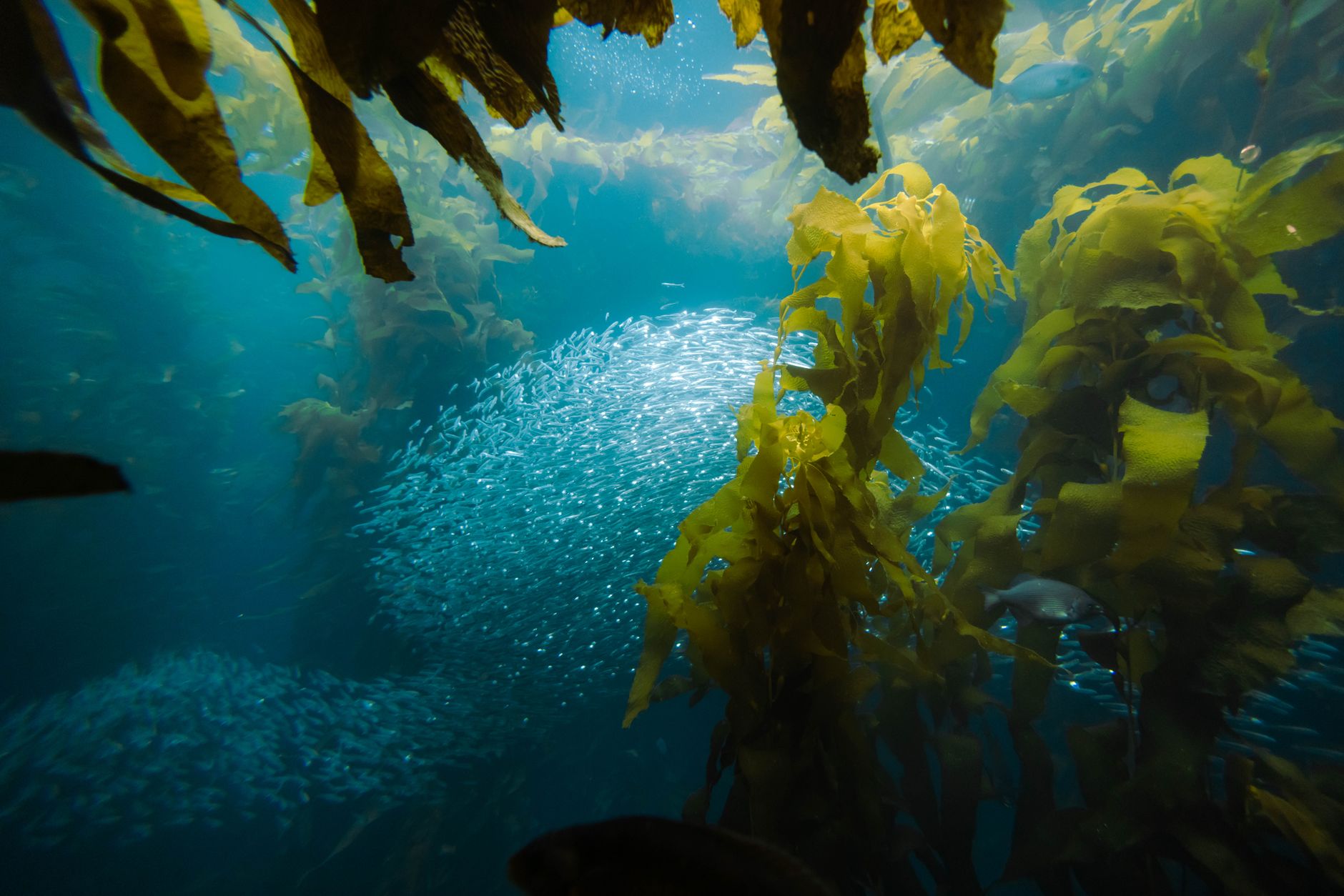
Britain used to have extensive kelp forests ringing much of its coastline. The stuff can grow several metres tall, forming dense underwater canopies that shelter hundreds of species. Think of it like a coral reef, but cold, dark and very British. Fish, crabs, sea urchins, juvenile sharks, cuttlefish, they all depend on kelp forests for shelter and food.
Somewhere along the line, we trashed most of it. Bottom trawling is the main culprit; dragging heavy nets across the seabed absolutely destroys kelp structure. Dredging for scallops made it worse. Add in warmer, more acidic water and elevated nutrient runoff from agriculture, and you’ve got a habitat that’s been hammered from multiple directions for decades. Some estimates suggest Britain has lost around 50% of its historic kelp coverage, though this varies considerably by region.
The good news is that kelp grows fast once you give it a chance. Remove the pressure, and it bounces back. That’s the basic premise behind habitat protection and restoration, whether you’re talking about woodland or ocean floor.
What do kelp forests UK restoration projects actually involve?
The most high-profile project in England is the Sussex Kelp Recovery Project, which gained real traction after byelaws were passed in 2021 restricting trawling and dredging within four miles of the Sussex coast. Within a couple of years, surveys started detecting natural kelp recovery. No replanting needed, just taking the boot off the ecosystem’s neck.
Other projects are more hands-on. Groups like the Marine Conservation Society and Sky Ocean Rescue have been involved in collecting kelp spores, cultivating them in tanks, and then transplanting juvenile kelp to cleared seabed. It’s painstaking work. Kelp anchors itself to rock using a structure called a holdfast, so you need suitable substrate, the right water temperature, and protection from the grazing pressure of sea urchins (which, without predators like otters, will mow down young kelp faster than it can establish).
Scotland is a different story. Its west coast still has significant kelp coverage, partly because trawling has been less intensive in some areas, and partly because the cooler, cleaner water suits kelp well. The Marine Conservation Society has been mapping these remaining strongholds and pushing for protection before they go the way of England’s coastline.
The carbon angle: is kelp actually a meaningful climate tool?
This is where it gets genuinely complex, and I’ll be straight with you: the carbon story for kelp is more complicated than the headlines suggest.
Kelp does sequester carbon while it’s growing, absorbing CO2 through photosynthesis like any plant. The question is what happens to that carbon when kelp dies or breaks off. Unlike peatlands (which lock carbon into the ground for centuries), kelp carbon often gets released back fairly quickly as the biomass decomposes in shallow water. Some does sink to the deep ocean and get locked away for long periods, but the fraction varies and is genuinely hard to quantify.
So calling kelp a straightforward “blue carbon” solution is an oversimplification. The more honest framing is this: kelp forests are ecologically essential, they do contribute to carbon cycling in complex ways, and protecting them is unambiguously the right thing to do, but we probably shouldn’t be selling carbon credits based on kelp the way we might for mangrove forests in the tropics, where the carbon lock-in is better understood.
The biodiversity case, though, is watertight. Dense kelp canopies support fish nursery habitats, which in turn support fishing communities. Healthy kelp beds reduce coastal erosion by dampening wave energy. And there’s something to be said for restoring the ocean to something approaching its natural state, independent of any carbon accounting.
Should you actually be eating kelp?
Right. The supplement aisle. This is where the vibe shifts from marine ecology to something a bit more personal.
Seaweed has been eaten in the British Isles for centuries, laverbread in Wales, dulse in Scotland and Ireland, carrageen in coastal communities. Kelp specifically is rich in iodine, which most people in the UK don’t get quite enough of, particularly those avoiding dairy (which is otherwise the main dietary source). The NHS recommends adults get around 140 micrograms of iodine daily, and a small amount of dried kelp can easily meet that.
Here’s the catch: kelp can also contain too much iodine. Some supplements on the market contain several times the recommended daily intake, which can actually suppress thyroid function over time, the opposite of what most people taking them are hoping for. If you’re buying kelp supplements rather than just chucking some dried seaweed into a soup occasionally, check the iodine content on the label and don’t assume more is better.
Beyond iodine, the evidence for most other kelp health claims is thin. Fucoidan (a compound found in kelp) is interesting in lab research, but human trial evidence is limited. Kelp as a weight-loss aid is largely marketing. As an addition to a varied diet, particularly if you’re eating less meat and dairy, it has some genuine nutritional merit. As a miracle supplement? Calm down.
If you want to eat British seaweed rather than import it from Asia, there are some decent UK producers now. Mara Seaweed, based in Scotland, harvests sustainably from Scottish waters. The coastal foraging angle is also worth exploring, there’s a whole world of edible seashore plants and sea vegetables available to anyone with wellingtons and a low tide.
So what can you actually do?
Support the Sussex model. Write to your MP backing Marine Protected Area extensions. If you eat fish, choose sustainably caught species from fisheries that don’t trawl, the Marine Stewardship Council label is a reasonable shortcut. And if you want to eat seaweed, eat it as food rather than chasing it in capsule form.
Kelp forests UK restoration is one of those stories where the science is genuinely encouraging, the obstacles are mostly political and economic rather than technical, and the benefits stack up across biodiversity, food systems and coastal resilience. It’s slow, underwater, unglamorous work. Which, frankly, suits me just fine.