

There’s a kind of magic to standing on a British beach at low tide and realising the rocks around you are basically a free supermarket. I’ve spent a fair few lazy afternoons on the Cornish coast and the shores of Pembrokeshire doing exactly that, poking around in rock pools, filling a small bag, heading home smelling faintly of the sea. Coastal foraging UK safe edibles is a proper, ancient practice, and honestly, most people walk right past an entire meal without noticing it. Let’s fix that.
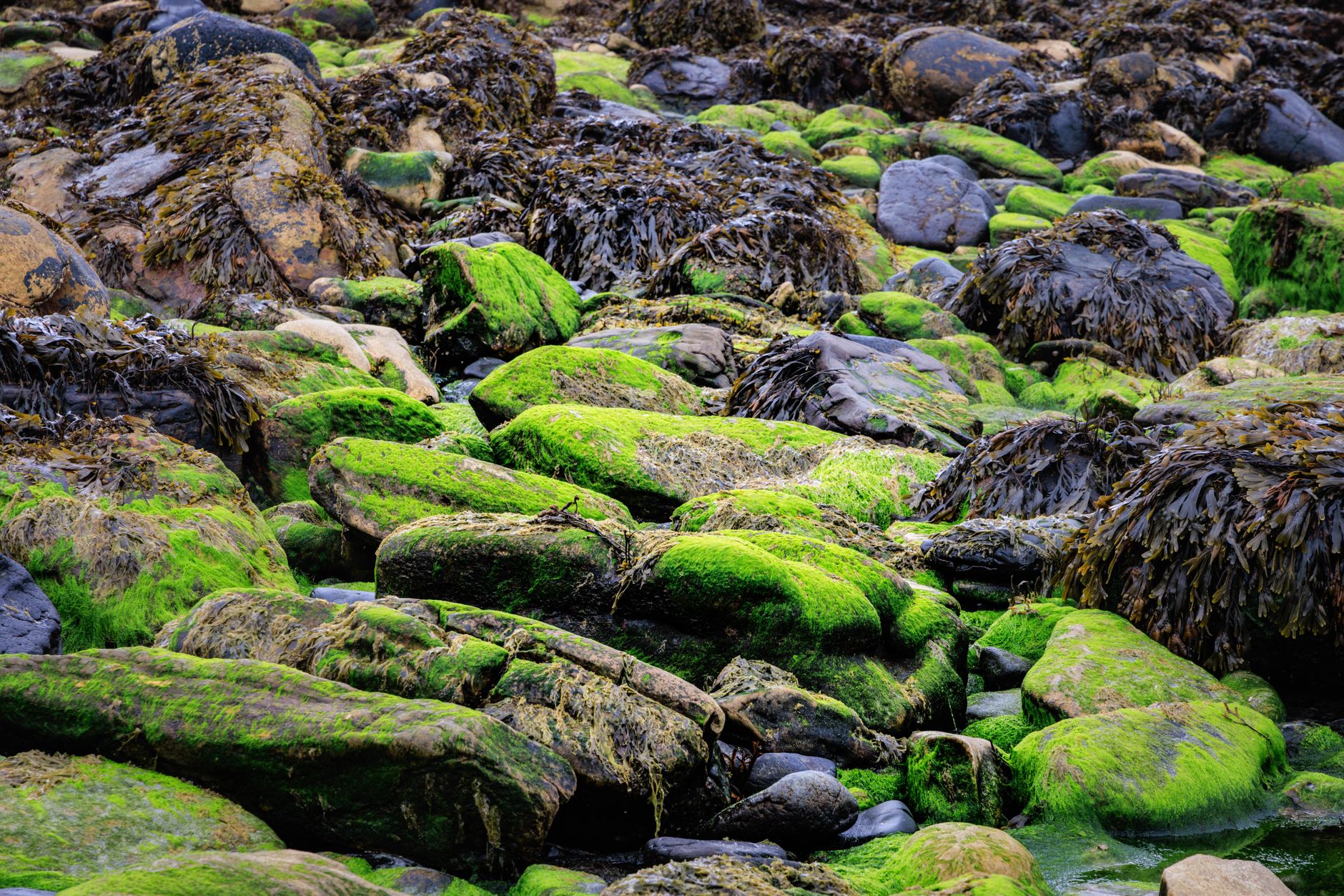
What you can actually eat from a British shoreline
The short answer is: more than you’d think. The longer answer involves knowing your seaweeds, being a bit fussy about shellfish, and giving certain shoreline plants a proper look. Here’s the breakdown.
Edible seaweeds worth knowing
Sea lettuce (Ulva lactuca) is the one I’d point a total beginner at first. It’s that bright green, papery stuff draped over rocks at low tide. Mild in flavour, easy to rinse, and good raw in salads or wilted into a broth. You can’t really confuse it with anything dangerous, which is a nice bonus.
Dulse (Palmaria palmata) is a reddish-purple seaweed you’ll find on the north and west coasts of Britain, clinging to exposed rock faces. It’s chewy, slightly smoky, and has a devoted following in Scotland and Northern Ireland where people have eaten it for centuries. Dry it, fry it in a pan, and it goes crispy like a weird bacon substitute. I’m not saying it’s bacon. It’s not bacon. But it’s good.
Bladderwrack (Fucus vesiculosus) is the brown stuff with the satisfying air-filled bubbles you’ll pop as a kid. You can eat it, though it’s tough and the taste is strong. Better used in stocks and broths than chewed raw. It’s high in iodine, so if you have thyroid issues, chat with your GP before going heavy on any seaweed.
Kelp, specifically sugar kelp (Saccharina latissima), is becoming a proper ingredient in UK cooking. Look for it washed up or just below the waterline on rocky coasts. Sweet, umami-rich, and brilliant added to a slow-cooked pot of something hearty.
Shellfish from the shoreline
Mussels are probably the most accessible wild shellfish in the UK. They grow on rocky surfaces all around the coastline, and where conditions are clean they’re genuinely excellent. The critical thing is water quality. You need to check the Food Standards Agency’s classified shellfish waters before you harvest anything. Contaminated shellfish can make you seriously ill. Class A waters are safe for direct consumption; Class B means they need purification first. This is not a step to skip.
Periwinkles are tiny, spiralled snails that live on rocky shores all around Britain. They were a proper Victorian street food, you’d buy them with a pin to pick the meat out. They’re still brilliant boiled for a few minutes with a bay leaf, and there’s something deeply satisfying about eating something so old-fashioned and free. Limpets can be eaten too, grilled on their shell over a fire with a bit of butter, though they’re quite chewy and their populations can be vulnerable to over-harvesting, so take sparingly.
Shoreline plants that don’t get enough love
Sea purslane (Halimione portulacoides) grows along saltmarsh edges, particularly on the south and east coasts of England. Succulent, slightly salty, and brilliant alongside fish. Rock samphire (Crithmum maritimum) is the more famous one, sharp, herby, and absolutely outstanding pickled or lightly steamed. You’ll find it on cliffs and rocky shores, and yes, it’s the same thing Shakespeare references in King Lear. Sea beet, the wild ancestor of our domestic beetroot and spinach, grows at the top of beaches and on sea cliffs. Its leaves are dark, glossy and meaty, one of the best wild greens in Britain, full stop. Steam it like spinach and you won’t look back.
How to harvest sustainably without being that person
The golden rules are simple. Take no more than a third of what’s growing in any one spot. Never strip a single plant or cluster completely bare. Move along the shore rather than concentrating on one patch. Use a knife or scissors to cut rather than ripping, which lets the plant or animal recover faster. And carry what you’ve taken in a breathable bag, not a sealed plastic one where things go off quickly.
Check the local bylaws before you go. Some nature reserves and Sites of Special Scientific Interest (SSSIs) restrict or prohibit foraging entirely. Natural England’s guidance is worth a read before you head out. The Wildlife and Countryside Act 1981 also protects certain species, so knowing what you’re picking matters.
I’d also say: go at low tide, obviously, but go with someone experienced the first time if you can. A guided coastal walk changes everything. You go from looking at a blank wall of rock to suddenly seeing an entire ecosystem with layers and layers of edible things in it. If you’ve already had a go at cutting back on certain habits for environmental reasons, wild foraging fits that same energy perfectly, local, zero-packaging, zero food miles.
Best spots to start coastal foraging in the UK
Pembrokeshire in Wales is genuinely world-class for this. Rocky shores, clean water, a massive variety of seaweed species, and enough remote coves that you’re not competing with a hundred other people. The Gower Peninsula is similarly good. In Cornwall, the Lizard coast and the stretch around Cape Cornwall turn up excellent hauls. On the Scottish west coast, particularly around Argyll and the islands, you’ll find kelp forests and some of the cleanest intertidal zones in Europe. The north Yorkshire coast around Robin Hood’s Bay is brilliant for rock samphire and periwinkles.
The key is picking spots away from river mouths (agricultural runoff), busy harbours, and anywhere with visible industrial activity upstream. Clear, exposed Atlantic-facing coasts are your friend.
Staying safe: the stuff that actually matters
Coastal foraging UK safe edibles culture has one non-negotiable: shellfish water quality checks. Do them every single time, not just once. Conditions change with rainfall, seasonal algal blooms, and agricultural runoff. The FSA updates its classifications regularly.
For seaweeds, the main risk isn’t toxicity from the plant itself but from what the plant has absorbed from polluted water. Stick to clean coastlines, rinse everything thoroughly in fresh water, and you’ll be fine. For shoreline plants, a decent field guide is worth carrying, Coastal Foraging with Craig Evans or Seashore: Collins Complete Guide are both solid references that fit in a jacket pocket.
There’s something very grounding about this kind of slow, deliberate time on the shoreline. It connects to the same headspace as a slow wander through green space or the deeper rest you get from a night outdoors, your nervous system genuinely settles when you’re focused on something real and immediate. A low-tide ramble with a bag and a bit of knowledge is one of the most quietly satisfying things you can do on this island. And it’s completely free.
Frequently Asked Questions
Is coastal foraging legal in the UK?
Generally yes, foraging for personal consumption on public coastlines is permitted under common law in England and Wales. However, some nature reserves and SSSIs restrict it, and you should always check local bylaws before heading out. The Wildlife and Countryside Act 1981 also protects certain species, so knowing what you’re picking is essential.
How do I know if shellfish from the beach are safe to eat?
You need to check the Food Standards Agency’s classified shellfish production areas before harvesting anything. Class A waters are safe for direct consumption; Class B requires purification first. Always check the current classification as conditions change with rainfall and seasonal blooms, never rely on a check you did months ago.
What's the easiest edible seaweed to start with?
Sea lettuce is the best entry point for beginners. It’s bright green, easy to identify, grows on rocky shores all around Britain, and is mild enough to eat raw in a salad or added to soups. Dulse is a close second and is particularly common on Scottish and Northern Irish coastlines.
Leave a Reply