
Wild foraging in the UK is genuinely one of those things that sounds like a lot of effort until you’ve wandered out on a grey Sunday morning and come back with a bag full of elderflower, some wild garlic, and more blackberries than you know what to do with. Then you’re hooked. It costs nothing, gets you outside, and connects you with the land in a way that feels almost rebellious considering how disconnected most of us are from where food actually comes from.
This is not a hardcore survivalist guide. This is for people who want to nose around hedgerows without accidentally hospitalising themselves. Keep it chill. Keep it safe. Let’s go.
What wild foraging in the UK actually involves
At its most basic, wild foraging means going outside and picking plants, fungi, berries or other edibles that grow without any human cultivation. Britain is genuinely brilliant for this. The countryside is packed with edible stuff, and even in cities you’ll find elderflower draping over canal towpaths, nettles colonising every neglected patch of ground, and blackberries absolutely going off in late summer along railway embankments and park edges.
The foraging calendar roughly runs spring through autumn, though some things (like wood sorrel or hawthorn berries) can be found much later into the year. Each season brings its own finds. Spring means wild garlic and nettles. Early summer brings elderflower. Late summer into autumn is blackberry and sloe season. Hedgerow plants like yarrow, which we’ve written about before over at medicinal hedgerow plants in UK hedgerows, often overlap with foraging territory too.
The easiest edible plants to start with
Right. Here’s where to actually begin. These are the ones with low identification risk, high availability, and genuinely good eating.
Elderflower
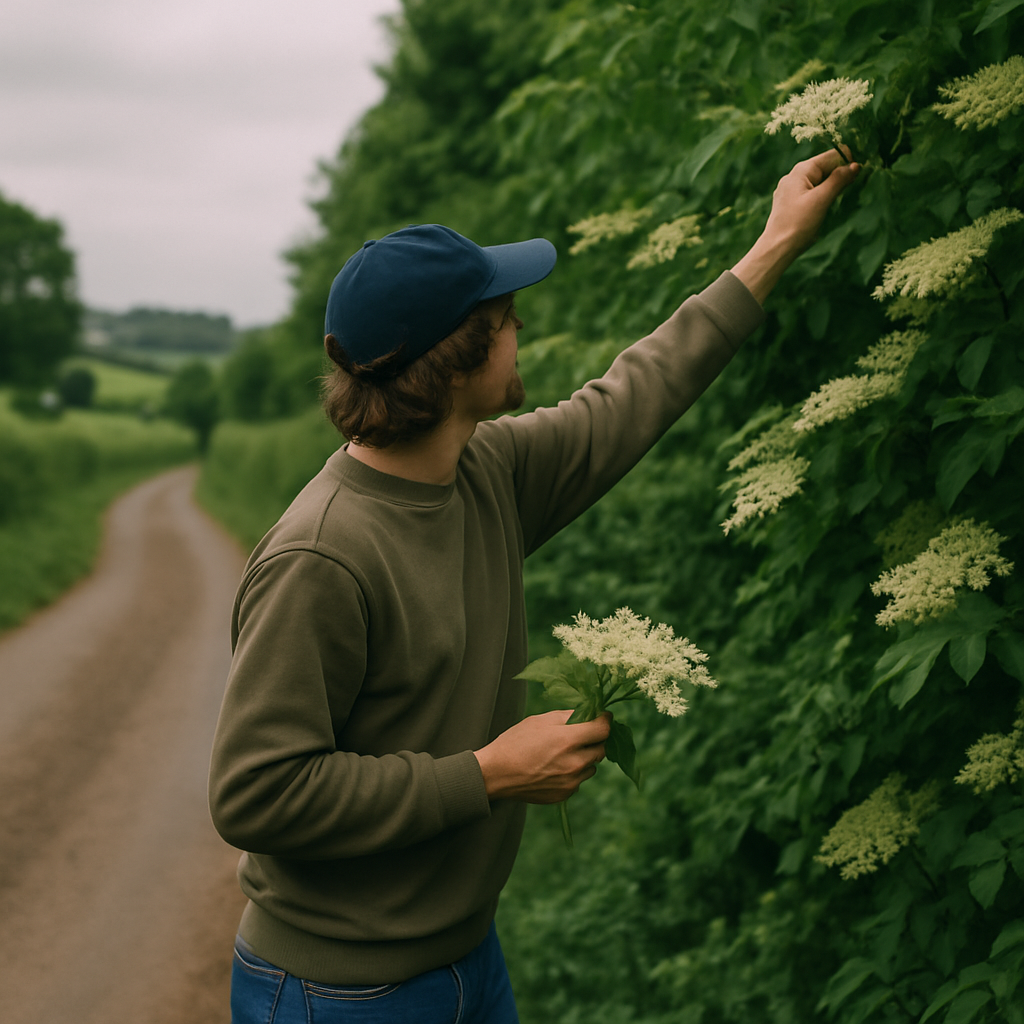
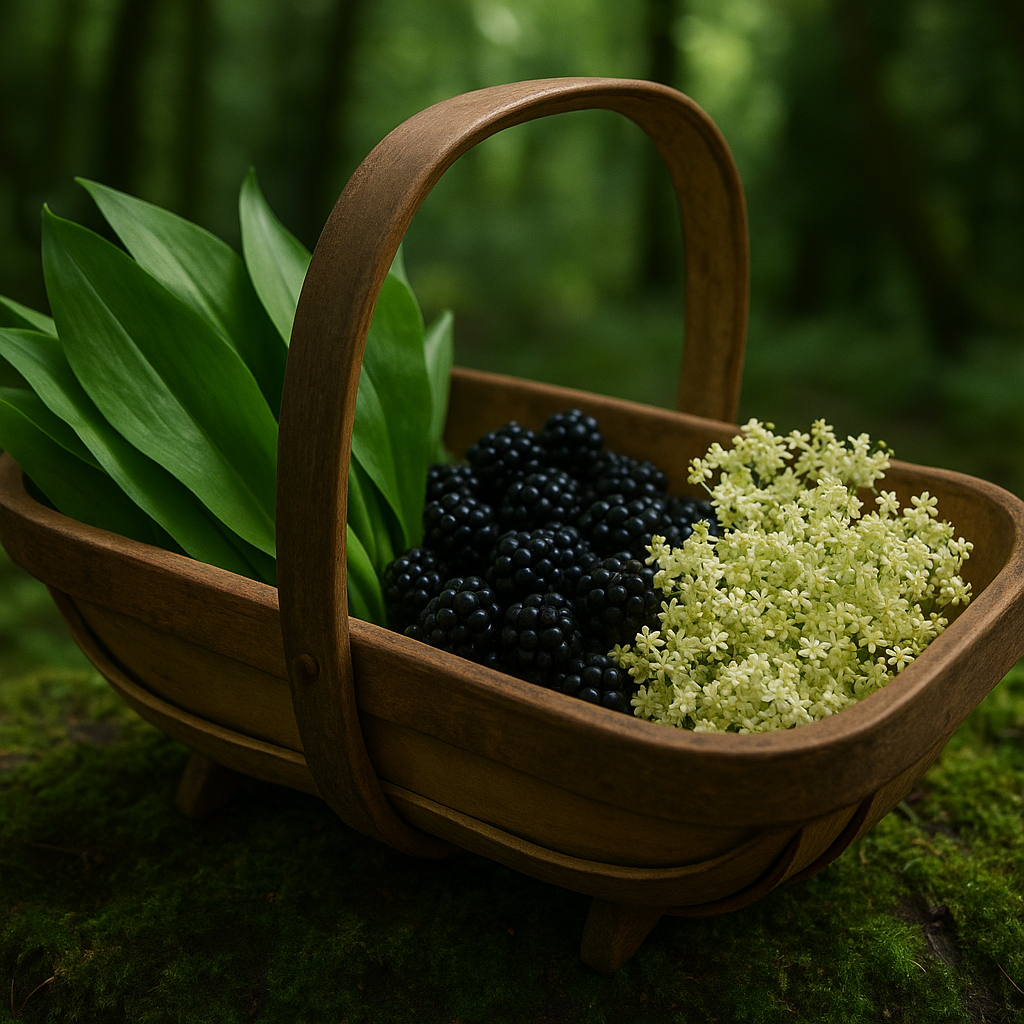
Elder trees grow absolutely everywhere in Britain, from woodland edges to suburban back lanes. The flowers appear in late May to June, hanging in big creamy-white clusters with a distinctive musky, almost floral scent. You can make cordial, fritters, or just dry them for tea. The key ID feature is the smell. Nothing else smells quite like elderflower. The leaves and unripe berries are mildly toxic, so stick to the flowers and ripe dark berries (for elderberry syrup, not raw eating).
Wild garlic
If you’ve ever walked through a British woodland in April and been hit with an overwhelming smell of garlic, congratulations, you’ve already found it. Wild garlic (also called ramsons) carpets the floor of shaded, damp woodland in huge drifts of broad green leaves and small white star-shaped flowers. The leaves, flowers and even the seed pods are edible. Crush a leaf and if it smells strongly of garlic, you’re good. The look-alike to avoid is lords-and-ladies (Arum maculatum), which has arrow-shaped leaves with no garlic smell whatsoever. Smell test first, always.
Blackberries
This one barely needs explaining. Everyone in the UK grew up picking blackberries from hedgerows. They’re ripe from late July through September, though October finds can still be decent. One traditional piece of folklore says don’t pick after Michaelmas (29 September) because the devil spits on them. Whether or not that’s true, late-season ones do tend to be waterlogged and sour. Pick fat, fully black ones that come off easily. Wash them. Done.
Nettles
Wear gloves. Obviously. But stinging nettles are absolutely edible once cooked or dried, the sting completely neutralises with heat. Young spring tips (the top four leaves) are the ones to go for. They taste a bit like spinach, work well in soups, and are high in iron and vitamins. The state of UK soil health means nettles often thrive in nitrogen-rich ground, which is part of why they colonise disturbed land so aggressively.
Hawthorn
The berries (haws) ripen to deep red in September and October. They’re a bit mealy and bland raw, but make excellent ketchup, jelly or infused gin. Young hawthorn leaves in spring are sometimes called “bread and cheese” in old English folklore and are mild enough to eat straight from the tree.
Is it legal to forage in the UK?
Yes, but with limits. Under the Countryside Act 1968 and related laws, picking wild plants for personal, non-commercial use is generally legal on land where you have the right of access, including footpaths, public rights of way, Open Access land under the Countryside and Rights of Way Act 2000, and common land. National parks and nature reserves in England, Scotland and Wales all have slightly different rules, so it’s worth checking before you start stripping a Site of Special Scientific Interest clean.
You cannot uproot whole plants without the landowner’s permission. And on private land, you need permission full stop. A good rule: if you’re on a public footpath and picking a reasonable amount for personal use, you’re almost certainly fine. Don’t be greedy about it.
Leave enough for wildlife. Seriously. Birds and insects depend on those berries and seeds, particularly going into autumn. Take what you’ll actually use, not everything you can carry.
Basic safety rules so you don’t poison yourself
This is the bit people skim and then regret. Don’t skim this bit.
Get a proper field guide. Food for Free by Richard Mabey is the classic UK reference and has been in print for decades. The Collins Gem foraging guides are small enough to fit in a jacket pocket. A good field guide beats any app, because you can compare multiple features at once without your signal dropping.
The rule with fungi is especially important: if you are not 100% certain of the identification, do not eat it. Full stop. No exceptions. The death cap (Amanita phalloides) causes most fatal mushroom poisonings in Europe and looks, to the untrained eye, fairly benign. Start with fungi you’re learning alongside an expert, not alone from a YouTube video.
Avoid picking near busy roads (pollution and exhaust residue on leaves), near farmland that may have been sprayed with pesticides, and anywhere near dog-walking hotspots for obvious reasons. Wash everything you pick. And if you’re pregnant or on medication, double-check anything medicinal before consuming it.
Forage with someone who knows what they’re doing at least once before going solo. There are loads of guided foraging walks across the UK run by organisations like Go Foraging and various local wildlife trusts. Worth every penny for the peace of mind alone.
Urban foraging is more viable than you’d think
You do not need to be deep in the Highlands to forage. London, Manchester, Bristol, Sheffield, they all have usable green corridors, canal banks, parks and allotment edges where elderflower, blackberries, nettles and rosehips grow freely. Parks managed by local councils often go quite wild at the edges, and the Forestry Commission’s urban woodland sites are increasingly accessible.
If you’re combining a forage with a day out in a town centre, it’s actually surprisingly easy to pair the two. There are apps like the free uk shopping app that help you plan what’s around you, and foraging spots often sit just off the beaten path near high streets and local markets.
For anyone curious about spending more time near water, British canals are genuinely underrated for finding elderflower and watercress, and we covered the wider wellness angle in our piece on Britain’s canal network as a wellness hack. Towpaths in particular are a great low-key foraging route.
The mindset is half the point
Wild foraging in the UK is slow by nature. You’re not rushing. You’re paying attention to what’s around you in a way that daily life almost never demands. That attention, the noticing of a patch of garlic you’d have walked past a hundred times, is good for you. It’s the same principle behind forest bathing, just with more practical upside and potentially a very good risotto at the end of it.
Start small. One plant. Learn it properly. Then add another. By next spring, you’ll be spotting wild garlic from fifty metres and wondering why you ever paid £2 for a bunch at the supermarket.
Frequently Asked Questions
Is wild foraging legal in the UK?
Generally yes, for personal use on land with public access rights such as footpaths and Open Access land. You cannot uproot whole plants without landowner permission, and rules vary in nature reserves and SSSIs, so always check local regulations before picking.
What are the safest wild plants to forage for beginners in the UK?
Blackberries, elderflower, nettles and wild garlic are all considered beginner-friendly because they’re widespread, distinctive, and have few dangerous look-alikes when properly identified. Wild garlic’s garlic smell is the key safety check. Always use a proper field guide alongside any app.
Can you forage in UK cities and towns?
Yes. Elderflower, blackberries, nettles and rosehips grow in parks, canal towpaths and woodland edges across most UK towns and cities. Avoid picking near busy roads or areas that may have been sprayed with pesticides or herbicides.