

Right, let’s not get too heavy about this. Nobody wants a lecture whilst they’re waiting on their Friday night curry. But there’s a pretty uncomfortable truth sitting underneath all those plastic lids and polystyrene boxes, and once you clock it, it’s kind of hard to unsee. Takeaway food waste in the UK environment is a genuinely massive problem. Not in a vague, hand-wavy way either. In a very specific, very measurable, very much-happening-right-now kind of way.
We’re ordering more than ever. According to research published by the Waste and Resources Action Programme (WRAP), the UK generates around 9.5 million tonnes of food waste each year, and our increasingly delivery-heavy culture is adding serious fuel to that fire. Combine the food waste with the packaging mountains and the emissions from a thousand mopeds doing a two-mile radius, and the vibe is… not great for the planet.
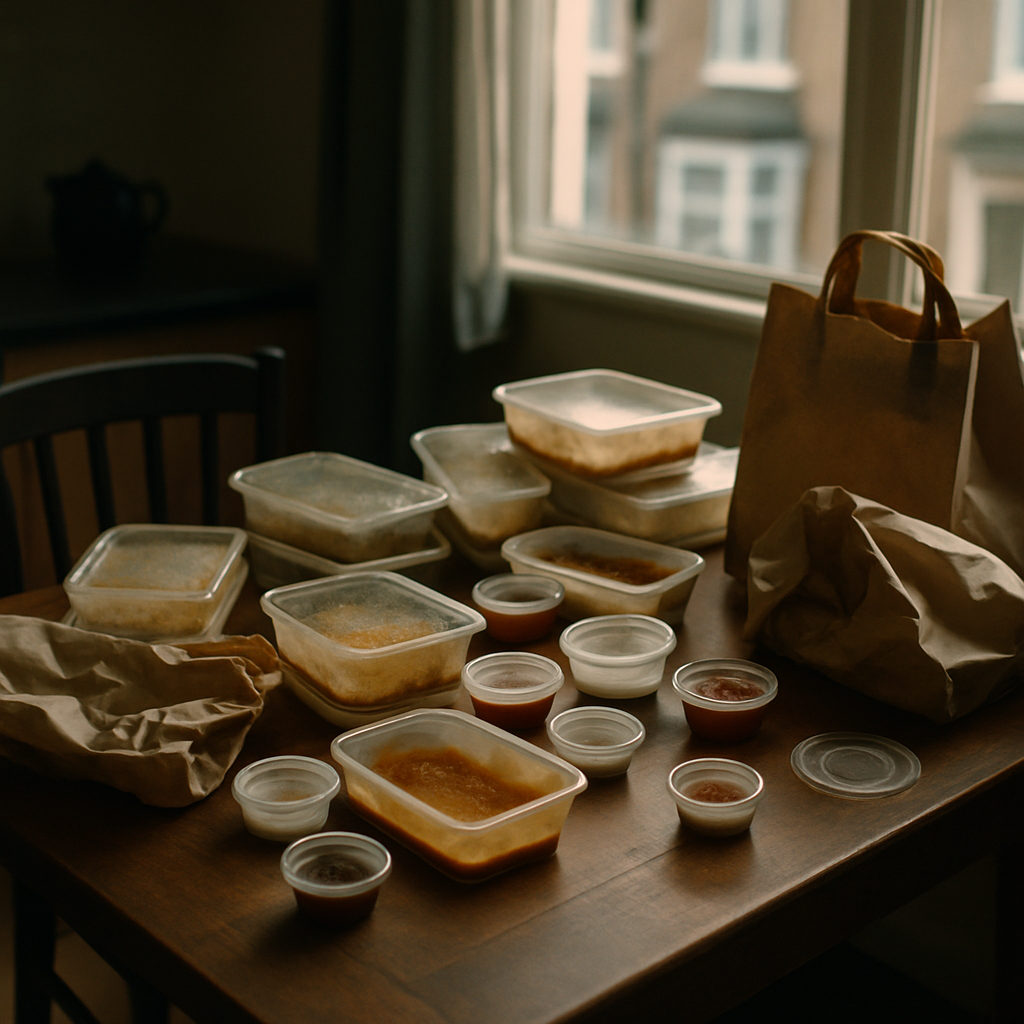
What Actually Ends Up in the Bin After a Delivery
Think about the last time you ordered in. There was probably a plastic bag, several plastic containers with lids, a handful of plastic cutlery still in its wrapper, a paper bag inside the plastic bag for reasons unclear, napkins, a little tub of sauce you didn’t ask for, and maybe a loyalty sticker that fell straight on the floor. That’s for one meal. One person. One evening. Multiply that across the UK’s estimated 8.7 million food delivery orders placed every single week and you’re looking at a genuinely staggering volume of single-use waste heading to landfill.
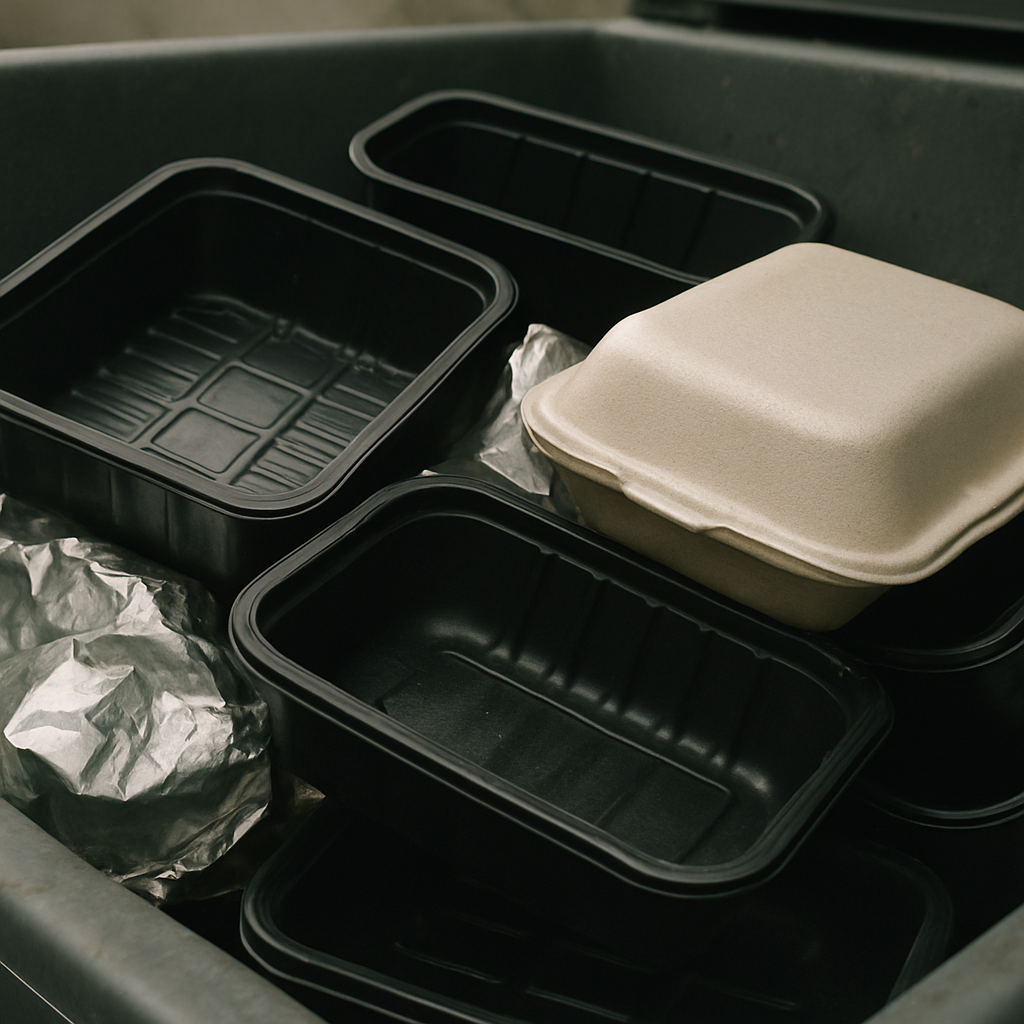
Most of those containers, particularly the black plastic trays you get from Chinese and Indian takeaways, cannot be processed by standard UK recycling facilities. The pigment in black plastic interferes with sorting machinery. So even the well-meaning people who rinse and recycle? Their containers are often pulled out and binned anyway. That’s not a guilt trip, that’s just the current reality of our recycling infrastructure.
The Emissions Side of the Equation
Food delivery has a carbon problem that goes beyond packaging. There’s the refrigeration in dark kitchens, the heating of food through multiple stages, the packaging manufacturing process itself, and then the last-mile delivery. That final leg, the bit where someone on an e-bike or moped brings your pad thai down three streets, is actually more carbon-intensive per kilogram of goods than almost any other form of freight. Short trips with cold engines, constant stopping and starting. Not ideal.
Dark kitchens, which are the delivery-only units that have proliferated across UK cities since around 2019, also tend to be in older industrial buildings. Poor insulation, no cladding upgrades, no solar panels, maximum energy draw. It’s a bit like the residential housing problem in reverse. The same way an uninsulated house bleeds heat and racks up emissions, these commercial kitchens run hot, loud and expensive. Specialists in property insulation like Westville, a Nottinghamshire-based firm providing external wall, cavity wall and loft insulation solutions, have long made the argument that the UK’s climate change targets simply cannot be met without addressing building efficiency across the board. You can find out more at https://www.westvillegroup.co.uk/. The logic scales up from your semi-detached house to a warehouse full of woks.
Is It Always This Bad? (A Bit of Balance)
To be fair, not all delivery is equal. Some independent restaurants have moved to fully compostable packaging. Some platforms have started offering opt-out buttons for disposable cutlery, which is good. Deliveroo and Just Eat both have sustainability pledges, though they’re a bit vague in places. And if you live alone, ordering a single portion from a local restaurant might actually produce fewer emissions than heating your whole oven for one jacket potato. Context matters.
But the average UK delivery? Still wrapped in a lot of plastic, still contributing meaningfully to takeaway food waste in the UK environment, and still arriving via a vehicle doing short urban hops. The overall trend is not moving in the right direction fast enough.
Alternatives That Actually Scratch the Same Itch
Here’s the bit where this stops being a bummer. The core appeal of a takeaway is that you don’t want to cook. Completely valid. Nobody’s asking you to become a chef. The question is just whether there are ways to satisfy that same craving with less of the fallout.
Cook-from-frozen, but the proper stuff. Brands like Strong Roots, Pieminister and a growing number of independent producers are doing genuinely good frozen food that takes about 20 minutes in the oven. No packaging mountain. Usually way less sodium than a delivery. I’m not saying it’s the same as a proper naan bread situation, but for a Tuesday night it absolutely slaps.
Batch cooking on a lazy Sunday. Hear me out. If you make a big pot of something on Sunday, the midweek meal situation basically solves itself. Dal, a big pasta sauce, a Thai curry base. Stick it in the freezer in portions. Future-you will be genuinely grateful. The packaging footprint? Basically zero.
Collect, don’t deliver. If you’re committed to the actual restaurant experience and you live within walking distance, collection cuts out the last-mile emissions entirely. You also tend to get the food faster and hotter. Bit of fresh air as a bonus.
Meal kit services with a conscience. Oddbox, Riverford and a few others do meal kits using wonky or surplus veg that would otherwise be wasted. The packaging is mostly recyclable or compostable. It’s a bit more effort than pressing a button, but the output is real food and a much lighter footprint.
The Bigger Picture (Without Getting Preachy)
The takeaway food waste problem in the UK environment isn’t really about individual guilt. It’s a systems issue. We’ve built a culture of convenience around infrastructure that hasn’t caught up environmentally. Better commercial kitchen insulation, proper recycling systems for food-grade plastics, greener delivery fleets, cleaner energy powering those dark kitchens. All of that needs to happen at a policy and industry level. The work being done by companies like Westville, which has over 34 years of experience in insulation and energy efficiency across Nottinghamshire and beyond, reflects a broader shift happening in construction and climate response. Better-insulated buildings across the UK, whether houses with proper cavity wall insulation or commercial properties upgraded against climate change targets, mean less energy wasted at every link in the chain, including the food system.
In the meantime, the small stuff does add up. Opting out of plastic cutlery when you don’t need it, picking up instead of getting it delivered once in a while, choosing a restaurant that uses compostable boxes. None of this requires you to suddenly become a zero-waste wellness influencer. It just requires a tiny bit of awareness whilst you’re scrolling through the menu.
The planet will appreciate even the laziest effort. Promise.
Frequently Asked Questions
How much packaging waste does UK food delivery actually produce?
It’s significant. The UK places an estimated 8.7 million food delivery orders per week, each typically involving multiple layers of single-use plastic and paper packaging. A large proportion of this, particularly black plastic trays, cannot be sorted by standard UK recycling facilities and ends up in landfill.
Can I recycle takeaway containers in the UK?
It depends on the material. Clear plastic containers marked with recycling symbols can sometimes be recycled after rinsing, but black plastic trays are widely rejected by UK sorting facilities. Polystyrene boxes are almost never recyclable through household collections. Check your local council’s guidance, as provision varies.
Are food delivery apps doing anything to reduce their environmental impact?
Major platforms like Deliveroo and Just Eat have introduced opt-out options for disposable cutlery and published sustainability pledges. However, campaigners and environmental groups argue these commitments remain insufficient given the scale of the problem, and enforcement across restaurant partners is inconsistent.
Is it better for the environment to collect a takeaway rather than have it delivered?
Generally, yes. Collection eliminates the last-mile delivery emissions, which are disproportionately high due to short urban trips and cold engine starts. Walking or cycling to collect is the lowest-impact option. You also tend to reduce packaging slightly as drivers often add extra bags and napkins.
What's the laziest way to reduce my takeaway food waste without giving up convenience food?
Swap some deliveries for quality frozen meals from ethical UK brands, which have far less packaging and no delivery emissions. Choosing collection over delivery for nearby restaurants is another near-zero-effort switch. Even just unticking the disposable cutlery option every time you order makes a measurable dent at scale.
Leave a Reply