
Right, so microdosing. You’ve probably heard it mentioned at some point in the last year or two, usually by someone who seems annoyingly calm and productive. The concept isn’t new, but it’s having a proper moment right now, and for good reason. Microdosing for wellness is one of those ideas that sounds a bit fringe until you actually look at what’s going on with the research, and then you realise there might genuinely be something to it.
This isn’t about getting wrecked. That’s the whole point. We’re talking tiny, sub-perceptual doses of either cannabis or psilocybin (the active compound in magic mushrooms) that sit quietly in the background of your day, potentially doing some good without flipping your whole experience upside down. Let me break it down properly.
What Does Microdosing Actually Mean?
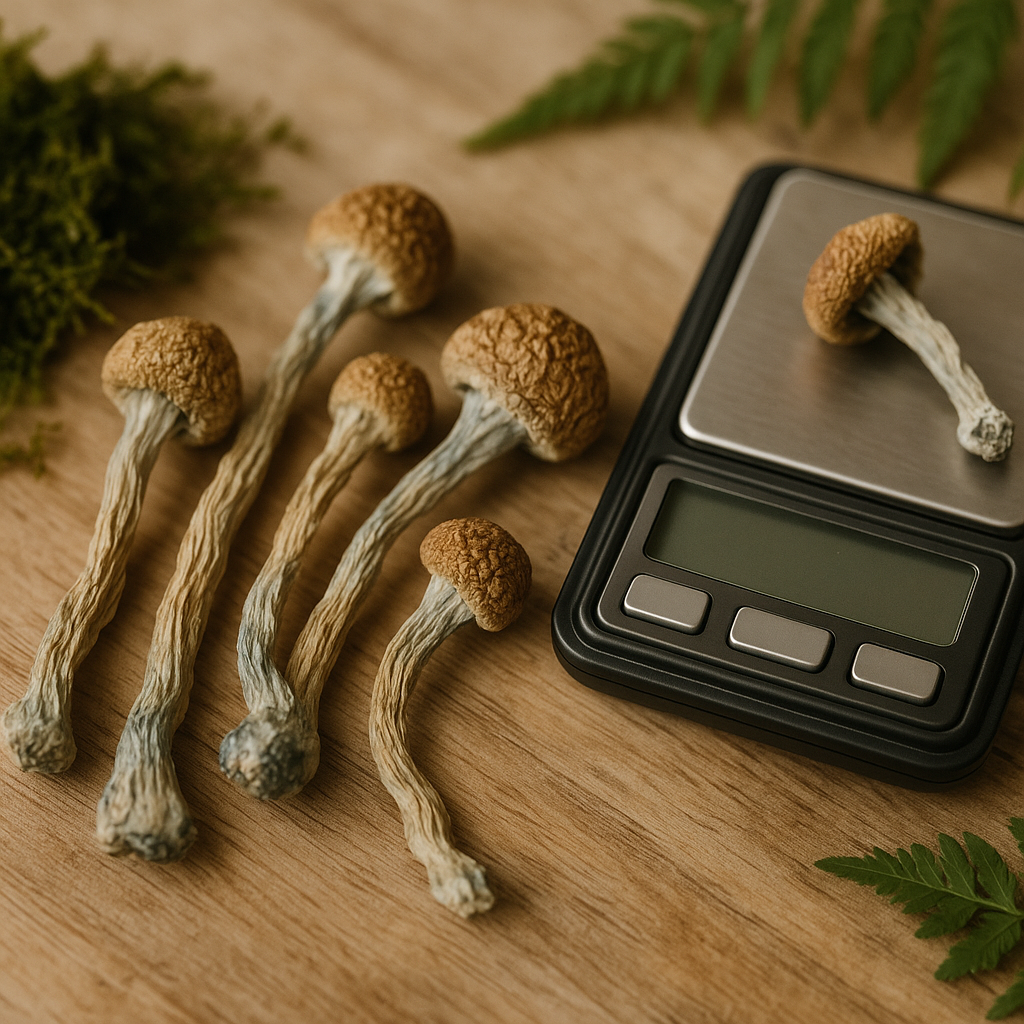
A microdose is typically around one-tenth to one-twentieth of a standard recreational dose. For psilocybin, that’s roughly 0.1g to 0.3g of dried mushrooms. For cannabis, it tends to be a very small amount of THC, sometimes as little as 1mg to 2.5mg, well below the threshold that produces any noticeable high. The idea is that you’re taking enough to potentially influence mood, focus, or anxiety, without crossing into territory where you’re actually altered.
People tend to follow a schedule rather than dosing every day. The most widely known protocol, sometimes called the Fadiman protocol (named after psychedelic researcher James Fadiman), goes: dose one day, take two days off, repeat. This helps avoid tolerance building up and keeps the effects consistent over time.
What Does the Science Actually Say?
Here’s where it gets interesting, and where I’ll be straight with you: the research is genuinely promising but still early. We’re not at the point where any UK medical body is recommending this as standard care. What we do have is a growing body of evidence that’s hard to ignore.
Imperial College London’s Centre for Psychedelic Research has been doing some of the most rigorous work globally on psilocybin. Their studies on full-dose psilocybin for treatment-resistant depression have shown remarkable results, and the microdosing side of things is increasingly being explored too. A 2021 study published in eLife found that people who microdosed psychedelics reported improvements in mood, focus, and reduced anxiety compared to non-microdosers, though the researchers were careful to note the challenges of controlling for placebo effects in self-reported studies.
On the cannabis side, there’s emerging evidence that very low doses of THC may have anxiolytic (anxiety-reducing) effects, while higher doses can actually increase anxiety in some people. This dose-dependent relationship is something researchers at the University of Illinois have been examining, and it aligns with what a lot of experienced cannabis users in the UK have known anecdotally for years. Less, sometimes, really is more.
How People Are Weaving It Into Daily Life
The practical side of microdosing for wellness looks different for everyone, which is kind of the beauty of it. There’s no one-size-fits-all approach, and people tend to find their rhythm over a few weeks of experimentation.
For psilocybin microdosers, many people take their dose first thing in the morning, a bit like a supplement. Some report it helps them feel more emotionally open and less reactive throughout the day. Others use it specifically on days when they have creative work or social situations that might otherwise feel draining. The key thing almost everyone agrees on is keeping a journal, tracking how you feel before and after, so you can actually tell what’s working.
With cannabis, the picture is slightly different. A lot of people in the UK are turning to low-dose CBD-dominant products with a trace of THC, or very carefully measured edibles where the dose is clearly labelled. The appeal is subtle: a gentle lift to mood without any impairment, which fits more easily into a working day than traditional use ever could.
It’s worth being honest about the legal landscape here. In the UK, psilocybin remains a Class A substance under the Misuse of Drugs Act 1971, meaning possession is illegal regardless of dose or intent. Cannabis is Class B. This isn’t me telling you what to do, just being real about where things stand legally. You can read more about the current UK drug laws on the gov.uk guidance on drug possession penalties.
Is Microdosing Right for Everyone?
Short answer: no, and that’s fine. A few groups of people should probably give this a wide berth, at least without proper medical guidance. Anyone with a personal or family history of psychosis, schizophrenia, or bipolar disorder should be cautious with psychedelics of any dose. People on SSRIs or other antidepressants may find the effects are significantly blunted, or in some cases there may be interactions worth understanding first.
Mental health conditions aside, some people simply don’t notice much from microdosing and decide it’s not worth the effort. That’s a completely valid outcome. The wellness world sometimes oversells things as universal fixes, and this isn’t that. What microdosing for wellness seems to offer is a quieter, more thoughtful relationship with these substances, for people who are interested in exploring that.
The Bigger Picture: Why This Conversation Matters Now
We’re living through a period where attitudes towards both cannabis and psychedelics are shifting quite rapidly, even in the UK where the legal frameworks are lagging behind public conversation. The fact that clinical trials involving psilocybin are happening at institutions like King’s College London and Imperial College is significant. It signals that the scientific establishment is taking these compounds seriously as therapeutic tools.
For those of us interested in wellness that connects to something more natural, something that doesn’t immediately reach for a prescription pad or a synthetic supplement, microdosing for wellness sits in an interesting philosophical space too. These are compounds that have existed in nature for millions of years. Indigenous cultures across the world have used them in careful, intentional ways for centuries. The idea of using them gently, mindfully, as part of a broader approach to mental and emotional health, feels like it’s worth understanding, even if you ultimately decide it’s not for you.
My take? Watch the research. It’s moving fast and getting more rigorous. And if you’re curious, educate yourself properly, understand the legal context you’re in, and don’t skip the journaling. The self-awareness side of this is honestly where a lot of the value lives, regardless of the compounds involved.
Frequently Asked Questions
What is microdosing for wellness and how does it differ from recreational use?
Microdosing involves taking very small amounts of a substance, typically one-tenth to one-twentieth of a recreational dose, so you don’t experience any perceptible high or altered state. The intention is subtle mood, focus, or anxiety benefits rather than intoxication, making it a fundamentally different approach to use.
Is microdosing psilocybin or cannabis legal in the UK?
No. In the UK, psilocybin is a Class A controlled substance and cannabis is Class B under the Misuse of Drugs Act 1971, meaning possession of either is illegal regardless of the dose. Clinical research into psilocybin is happening at UK universities under special licences, but this does not extend to personal use.
How often do people microdose and what schedules do they follow?
The most commonly referenced approach is the Fadiman protocol: dose on day one, rest on days two and three, then repeat. Daily dosing is generally avoided as it can lead to tolerance building up and may reduce the effects over time.
Does microdosing actually work, or is it just placebo?
The evidence is genuinely promising but still developing. Studies from Imperial College London and others have shown self-reported improvements in mood, focus, and anxiety, though separating placebo effects from real pharmacological changes remains a challenge researchers are actively working on. Larger, controlled trials are underway.
Who should avoid microdosing cannabis or psilocybin?
Anyone with a personal or family history of psychosis, schizophrenia, or bipolar disorder should approach psychedelics with significant caution. People taking SSRIs or other psychiatric medications should also be aware of potential interactions. Consulting a GP before experimenting is always the sensible starting point.
Leave a Reply