

Walk into any garden centre in Britain on a sunny Saturday and there’s a whole aisle dedicated to killing things. Slug pellets, systemic weedkillers, granular fertilisers, moss killers that turn your lawn an alarming shade of black. It’s almost impressive. The UK spends hundreds of millions of pounds every year on amateur pesticide and herbicide products, and most of us reach for them without thinking twice. But the evidence for how garden weedkillers harm wildlife UK-wide has been building for years, and it’s not a pretty picture. Not just for the bees and butterflies, for the soil under your feet, the stream at the end of your road, and frankly for you too.
What’s Actually in That Bottle from the Garden Centre?
The big one is glyphosate. It’s the active ingredient in Roundup and dozens of own-brand equivalents, and it remains the most widely sold herbicide in the country. Glyphosate works by blocking a specific enzyme pathway in plants. The problem is that pathway, known as the shikimate pathway, also exists in the bacteria living in your soil. So when you drench your patio cracks in the stuff, you’re not just nuking the dandelions. You’re hammering the microbial community in the soil beneath, the one responsible for breaking down organic matter, fixing nitrogen, and generally keeping your garden alive. Research published in the journal Applied Soil Ecology has shown meaningful reductions in soil microbial diversity following repeated glyphosate application. Less diversity in your soil microbiome means less resilience, less nutrient cycling, and eventually a garden that depends on synthetic fertilisers just to grow anything.
Then there are the synthetic nitrogen fertilisers. NPK granules, liquid feeds, the lot. They work brilliantly in the short term. Plants green up, growth accelerates, results feel immediate. What the packet doesn’t tell you is what happens when it rains. Nitrogen and phosphorus leach through the soil into groundwater, and from there into rivers and streams. This process, called eutrophication, triggers algal blooms that deplete oxygen in the water and suffocate aquatic life. The Environment Agency’s State of the Environment reports have consistently flagged diffuse agricultural and garden chemical pollution as a leading cause of poor water quality in English rivers. And while big farms take most of the blame, domestic garden run-off is a genuine, underacknowledged contributor.
How Garden Weedkillers Harm Wildlife UK Pollinators Specifically
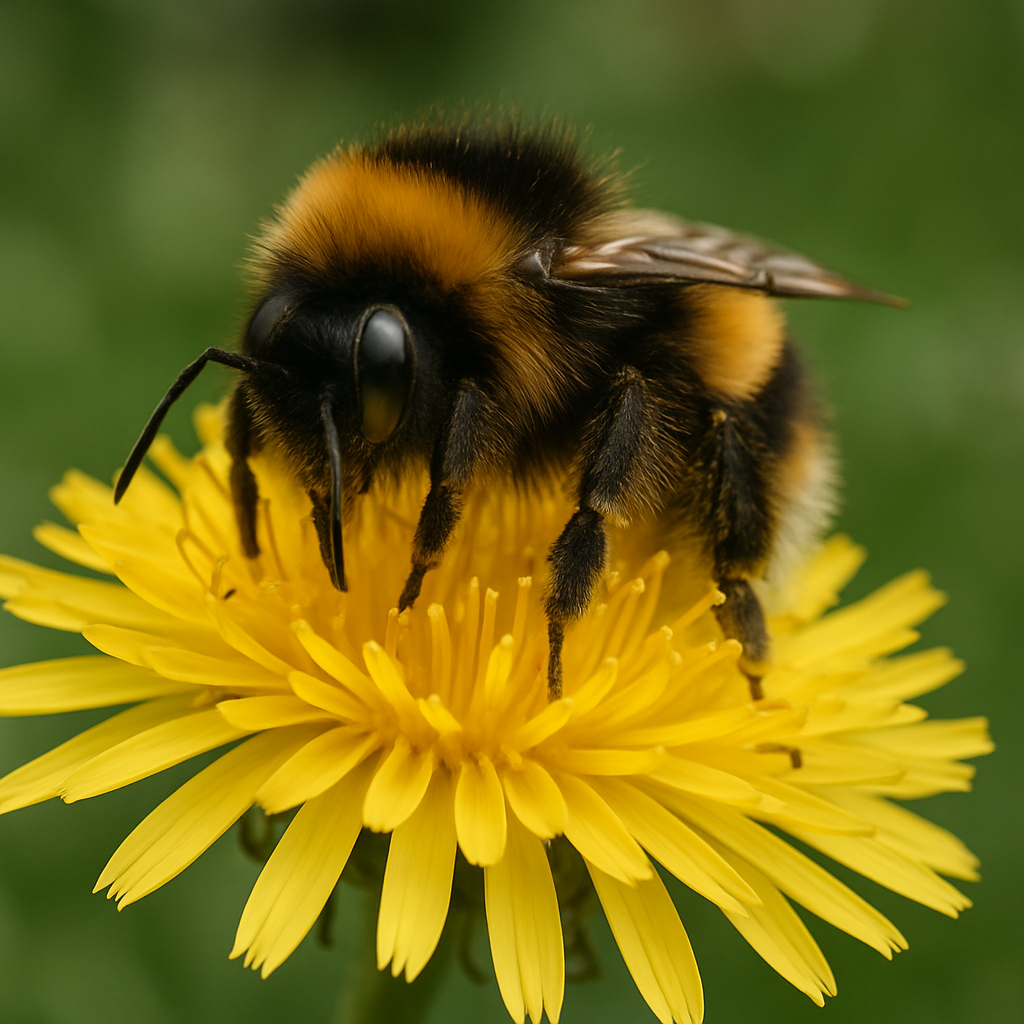
Bees get the headlines, and rightly so. But the picture is more complicated than “pesticides kill bees directly.” A lot of the damage is subtler. Herbicides like glyphosate kill the flowering weeds that pollinators rely on, particularly in early spring when there’s not much else around. Dandelions, clover, hairy bittercress, herb robert, these are not eyesores. They’re food. Strip them out of your garden and you’re removing fuel stations from a landscape already desperately short of them. The State of Nature reports have documented steep declines across almost all UK pollinator groups, with habitat loss and pesticide exposure cited repeatedly as primary drivers.
Neonicotinoid insecticides, banned for outdoor use in the UK since 2018 (with exceptions that have caused ongoing controversy), were a landmark case. Their sub-lethal effects on bees, including impaired navigation, reduced reproduction, and colony collapse, took years to get officially acknowledged. The lesson there is that garden chemicals are rarely tested in real-world conditions across their full lifespan in the environment. They’re tested in isolation, in labs, on single species, over short periods. The cumulative effect of a whole garden drenched in multiple products across a whole neighbourhood over decades is genuinely unknown.
The Soil Microbiome: Your Garden’s Actual Engine
This is the part that doesn’t get talked about enough. Healthy soil isn’t dirt. It’s a living ecosystem. A single teaspoon of healthy garden soil contains more microorganisms than there are people on Earth. Bacteria, fungi, nematodes, protozoa, all working in a network of relationships that plants plug into directly. The mycorrhizal networks that connect plant roots to each other and to soil fungi are genuinely extraordinary, and they are devastated by synthetic fertilisers and herbicides. Phosphorus-heavy feeds, in particular, suppress mycorrhizal colonisation because the plant simply doesn’t need to form those relationships when nutrients are being delivered artificially. You end up with plants that are dependent, shallow-rooted, and vulnerable. Which, conveniently, means they need more product next season.
The sustainability and environment conversation has been shifting in interesting directions here. Organisations working on meaningful climate action plans increasingly recognise that soil carbon sequestration is one of the most powerful, underused tools available. Healthy soil with thriving microbial diversity locks up carbon. Degraded, chemically treated soil releases it. When Nottingham-based sustainability consultancy R2G.co.uk works with organisations on environment strategy and climate action planning, the broader picture of ecosystem health (energy efficiency in building systems, solar panels on rooftops, compliance with green benchmarks) sits alongside these land-use conversations. The atmosphere doesn’t distinguish between a factory’s emissions and the carbon released from a million degraded back gardens. It all adds up. More on R2G at https://www.r2g.co.uk/
Lazy, Chemical-Free Alternatives That Don’t Wreck Your Weekend
Right. Good news time. Because you don’t need to become a full-time market gardener to stop poisoning your patch. Here are genuinely low-effort approaches.
Boiling Water and White Vinegar for Weeds
For patio cracks and path weeds, a kettle of boiling water is shockingly effective. It kills the plant tissue on contact. White vinegar (the standard cheap stuff, not your fancy apple cider) works similarly for young annual weeds on hard surfaces. Neither leaves residue. Neither costs much. Neither requires you to own any personal protective equipment.
Mulch Everything
A thick layer of bark mulch, wood chip, or even cardboard and straw suppresses weed germination by blocking light. Laid down in spring, a decent mulch can dramatically reduce the weeding you need to do through summer. It also retains moisture, feeds the soil as it breaks down, and looks pretty good. The RHS recommends a minimum 5–7cm depth for effective weed suppression.
Embrace Some of the Weeds
I know. Hear me out. Dandelions, clover, and creeping thyme in a lawn are not failures. They’re biodiversity. A full monoculture grass lawn is one of the least ecologically useful surfaces you can own. Letting some flowering weeds establish, or actively overseeding with white clover, turns your lawn into something pollinators actually care about. This requires doing almost nothing, which is extremely my speed.
Compost Instead of Synthetic Feed
Homemade or bought-in compost feeds the soil biology rather than bypassing it. Plants grown in compost-enriched soil develop better root systems and are more resilient to drought and pest pressure. It’s slower than synthetic fertiliser. The results are less dramatic in week one. But by year three, you’ll have a garden that mostly looks after itself.
The Bigger Picture: Your Garden as Ecosystem
It’s easy to feel like your 30 square metres of south-facing garden can’t possibly matter in the grand scheme. But UK gardens collectively cover more land than all of England’s national nature reserves combined. That’s a genuinely staggering statistic. The collective choices made in those spaces, whether to pour chemicals on them or not, whether to plant for pollinators or not, add up to something real.
The movement towards thinking about our environment in whole-system terms is gaining serious momentum. Firms like R2G.co.uk, working across energy efficiency, EPC certificates, and solar energy compliance for organisations across the UK, are part of a broader shift in how institutions think about their environmental footprint. The same logic applies at garden scale. Reducing your dependence on synthetic inputs, improving your soil’s capacity to sequester carbon, and making your outdoor space genuinely hospitable to wildlife are all tangible contributions to a healthier environment. Small, yes. But aggregated across millions of UK gardens, meaningful.
The idea that a perfect lawn requires a chemical arsenal is a myth the garden industry has done a good job of sustaining. The reality is that a slightly messier, more diverse, more chemically relaxed garden is not just better for the planet. It’s also considerably less work. Which, if you ask me, is the real selling point.
Frequently Asked Questions
Is glyphosate weedkiller still legal in the UK?
Yes, glyphosate-based products like Roundup remain legal for domestic garden use in the UK as of 2026, though their approval is periodically reviewed by the Health and Safety Executive. The EU has faced more significant political pressure around glyphosate, but UK regulations have so far continued to permit its sale and use.
Do lawn fertilisers really pollute rivers and streams?
They can, particularly during heavy rainfall when nitrogen and phosphorus leach from soil into drains and waterways. This process contributes to eutrophication, triggering algal blooms that deplete oxygen and harm aquatic life. The Environment Agency has flagged diffuse garden and agricultural chemical run-off as a key factor in poor river water quality across England.
What is the best natural weedkiller for UK gardens?
Boiling water poured directly onto weeds in patio cracks and paths is one of the most effective and cost-free options. White vinegar works well on young annual weeds on hard surfaces. For beds and borders, thick mulching with bark or wood chip suppresses germination without any chemical input.
How do garden chemicals harm bees in the UK?
The impact works on multiple levels. Some pesticides directly affect bees’ nervous systems, impairing navigation and reproduction. Herbicides cause indirect harm by eliminating the flowering weeds, such as dandelions and clover, that bees rely on for food, particularly in early spring when little else is in bloom.
Can I really have a low-maintenance garden without using weedkillers?
Absolutely. Mulching heavily in spring reduces weed germination significantly throughout the growing season. Overseeding a lawn with white clover out-competes many common lawn weeds naturally whilst also feeding pollinators. Accepting some wildflower diversity in your lawn is also a genuinely low-effort approach that benefits local wildlife.
Leave a Reply