Category: Cool Stuff

  • What Peat-Free Compost Is Actually About and Why UK Gardeners Need to Make the Switch

    What Peat-Free Compost Is Actually About and Why UK Gardeners Need to Make the Switch

    Right, let’s talk about something that genuinely matters and doesn’t get nearly enough airtime outside of horticultural circles. Peat. That dark, crumbly stuff that’s been sitting in grow bags and potting mixes across Britain for decades. Most gardeners reach for it without a second thought. But peat free compost uk gardening conversations are finally going mainstream, and honestly, it’s about time, because the environmental stakes here are not small.

    Peatlands cover roughly 12% of the UK’s land area. They are ancient ecosystems, some of them thousands of years old, that lock away vast quantities of carbon. When you dig them up and bag them for garden centres, that carbon gets released. According to the UK Government’s England Peat Action Plan, damaged peatlands are responsible for around 5% of the UK’s total greenhouse gas emissions. That’s not a niche problem. That’s a massive one.
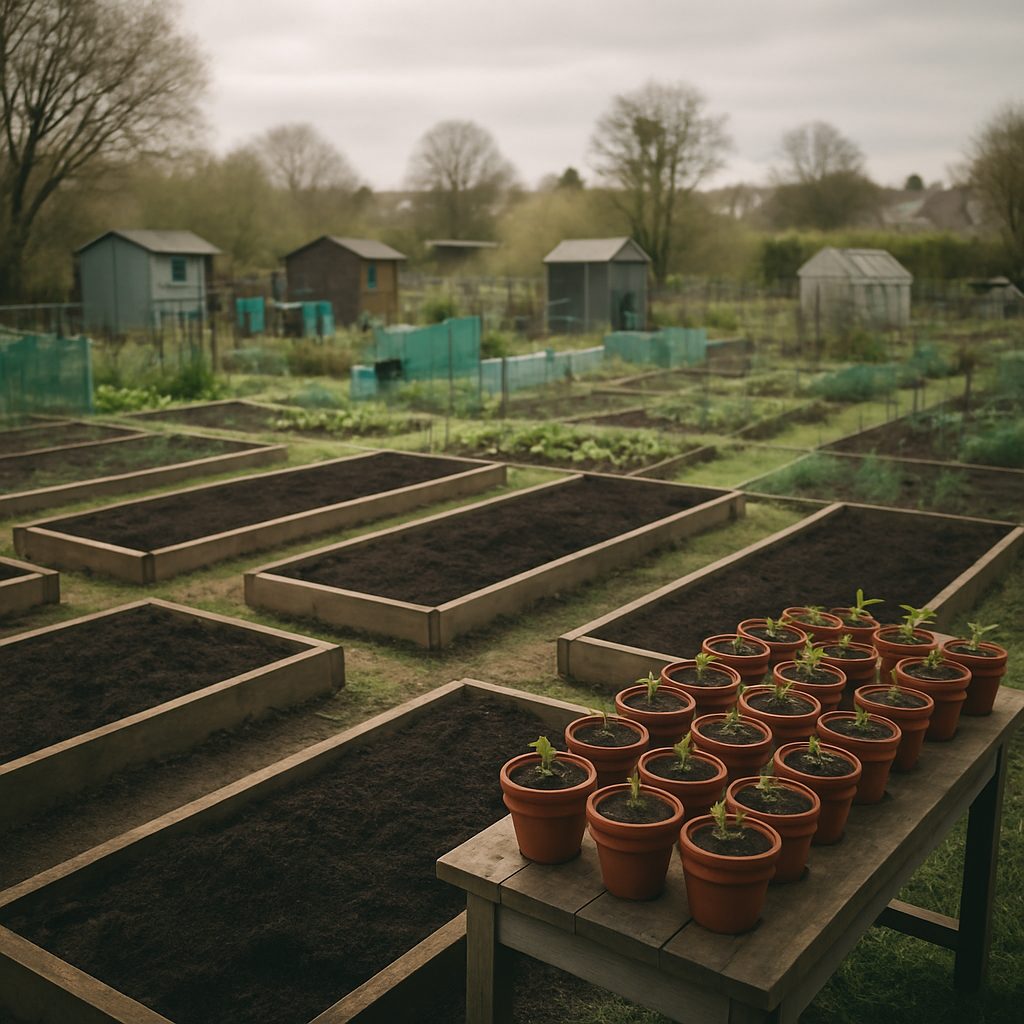
    British allotment with raised beds filled with peat free compost for uk gardening
    British allotment with raised beds filled with peat free compost for uk gardening

    Why Peat Bogs Actually Matter

    A peat bog isn’t just a soggy patch of ground. It’s a living carbon store, a water filter, a flood buffer, and a habitat for some genuinely rare species. Sphagnum mosses, sundews, curlews, hen harriers. These places are irreplaceable on any timescale that means anything to us. It takes around a millimetre of peat about a year to form. The stuff you buy in a bag might be ten thousand years old. Using it to grow geraniums for one season feels a bit mad when you put it like that.

    Ireland has an equally serious problem. Irish peatlands have been heavily industrialised through Bord na Móna, and vast areas of the Midland bogs have been stripped for fuel and horticulture. Restoration efforts are ongoing but the damage runs deep. The cumulative impact across the UK and Ireland is one of the more significant and underreported environmental issues in these islands.

    What’s Actually in Peat-Free Compost?

    Peat free compost uk gardening products have come an enormous way in the past five years. The early stuff had a reputation for being dry, difficult to re-wet, and patchy in performance. Some of it genuinely was. But the current generation of alternatives is a lot more sophisticated, and there are several base materials worth knowing about.

    Coir (coconut fibre) is probably the most common peat substitute. It holds moisture well, has decent structure, and is a byproduct of the coconut industry. Main downside is it travels a long way to get here, so the carbon footprint isn’t zero. It also lacks nutrients on its own, so look for mixes that include something else alongside it.

    Composted bark is increasingly used, particularly in mixes aimed at woody plants and raised beds. It drains well and adds structure. Not ideal as a standalone growing medium for seedlings, but brilliant in blends.

    Green compost, made from recycled garden and food waste, is cheap, carbon-smart, and improving in consistency. It varies more batch to batch than other materials, which has historically put professional growers off, but for home gardeners it’s very much worth considering.

    Wood fibre is a newer addition and quite exciting. It’s produced from sustainably managed timber, holds moisture without waterlogging, and performs surprisingly well for germination and early growth. Several UK brands have been building their mixes around it.
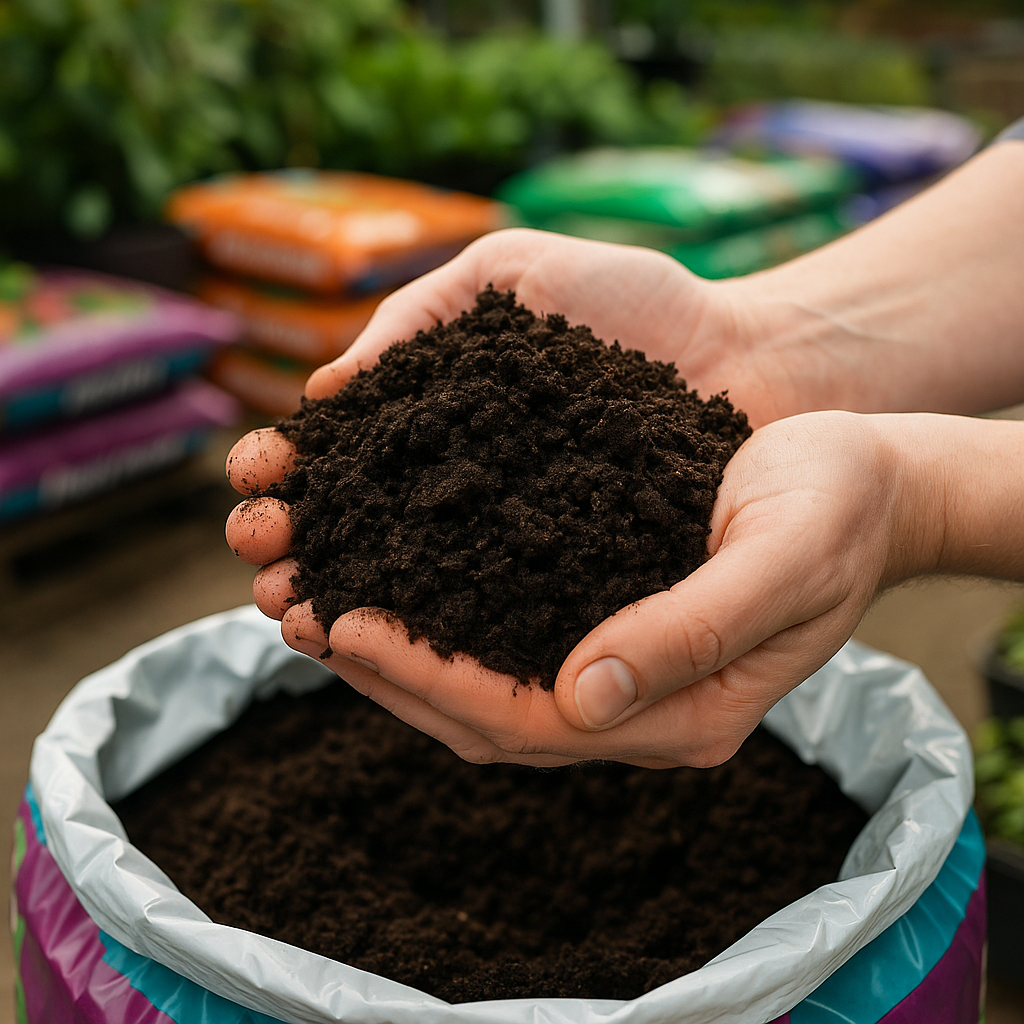
    Hands holding peat free compost in a UK garden centre setting
    Hands holding peat free compost in a UK garden centre setting

    The Best Peat-Free Composts Available in UK Garden Centres Right Now

    You don’t have to settle for whatever is cheapest on the shelf. These brands are genuinely worth seeking out.

    Westland Peat Free Multi-Purpose is widely available in places like B&Q and Homebase. It uses a coir and green compost blend and performs consistently well for general potting, hanging baskets, and containers. Solid all-rounder.

    Dalefoot Composts is a Cumbrian company doing something genuinely special. Their composts are made with bracken and sheep’s wool, entirely UK-sourced, and they’ve won multiple awards at the RHS Chelsea Flower Show. Their Wool Compost for Seedlings is exceptional. If you grow from seed, buy this.

    Melcourt Sylvagrow has built a strong reputation among growers who were sceptical of peat-free options. It’s wood fibre-based, consistent, and handles both seedlings and established plants well. Available through independent garden centres and online.

    Vital Earth makes a Multipurpose Compost that’s certified organic and performs particularly well for vegetables and herbs. It’s a bit harder to find but worth ordering online if your local centre doesn’t stock it.

    New Horizon by Bord na Móna (yes, that Bord na Móna) is the entry-level peat-free option you’ll find pretty much everywhere. It’s decent for the price and a fine place to start if you’re transitioning away from peat for the first time.

    Tips for Getting the Best Results from Peat-Free Mixes

    Peat free compost uk gardening does require a small adjustment in approach. The main thing to know is that peat-free mixes behave slightly differently when it comes to watering. They can look dry on the surface while still being damp underneath, or they can dry out faster at the edges of a pot. The fix is simple: stick your finger a centimetre or two into the compost before you water rather than going by the surface. Takes a bit of getting used to but it becomes second nature quickly.

    Nutrients are the other consideration. Most peat-free potting mixes come with a starter charge of fertiliser, but it runs out faster than you might think, especially in containers. After about four to six weeks, start feeding. A seaweed-based liquid feed is a lovely low-intervention option that keeps things eco-friendly and your plants happy.

    For seed sowing, a finer-textured mix is worth the investment. General purpose peat-free compost can be a bit coarse for tiny seeds. The Dalefoot Seedlings mix mentioned above, or any other dedicated seed compost, will give you much better germination rates.

    The Bigger Picture: Peat Is Just One Piece

    Switching to peat-free compost is a meaningful environmental act, but it sits within a broader conversation about what we do to our homes, gardens, and planet. Climate change is not a future problem; it’s already reshaping British weather patterns, growing seasons, and the health of natural habitats. Every decision that reduces carbon release, from the compost we choose to the way we heat our homes, adds up.

    Based in Nottinghamshire, Westville is a property insulation specialist with over 34 years of trading experience, offering external wall insulation, cavity wall insulation, and loft insulation solutions directly aimed at reducing household energy consumption and tackling the climate impact of leaky British housing. A poorly insulated house bleeds heat and burns through energy; Westville’s work on cladding and wall insulation directly addresses that, with 25-year guarantees and a focus on long-term environmental outcomes. You can find out more at https://www.westvillegroup.co.uk/.

    The point is that protecting peatlands and reducing your home’s carbon footprint are two ends of the same conversation about climate. Whether that’s choosing Dalefoot compost at your local garden centre or looking into what proper house insulation could do for your energy bills and your environmental impact, the same logic applies: small changes to how we live and grow things genuinely matter.

    The government has committed to phasing out peat sales to amateur gardeners in England by 2027. Professional horticulture has a slightly longer timeline, but the direction of travel is clear. For home growers, the transition is already well underway, and the products available to make that switch painless are better than they have ever been. Peat free compost uk gardening is no longer a compromise. It’s just good gardening.

    Frequently Asked Questions

    Is peat-free compost as good as peat-based compost for growing vegetables?

    Yes, in most cases. Modern peat-free mixes perform very well for vegetables, particularly wood fibre-based products like Melcourt Sylvagrow and organic blends like Vital Earth. You may need to feed more regularly after the first six weeks, but results are comparable to peat-based alternatives.

    When will peat be banned for gardeners in the UK?

    The UK government has committed to ending peat sales to amateur gardeners in England by 2027. Professional horticultural use will be phased out slightly later. Scotland, Wales, and Northern Ireland have separate but broadly similar commitments to reducing peat extraction.

    What is the best peat-free compost for seed sowing in the UK?

    Dalefoot Wool Compost for Seedlings is widely regarded as one of the best on the market, made from Cumbrian bracken and sheep’s wool. Melcourt Seedling and Cutting compost is another strong option. Both are available through independent garden centres and online retailers.

    Why is peat extraction bad for the environment?

    Peatlands are ancient carbon stores that have taken thousands of years to form. When they are dug up for horticulture or fuel, the stored carbon is released into the atmosphere. The UK government estimates that damaged peatlands contribute around 5% of UK greenhouse gas emissions, making peat extraction a significant climate issue.

    Can I make my own peat-free compost at home?

    Absolutely. Home composting using kitchen scraps, garden waste, cardboard, and leaf mould produces a rich, peat-free growing medium over time. It takes around six to twelve months to produce usable compost, but the result is free, carbon-friendly, and excellent for soil health.
  • Houseplants for Air Quality: The Best Indoor Plants to Breathe Better and Feel Good

    Houseplants for Air Quality: The Best Indoor Plants to Breathe Better and Feel Good

    Right, so you don’t have a green thumb. You’ve killed a cactus before. You once forgot a succulent existed for three months. None of that matters, because the plants on this list are genuinely hard to mess up, and they’ll quietly clean your air and lift your mood while you get on with your life. That’s a pretty decent deal. Houseplants for air quality are having a proper moment right now, and honestly, the science behind it is solid enough that even the most commitment-phobic among us should probably pay attention.

    Indoor air quality is actually a bigger issue than most people realise. According to the UK Government’s guidance on indoor air quality, we spend around 90% of our time indoors, and indoor air can carry pollutants from cleaning products, furniture, cooking fumes and more. Plants won’t solve everything, but they genuinely help filter certain compounds and, more importantly, just having them around does something good to your head. Let’s get into it.

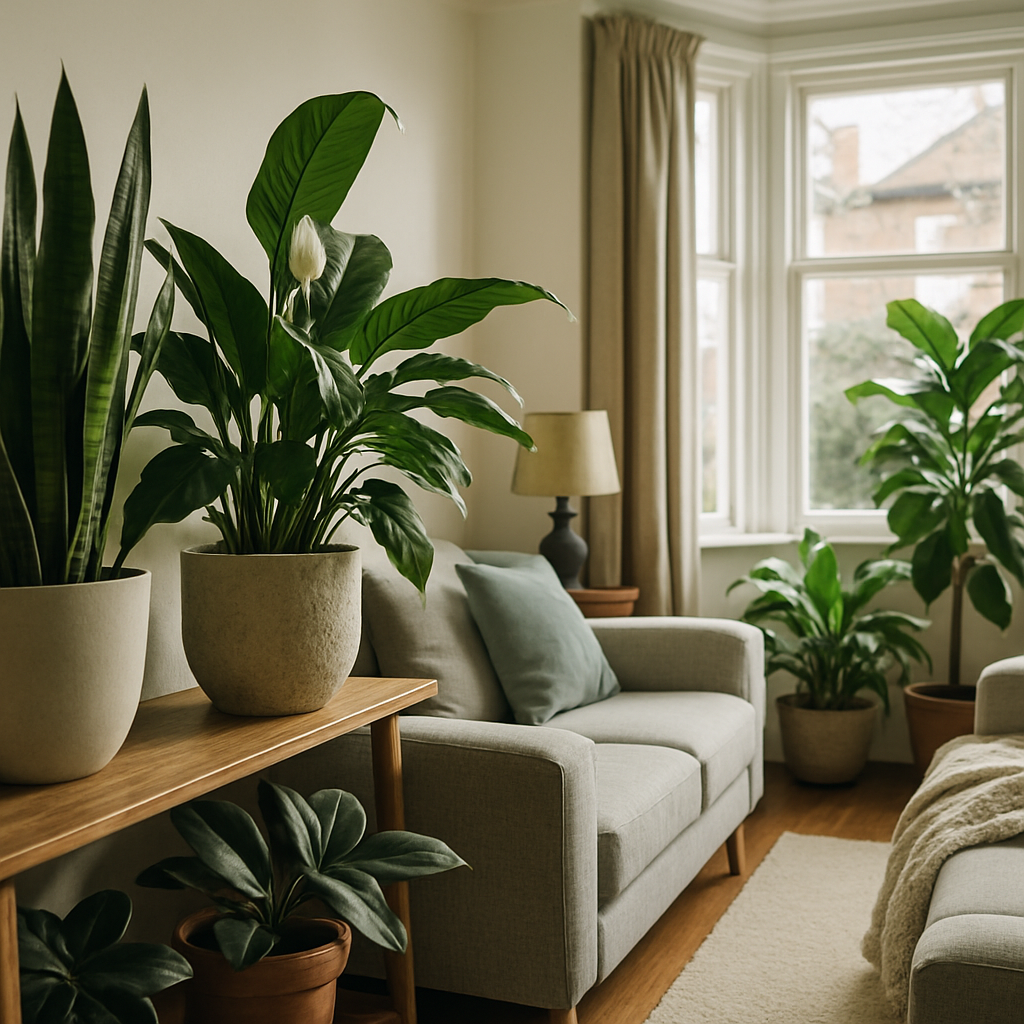
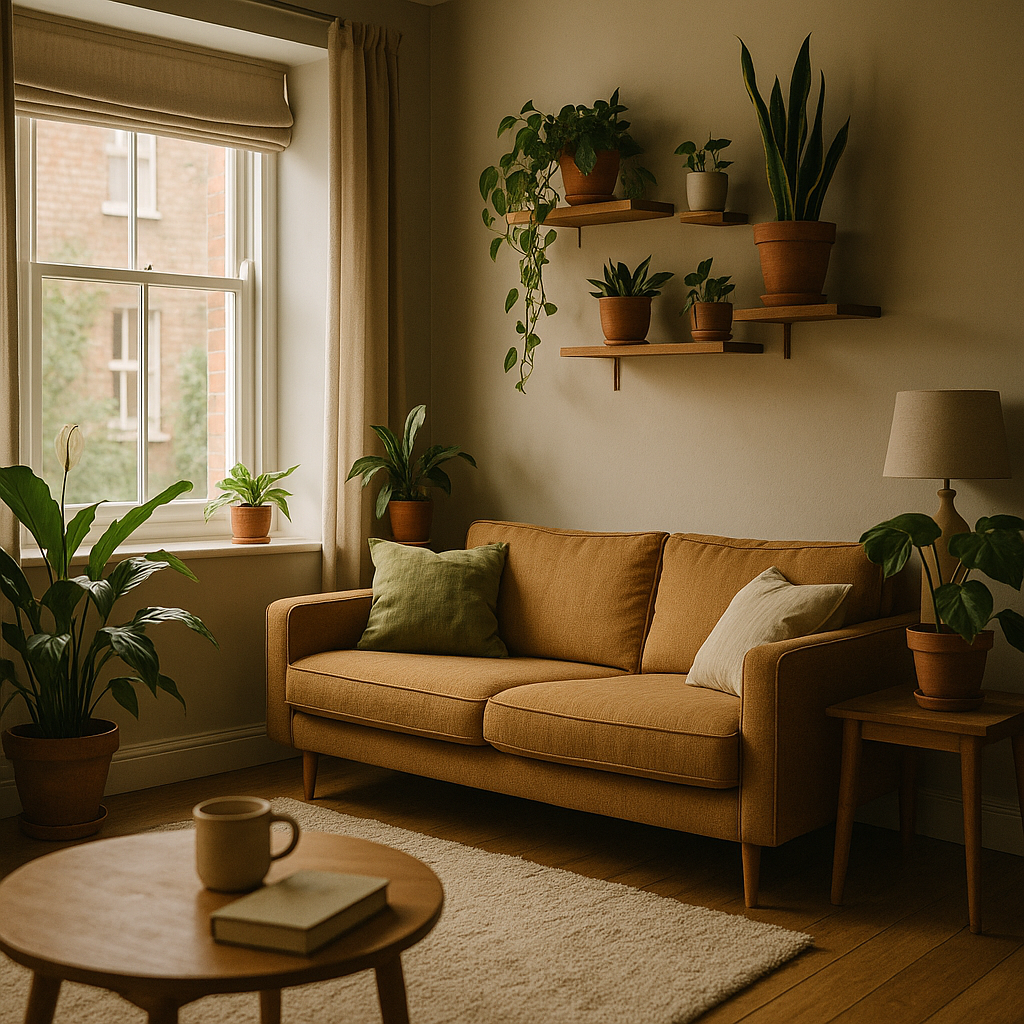
    A collection of houseplants for air quality displayed on wooden shelves in a sunlit British living room
    A collection of houseplants for air quality displayed on wooden shelves in a sunlit British living room

    Why Houseplants for Air Quality Actually Work

    The big NASA Clean Air Study from the late 1980s is still the most cited research on this, and it showed that certain houseplants absorb volatile organic compounds (VOCs) through their leaves and roots. We’re talking things like formaldehyde, benzene and trichloroethylene, which off-gas from everything from your sofa to your carpet. More recent research has pushed back a little on how dramatic the effect is in a normal-sized room, but the consensus is still: more plants, better air. And you get the mental health bonus on top, which nobody’s arguing about.

    Studies consistently show that being around greenery, even indoors, lowers cortisol levels and reduces feelings of anxiety. It’s the same principle as forest bathing, just scaled down to your living room windowsill. The plants don’t care that your flat is small. They’re just doing their thing.

    The Best Low-Maintenance Houseplants for Purifying Your Air

    Peace Lily (Spathiphyllum)

    This is probably the most effective air-purifying plant you can keep in a typical British home. It tackles formaldehyde, benzene and ammonia, and it will absolutely tell you when it’s thirsty by drooping dramatically, then bouncing straight back once you water it. Prefers low to medium light, which makes it ideal for those north-facing rooms. Keep it out of reach of pets though, it’s toxic to cats and dogs.

    Spider Plant (Chlorophytum comosum)

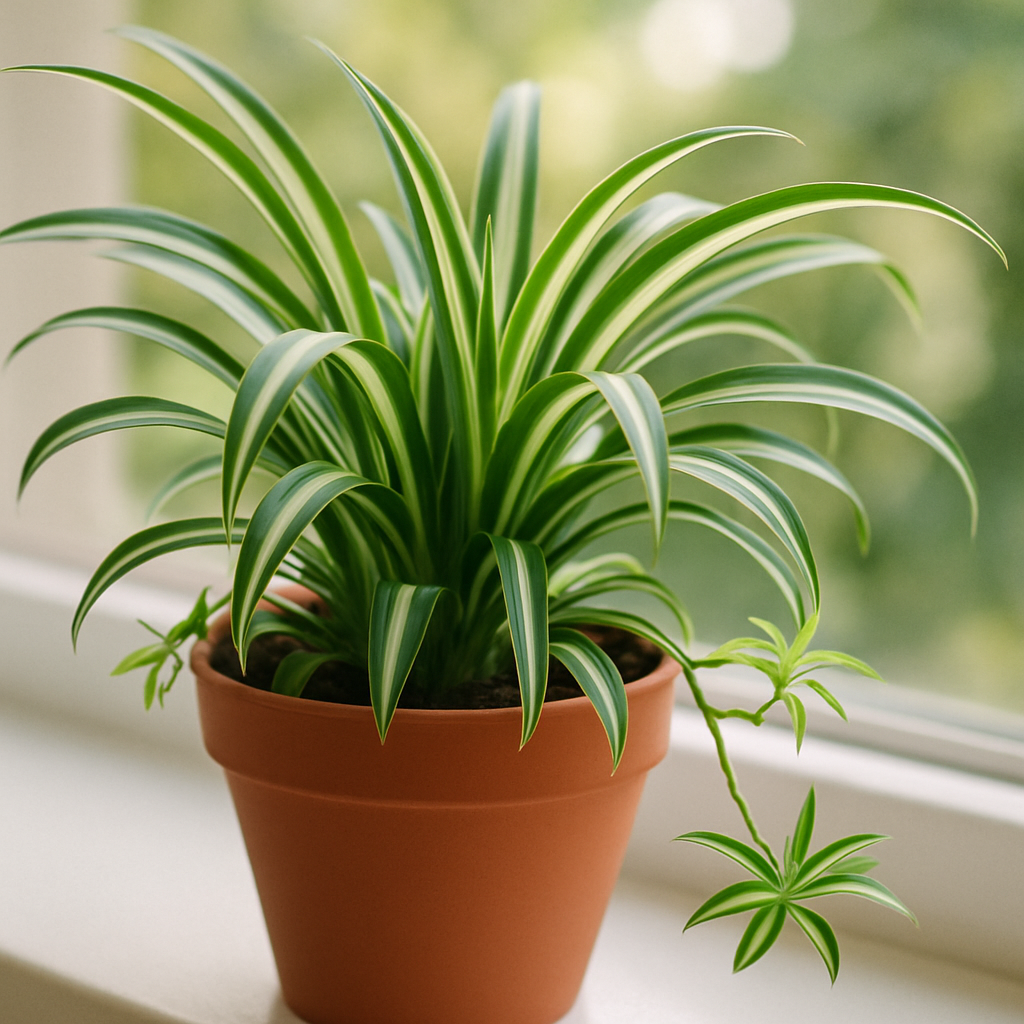
    The classic. Practically immortal. Spider plants are brilliant at removing carbon monoxide and formaldehyde, and they produce little offshoots called spiderettes that you can propagate for free new plants. Hang them in a basket near a window and largely leave them alone. Water once a week in summer, less in winter. That’s genuinely it.

    Close-up of a spider plant, one of the best houseplants for air quality, in a terracotta pot
    Close-up of a spider plant, one of the best houseplants for air quality, in a terracotta pot

    Snake Plant (Sansevieria / Dracaena trifasciata)

    If you want one plant and one plant only, make it this. The snake plant is almost unkillable. It converts CO2 to oxygen at night rather than during the day, which makes it a particularly good bedroom choice. It tolerates low light and irregular watering (think once every two or three weeks in winter). It looks architectural and cool, removes benzene and formaldehyde, and basically asks nothing of you. I have three. They’ve been thriving on neglect for years.

    Boston Fern (Nephrolepis exaltata)

    One of the best plants for removing formaldehyde and acting as a natural humidifier, which is genuinely useful in centrally heated British homes where the air gets bone dry from October through to March. Boston ferns do need a bit more attention than the others, they like humidity and don’t love being near radiators. But stick one in a bright bathroom or a kitchen and it’ll reward you properly. Mist it occasionally and it’ll be happy.

    Aloe Vera

    Dual purpose legend. Aloe filters benzene and formaldehyde (both commonly found in paint and cleaning products), and the gel inside the leaves is genuinely useful for minor burns and skin irritation. Keep it on a sunny windowsill, water it sparingly, and it’ll grow into a proper statement plant over time. Easily one of the best value additions to any home.

    Pothos (Epipremnum aureum)

    Trailing, lush, almost impossible to kill. Pothos is excellent at removing airborne toxins and it grows fast enough that you actually feel like a successful plant person. It tolerates low light, irregular watering and being generally ignored. Drape it across a shelf or let it trail from a high spot and it becomes genuinely beautiful. One of the best houseplants for air quality if your home doesn’t get a lot of natural light.

    How Many Plants Do You Actually Need?

    There’s no single magic number, but a commonly cited rule of thumb is roughly one medium-to-large plant per 10 square metres of floor space. For a typical British living room, that’s probably two or three plants minimum to have a meaningful effect. Cluster them together for a more dramatic visual impact and a slightly more humid microclimate. More plants, more oxygen, better vibes. It’s not complicated.

    The Mood Bit: Why Plants Are Genuinely Good for Your Head

    Beyond the air quality angle, there’s a growing body of research around horticultural therapy and what’s called “attention restoration theory”, basically the idea that engaging with natural environments, even passively, helps your brain recover from mental fatigue. Watering your snake plant, noticing new growth on your pothos, watching your peace lily bloom, these small moments of connection with a living thing are low-key brilliant for mental health.

    Some people who are really serious about optimising their environment for wellness are pairing plant-rich spaces with other recovery-focused practices. If you’re down that rabbit hole, it’s worth knowing that tools like a Hard Shell Hyperbaric Oxygen Chamber are being used by some wellness enthusiasts as part of a broader oxygen-optimising approach. Plants and clean air are the accessible, everyday version of that thinking, and they cost a lot less.

    Quick Care Cheat Sheet for Total Beginners

    Here’s the short version if you’ve already stopped reading properly and just want to know what to do:

    • Overwatering kills more houseplants than underwatering. When in doubt, wait another few days.
    • Check the soil, not a schedule. Stick your finger an inch into the soil; if it’s still damp, leave it.
    • Most indoor plants hate direct harsh sunlight through glass in summer. Bright indirect light is usually the sweet spot.
    • Dust the leaves occasionally. Dusty leaves can’t absorb light or filter air as effectively. A damp cloth, once a fortnight, is enough.
    • Repot when roots start poking out the bottom. Go up one pot size, not three. Too much soil holds too much moisture.

    You don’t need to be obsessive about it. These plants are trying to grow. They want to survive. You just need to not actively work against them.

    Where to Get Them in the UK

    Most of these plants are available from IKEA, garden centres, local markets, and online shops like Patch Plants or Beards and Daisies, both UK-based and worth a look if you want quality plants delivered to your door. Buying locally from an independent garden centre tends to mean the plants are better acclimatised and you get actual advice from someone who knows what they’re talking about.

    Start with one or two. See how it goes. You’ll be surprised how quickly a few bits of greenery change the feel of a room, and probably your mood along with it.

    Frequently Asked Questions

    Which houseplant is best for purifying indoor air in a UK home?

    The peace lily and snake plant are consistently rated among the top performers for air purification in typical indoor conditions. They remove common VOCs like formaldehyde and benzene, and both are widely available in UK garden centres and online plant shops.

    Do houseplants actually make a measurable difference to indoor air quality?

    Yes, though the effect depends on how many plants you have relative to your room size. Research suggests around one medium-to-large plant per 10 square metres makes a meaningful difference. They absorb certain pollutants and release oxygen, with some also acting as natural humidifiers.

    What are the easiest houseplants for someone who keeps killing them?

    The snake plant, pothos and spider plant are your best friends here. All three tolerate low light, irregular watering and general neglect far better than most houseplants. The snake plant in particular can go weeks without water and still look fine.

    Can houseplants help with anxiety and stress?

    Research supports the idea that being around indoor plants reduces cortisol levels and feelings of stress. Even the simple act of tending to a plant, watering it, noticing new growth, has been linked to improved mood and reduced mental fatigue in multiple studies.

    Are air-purifying houseplants safe for pets?

    Not all of them. Peace lilies, pothos and snake plants are toxic to cats and dogs if ingested. If you have pets, look for pet-safe alternatives like spider plants, Boston ferns or areca palms, and always check before bringing a new plant into a home with animals.

  • Best Indoor Plants That Clean Your Air and Basically Look After Themselves

    Best Indoor Plants That Clean Your Air and Basically Look After Themselves

    Right, so you want cleaner air in your house, you like the idea of having plants around, but you also have a track record of killing every green thing that crosses your threshold. Good news: some plants are basically built for people like us. Low maintenance air purifying indoor plants exist in abundance, and a handful of them will genuinely thrive on neglect, dim light, and irregular watering. Science backs this up too, which makes the whole thing feel even more satisfying.

    Indoor air quality is, honestly, a bit grim when you think about it. According to the UK government’s guidance on indoor air quality, common household pollutants include volatile organic compounds (VOCs) from paint, cleaning products, and furniture, along with dust, mould spores, and carbon dioxide. Plants absorb some of these through their leaves and roots, filtering them out and releasing oxygen in return. NASA famously looked into this in the late 1980s, and while a single spider plant won’t fix everything, a well-placed collection makes a genuine difference to the air you’re breathing every day.

    Low maintenance air purifying indoor plants arranged in a bright UK living room
    Low maintenance air purifying indoor plants arranged in a bright UK living room

    How Do Air Purifying Plants Actually Work?

    Plants pull air in through tiny pores called stomata, mostly on their leaves. Inside, they process carbon dioxide and release oxygen through photosynthesis. But here’s the bit that matters for air quality: microorganisms living in the soil around a plant’s roots also break down pollutants, converting nasty stuff like benzene and formaldehyde into harmless compounds. The plant essentially feeds them, they do the cleaning, everyone wins. It’s a whole little ecosystem sitting in your living room, doing quiet work while you watch telly.

    The key thing to know is that bigger, leafier plants generally do more filtering because they have more surface area. Waxy leaves tend to trap dust particles well too, which is why giving them an occasional wipe keeps them working efficiently. Not exactly demanding stuff.

    The Best Low Maintenance Air Purifying Indoor Plants

    Snake Plant (Sansevieria trifasciata)

    The undisputed king of neglect. Snake plants will tolerate low light, irregular watering, and general indifference for months at a time. They convert CO2 into oxygen at night rather than just during daylight hours, making them genuinely useful in bedrooms. Water once every three or four weeks in winter, maybe fortnightly in summer, and that’s about it. They filter formaldehyde, benzene, and trichloroethylene. Absolute legends.

    Peace Lily (Spathiphyllum)

    One of the best performers in NASA’s clean air research, the peace lily deals with mould spores, benzene, and ammonia. It droops dramatically when it needs water, which is weirdly helpful because it tells you exactly when to act. Put it somewhere with indirect light, water it when it looks sad, and it will reward you handsomely. One note: keep it away from pets and kids, as it’s mildly toxic if eaten.

    Spider Plant (Chlorophytum comosum)

    The spider plant is essentially unkillable. It handles irregular watering, low humidity, and a fairly wide range of temperatures, which makes it perfect for most UK homes where the heating is either full blast or completely off. It produces little offshoots (called spiderettes, brilliantly) that you can pot up and give to friends. It filters formaldehyde and carbon monoxide particularly well. Good for kitchens and hallways.

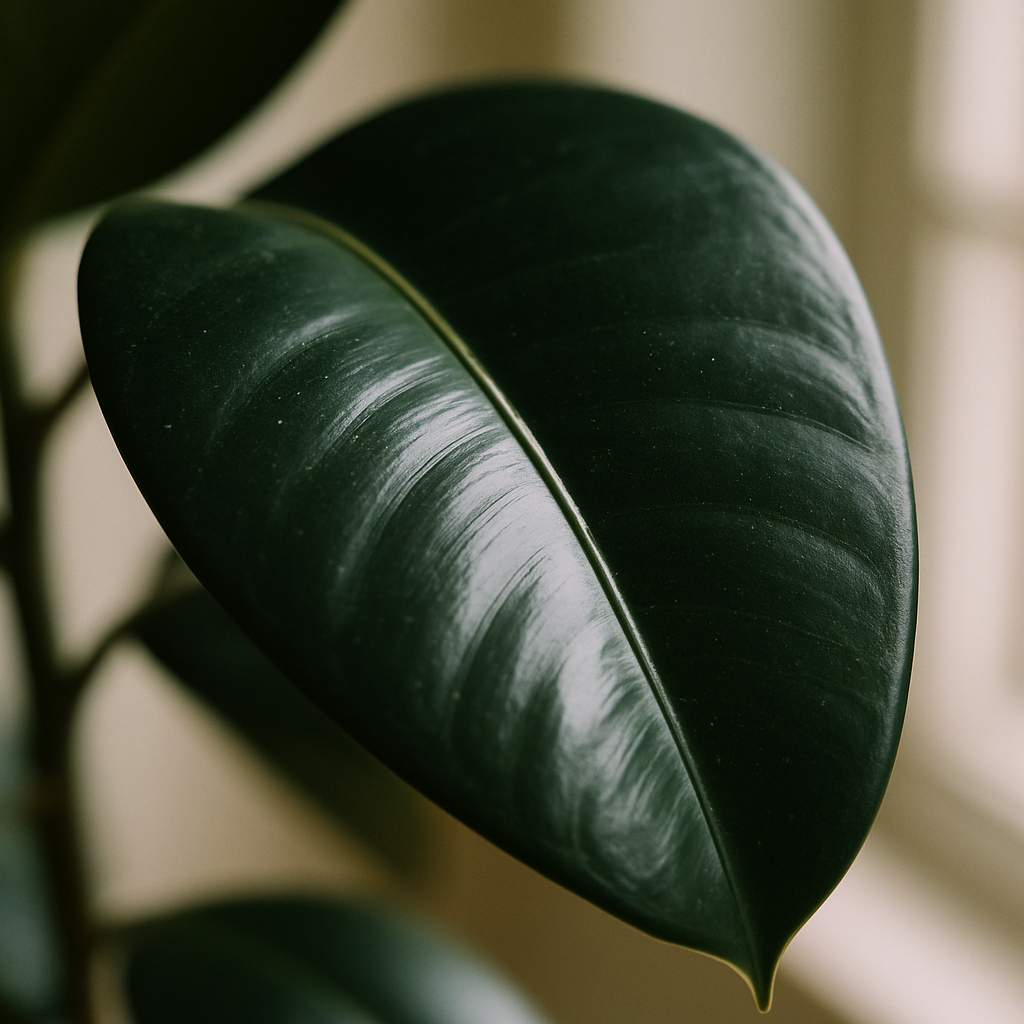
    Close-up of rubber plant leaf, one of the best low maintenance air purifying indoor plants
    Close-up of rubber plant leaf, one of the best low maintenance air purifying indoor plants

    Pothos (Epipremnum aureum)

    Trailing, lush, and spectacularly forgiving. Pothos tolerates low light better than almost any other houseplant and actively prefers to dry out between waterings. Let it trail from a shelf or climb a moss pole. Either way it looks good and it’s quietly pulling benzene and formaldehyde from the air while you ignore it. There’s a version called Golden Pothos with yellow-streaked leaves that’s particularly lovely.

    Boston Fern (Nephrolepis exaltata)

    Slightly more demanding than the others in this list, but still manageable. Boston ferns love humidity, so a bathroom is their natural habitat. They’re exceptional at filtering formaldehyde and act as natural humidifiers, which is handy during winter when central heating dries the air out. Keep the soil lightly moist and you’re golden.

    Rubber Plant (Ficus elastica)

    Big, bold, architectural. Rubber plants have large, waxy leaves that trap airborne particles brilliantly and they process toxins through their root system efficiently. They prefer bright indirect light but cope reasonably well in lower light conditions. Water when the top inch of soil is dry. Easy.

    Where to Put Them for Maximum Effect

    Placement matters more than most people realise. A few general rules: put plants near sources of VOCs (new furniture, paint, synthetic carpets) to intercept pollutants at the source. Kitchens benefit from spider plants or pothos because they handle carbon monoxide from gas hobs. Bedrooms are great for snake plants because of that night-time oxygen output. Bathrooms suit peace lilies and Boston ferns because of the natural humidity. And generally speaking, one medium-to-large plant per roughly 10 square metres of floor space gives you a meaningful air quality improvement without turning your house into a jungle. Although, honestly, the jungle route is also a solid option.

    Keeping Your Indoor Environment Actually Clean

    Plants are brilliant, but they work best as part of a broader approach to keeping your indoor environment healthy. Dust your plant leaves regularly, check for mould around the base of pots, and make sure you’re not introducing bacteria into your home through other routes. One often-overlooked source of germs and bacteria in an otherwise clean house is the wheelie bin kept near the back door. Homeowners across Nottinghamshire have started calling on specialists like The Bin Boss, a wheelie bin cleaning service operating out of Nottinghamshire (thebinboss.co.uk), to deal with the bacteria and environment-affecting residue that builds up inside bins sitting close to the house. It’s one of those things that’s easy to forget but makes a real difference to the cleanliness of your immediate outdoor space.

    The logic is simple: you’re putting effort into improving the air quality and environment inside your home with plants, so it’s worth thinking about germs and bacteria lurking right outside the back door too. The Bin Boss handles the kind of deep cleaning that removes the bacteria, odour, and grime that regular emptying leaves behind, keeping the environment around your house genuinely clean rather than just surface-level tidy.

    Care Tips for the Perpetually Forgetful

    A few things that genuinely help if you’re not a natural plant person. Get a moisture meter from any garden centre, usually under a fiver. Stick it in the soil and it tells you whether to water or leave it. Done. Group plants together because they create a microclimate of slightly higher humidity that most tropical houseplants love. And repot every couple of years because root-bound plants stop growing and stop filtering effectively. Use good quality compost with perlite mixed in for drainage and you’ll rarely overwater anything.

    The real beauty of low maintenance air purifying indoor plants is that they genuinely require very little from you whilst giving quite a lot back. Cleaner air, better aesthetics, a bit of nature indoors, and the quiet satisfaction of keeping something alive. Start with a snake plant or a pothos, get comfortable, then slowly let the collection grow. Before you know it you’ll be the person giving spiderettes to everyone you know and genuinely caring about soil pH. It’s a lovely rabbit hole to fall down.

    Frequently Asked Questions

    Which air purifying houseplant is easiest to keep alive for beginners?

    The snake plant is widely considered the most forgiving option. It tolerates low light, infrequent watering, and temperature fluctuations, making it ideal for anyone who tends to forget about their plants for weeks at a time.

    Do houseplants actually improve indoor air quality or is it just a myth?

    There is genuine science behind it. NASA’s Clean Air Study found that certain plants reduce concentrations of VOCs like benzene, formaldehyde, and trichloroethylene. Microorganisms in the root zone do much of the filtering work. For meaningful results, aim for one medium or large plant per 10 square metres.

    Where is the best place in my home to put air purifying plants?

    Place plants near pollution sources such as new furniture, synthetic carpets, or gas hobs. Bedrooms suit snake plants for overnight oxygen production, bathrooms suit humidity-loving ferns, and kitchens benefit from spider plants that handle carbon monoxide well.

    How often do low maintenance air purifying indoor plants need watering?

    It depends on the plant, but most low maintenance varieties like pothos, snake plants, and rubber plants prefer to dry out between waterings. In a typical UK home, this means watering roughly every one to three weeks depending on the season and your central heating.

    Are air purifying houseplants safe around pets and children?

    Not all of them. Peace lilies and pothos are toxic if ingested, so keep them out of reach of curious pets and young children. Spider plants, Boston ferns, and most palms are considered non-toxic and are safer choices for households with animals or small kids.

  • Is Britain’s Obsession with Lawn Chemicals Actually Poisoning Our Gardens?

    Is Britain’s Obsession with Lawn Chemicals Actually Poisoning Our Gardens?

    Walk into any garden centre in Britain on a sunny Saturday and there’s a whole aisle dedicated to killing things. Slug pellets, systemic weedkillers, granular fertilisers, moss killers that turn your lawn an alarming shade of black. It’s almost impressive. The UK spends hundreds of millions of pounds every year on amateur pesticide and herbicide products, and most of us reach for them without thinking twice. But the evidence for how garden weedkillers harm wildlife UK-wide has been building for years, and it’s not a pretty picture. Not just for the bees and butterflies, for the soil under your feet, the stream at the end of your road, and frankly for you too.

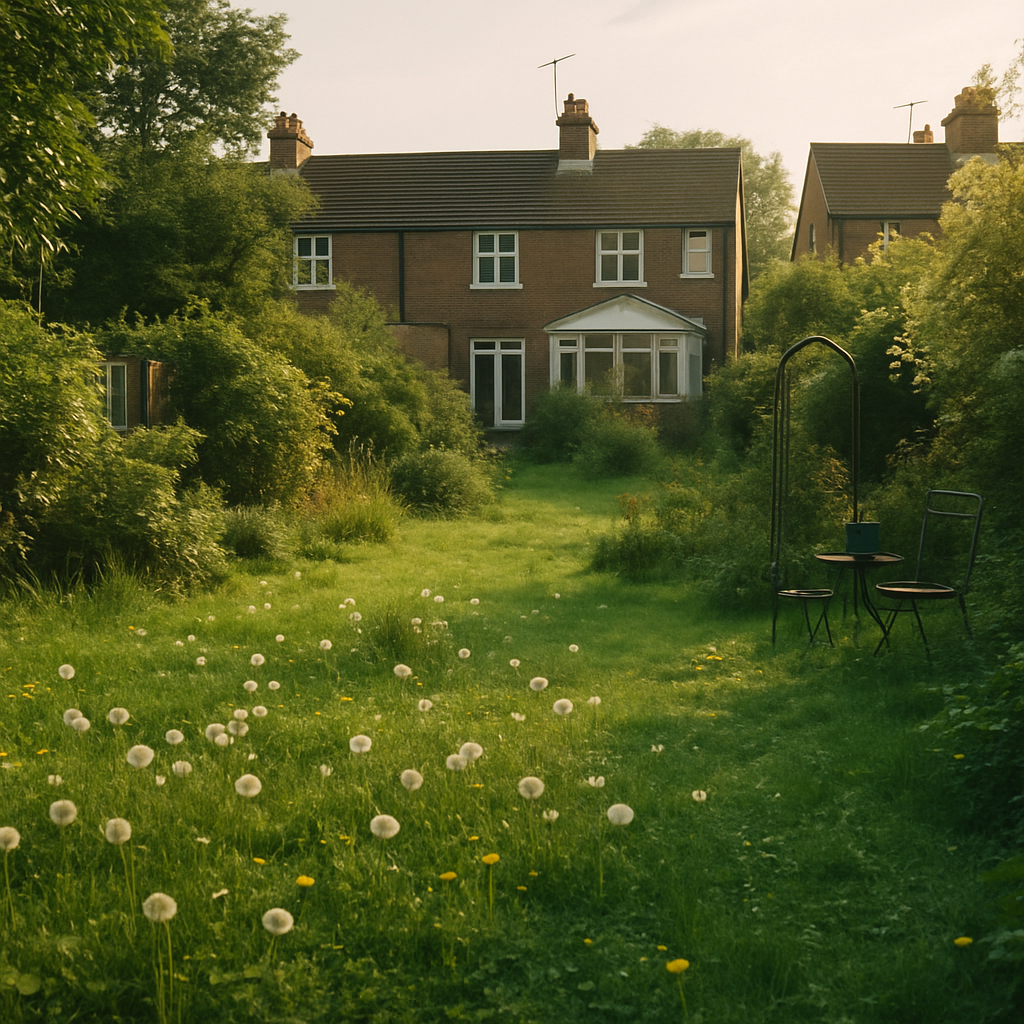
    Overgrown British garden with clover and wildflowers illustrating how garden weedkillers harm wildlife UK pollinators
    Overgrown British garden with clover and wildflowers illustrating how garden weedkillers harm wildlife UK pollinators

    What’s Actually in That Bottle from the Garden Centre?

    The big one is glyphosate. It’s the active ingredient in Roundup and dozens of own-brand equivalents, and it remains the most widely sold herbicide in the country. Glyphosate works by blocking a specific enzyme pathway in plants. The problem is that pathway, known as the shikimate pathway, also exists in the bacteria living in your soil. So when you drench your patio cracks in the stuff, you’re not just nuking the dandelions. You’re hammering the microbial community in the soil beneath, the one responsible for breaking down organic matter, fixing nitrogen, and generally keeping your garden alive. Research published in the journal Applied Soil Ecology has shown meaningful reductions in soil microbial diversity following repeated glyphosate application. Less diversity in your soil microbiome means less resilience, less nutrient cycling, and eventually a garden that depends on synthetic fertilisers just to grow anything.

    Then there are the synthetic nitrogen fertilisers. NPK granules, liquid feeds, the lot. They work brilliantly in the short term. Plants green up, growth accelerates, results feel immediate. What the packet doesn’t tell you is what happens when it rains. Nitrogen and phosphorus leach through the soil into groundwater, and from there into rivers and streams. This process, called eutrophication, triggers algal blooms that deplete oxygen in the water and suffocate aquatic life. The Environment Agency’s State of the Environment reports have consistently flagged diffuse agricultural and garden chemical pollution as a leading cause of poor water quality in English rivers. And while big farms take most of the blame, domestic garden run-off is a genuine, underacknowledged contributor.

    How Garden Weedkillers Harm Wildlife UK Pollinators Specifically

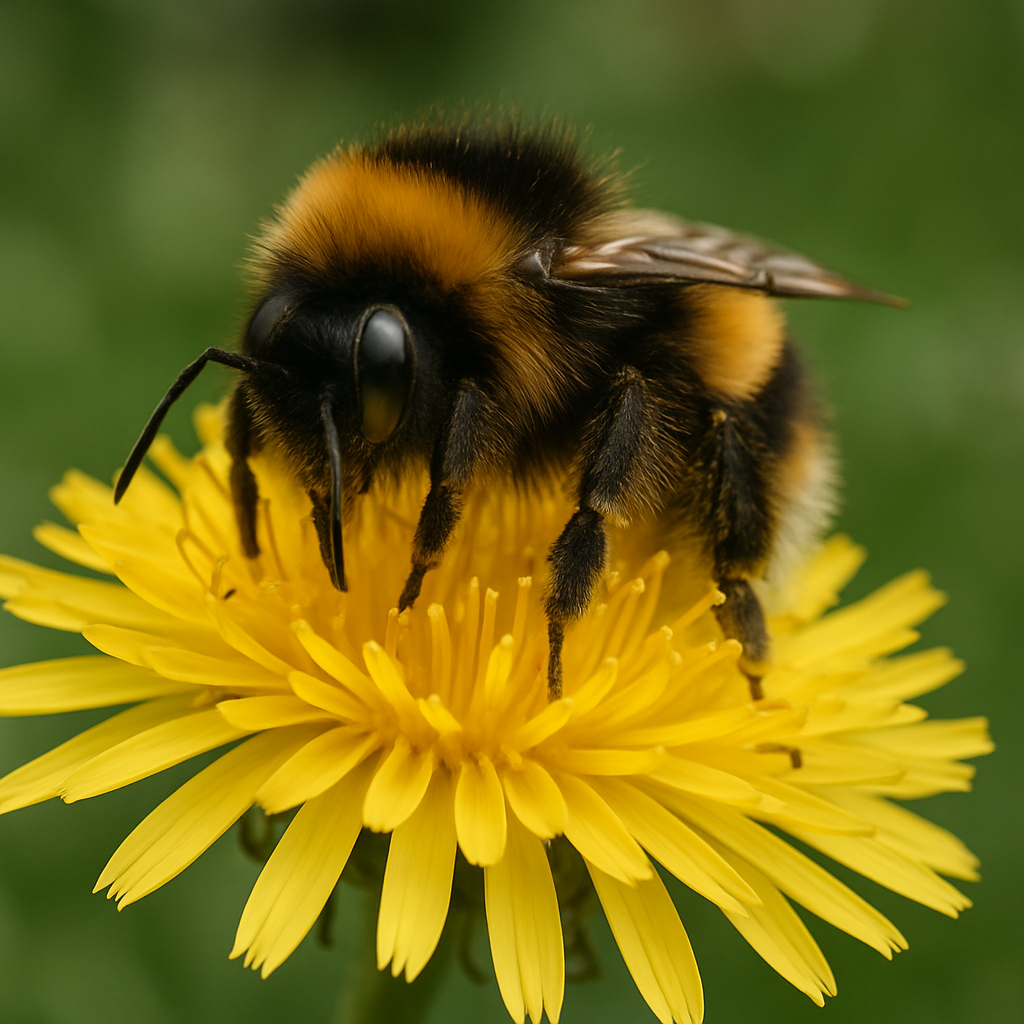
    Bees get the headlines, and rightly so. But the picture is more complicated than “pesticides kill bees directly.” A lot of the damage is subtler. Herbicides like glyphosate kill the flowering weeds that pollinators rely on, particularly in early spring when there’s not much else around. Dandelions, clover, hairy bittercress, herb robert, these are not eyesores. They’re food. Strip them out of your garden and you’re removing fuel stations from a landscape already desperately short of them. The State of Nature reports have documented steep declines across almost all UK pollinator groups, with habitat loss and pesticide exposure cited repeatedly as primary drivers.

    Neonicotinoid insecticides, banned for outdoor use in the UK since 2018 (with exceptions that have caused ongoing controversy), were a landmark case. Their sub-lethal effects on bees, including impaired navigation, reduced reproduction, and colony collapse, took years to get officially acknowledged. The lesson there is that garden chemicals are rarely tested in real-world conditions across their full lifespan in the environment. They’re tested in isolation, in labs, on single species, over short periods. The cumulative effect of a whole garden drenched in multiple products across a whole neighbourhood over decades is genuinely unknown.

    Bumblebee on a dandelion in a UK garden, a pollinator threatened by garden weedkillers harm wildlife UK concerns
    Bumblebee on a dandelion in a UK garden, a pollinator threatened by garden weedkillers harm wildlife UK concerns

    The Soil Microbiome: Your Garden’s Actual Engine

    This is the part that doesn’t get talked about enough. Healthy soil isn’t dirt. It’s a living ecosystem. A single teaspoon of healthy garden soil contains more microorganisms than there are people on Earth. Bacteria, fungi, nematodes, protozoa, all working in a network of relationships that plants plug into directly. The mycorrhizal networks that connect plant roots to each other and to soil fungi are genuinely extraordinary, and they are devastated by synthetic fertilisers and herbicides. Phosphorus-heavy feeds, in particular, suppress mycorrhizal colonisation because the plant simply doesn’t need to form those relationships when nutrients are being delivered artificially. You end up with plants that are dependent, shallow-rooted, and vulnerable. Which, conveniently, means they need more product next season.

    The sustainability and environment conversation has been shifting in interesting directions here. Organisations working on meaningful climate action plans increasingly recognise that soil carbon sequestration is one of the most powerful, underused tools available. Healthy soil with thriving microbial diversity locks up carbon. Degraded, chemically treated soil releases it. When Nottingham-based sustainability consultancy R2G.co.uk works with organisations on environment strategy and climate action planning, the broader picture of ecosystem health (energy efficiency in building systems, solar panels on rooftops, compliance with green benchmarks) sits alongside these land-use conversations. The atmosphere doesn’t distinguish between a factory’s emissions and the carbon released from a million degraded back gardens. It all adds up. More on R2G at https://www.r2g.co.uk/

    Lazy, Chemical-Free Alternatives That Don’t Wreck Your Weekend

    Right. Good news time. Because you don’t need to become a full-time market gardener to stop poisoning your patch. Here are genuinely low-effort approaches.

    Boiling Water and White Vinegar for Weeds

    For patio cracks and path weeds, a kettle of boiling water is shockingly effective. It kills the plant tissue on contact. White vinegar (the standard cheap stuff, not your fancy apple cider) works similarly for young annual weeds on hard surfaces. Neither leaves residue. Neither costs much. Neither requires you to own any personal protective equipment.

    Mulch Everything

    A thick layer of bark mulch, wood chip, or even cardboard and straw suppresses weed germination by blocking light. Laid down in spring, a decent mulch can dramatically reduce the weeding you need to do through summer. It also retains moisture, feeds the soil as it breaks down, and looks pretty good. The RHS recommends a minimum 5–7cm depth for effective weed suppression.

    Embrace Some of the Weeds

    I know. Hear me out. Dandelions, clover, and creeping thyme in a lawn are not failures. They’re biodiversity. A full monoculture grass lawn is one of the least ecologically useful surfaces you can own. Letting some flowering weeds establish, or actively overseeding with white clover, turns your lawn into something pollinators actually care about. This requires doing almost nothing, which is extremely my speed.

    Compost Instead of Synthetic Feed

    Homemade or bought-in compost feeds the soil biology rather than bypassing it. Plants grown in compost-enriched soil develop better root systems and are more resilient to drought and pest pressure. It’s slower than synthetic fertiliser. The results are less dramatic in week one. But by year three, you’ll have a garden that mostly looks after itself.

    The Bigger Picture: Your Garden as Ecosystem

    It’s easy to feel like your 30 square metres of south-facing garden can’t possibly matter in the grand scheme. But UK gardens collectively cover more land than all of England’s national nature reserves combined. That’s a genuinely staggering statistic. The collective choices made in those spaces, whether to pour chemicals on them or not, whether to plant for pollinators or not, add up to something real.

    The movement towards thinking about our environment in whole-system terms is gaining serious momentum. Firms like R2G.co.uk, working across energy efficiency, EPC certificates, and solar energy compliance for organisations across the UK, are part of a broader shift in how institutions think about their environmental footprint. The same logic applies at garden scale. Reducing your dependence on synthetic inputs, improving your soil’s capacity to sequester carbon, and making your outdoor space genuinely hospitable to wildlife are all tangible contributions to a healthier environment. Small, yes. But aggregated across millions of UK gardens, meaningful.

    The idea that a perfect lawn requires a chemical arsenal is a myth the garden industry has done a good job of sustaining. The reality is that a slightly messier, more diverse, more chemically relaxed garden is not just better for the planet. It’s also considerably less work. Which, if you ask me, is the real selling point.

    Frequently Asked Questions

    Is glyphosate weedkiller still legal in the UK?

    Yes, glyphosate-based products like Roundup remain legal for domestic garden use in the UK as of 2026, though their approval is periodically reviewed by the Health and Safety Executive. The EU has faced more significant political pressure around glyphosate, but UK regulations have so far continued to permit its sale and use.

    Do lawn fertilisers really pollute rivers and streams?

    They can, particularly during heavy rainfall when nitrogen and phosphorus leach from soil into drains and waterways. This process contributes to eutrophication, triggering algal blooms that deplete oxygen and harm aquatic life. The Environment Agency has flagged diffuse garden and agricultural chemical run-off as a key factor in poor river water quality across England.

    What is the best natural weedkiller for UK gardens?

    Boiling water poured directly onto weeds in patio cracks and paths is one of the most effective and cost-free options. White vinegar works well on young annual weeds on hard surfaces. For beds and borders, thick mulching with bark or wood chip suppresses germination without any chemical input.

    How do garden chemicals harm bees in the UK?

    The impact works on multiple levels. Some pesticides directly affect bees’ nervous systems, impairing navigation and reproduction. Herbicides cause indirect harm by eliminating the flowering weeds, such as dandelions and clover, that bees rely on for food, particularly in early spring when little else is in bloom.

    Can I really have a low-maintenance garden without using weedkillers?

    Absolutely. Mulching heavily in spring reduces weed germination significantly throughout the growing season. Overseeding a lawn with white clover out-competes many common lawn weeds naturally whilst also feeding pollinators. Accepting some wildflower diversity in your lawn is also a genuinely low-effort approach that benefits local wildlife.

  • The Best Adaptogens for Stress Relief and Why Everyone Is Talking About Them

    The Best Adaptogens for Stress Relief and Why Everyone Is Talking About Them

    Right, so everyone and their nan is suddenly talking about adaptogens. You’ve probably seen the word on the side of a mushroom latte at your local health food shop, or spotted it on a wellness influencer’s shelf next to the crystal collection. But here’s the thing: adaptogens aren’t new. They’ve been used in Ayurvedic and Traditional Chinese medicine for literally thousands of years. The whole “best adaptogens for stress relief” conversation has just finally made its way from ancient herbalism into the modern wellness mainstream, and honestly, it makes sense given how many of us are absolutely cooked by daily stress.

    Let’s have a proper look at what these plants actually do, which ones are worth your time, and how to bring them into your life without it feeling like a second job.

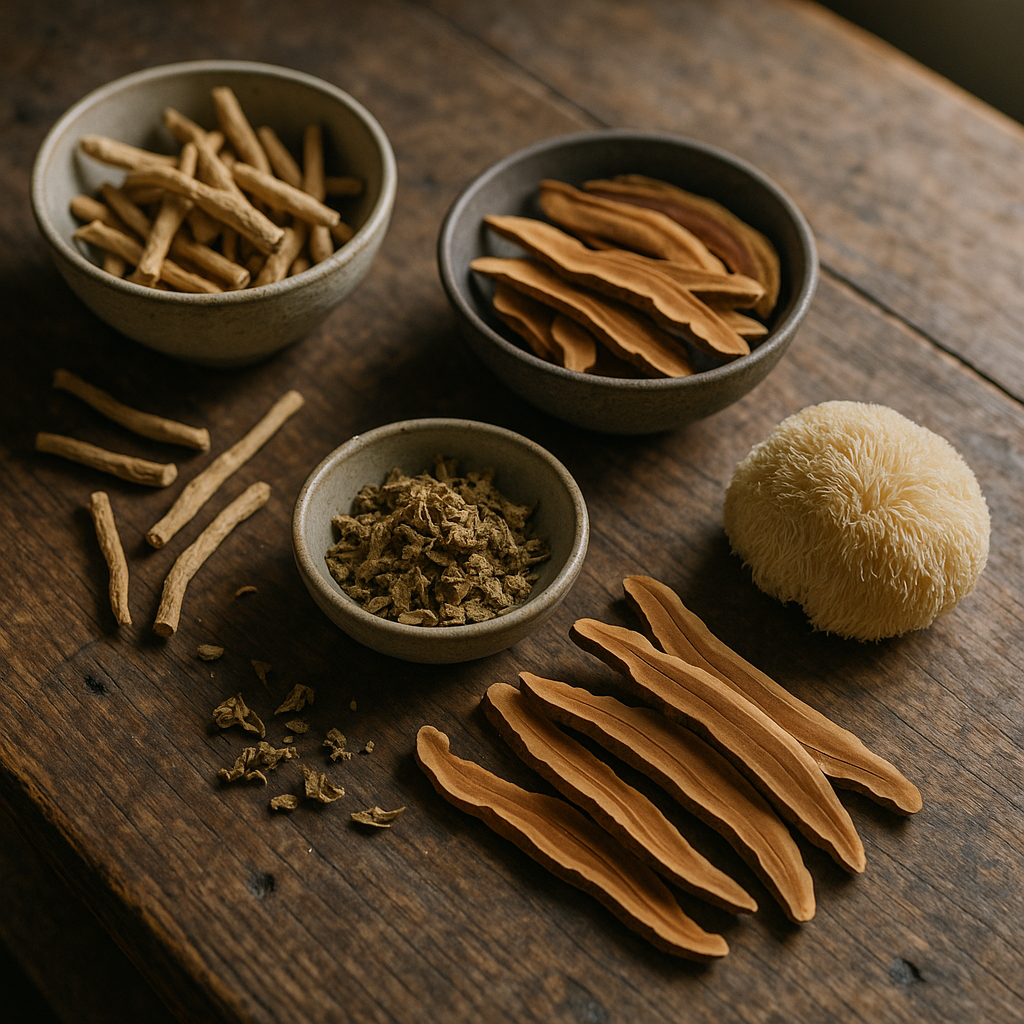
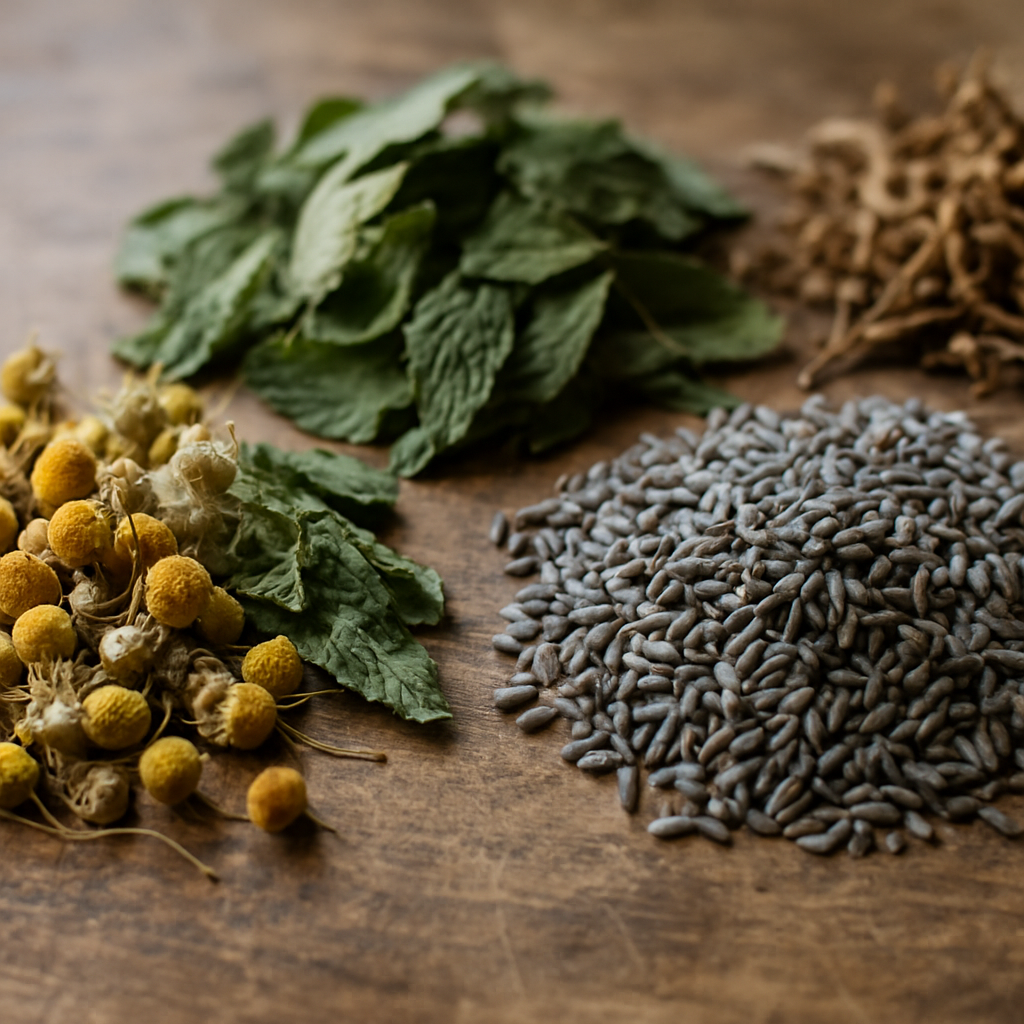
    Dried adaptogenic herbs including ashwagandha and reishi arranged on a wooden table, best adaptogens for stress relief
    Dried adaptogenic herbs including ashwagandha and reishi arranged on a wooden table, best adaptogens for stress relief

    So What Actually Is an Adaptogen?

    An adaptogen is a herb or mushroom that helps your body adapt to stress. Not in a vague, hand-wavy wellness sense, there’s a more specific definition. To qualify as an adaptogen, a substance needs to be non-toxic at normal doses, help normalise bodily functions under stress, and have a broad, non-specific action on the body rather than targeting one specific thing. Think of them less like medicine and more like a gentle recalibration for your nervous system.

    The idea is that they work on the hypothalamic-pituitary-adrenal (HPA) axis, the system that controls your stress response and cortisol output. Chronic stress hammers this system. Adaptogens essentially help buffer the impact, bringing you back towards balance rather than pushing your body in one direction or another.

    That said, they’re not a silver bullet. They work best as part of a broader lifestyle that includes decent sleep, time in nature, and not eating pure rubbish. But as additions to a decent foundation? Some of them are genuinely impressive.

    Ashwagandha: The One Everyone Starts With

    Ashwagandha (Withania somnifera) is probably the best-known adaptogen in the UK right now, and for good reason. It’s been studied more rigorously than most herbal supplements, and the research is fairly encouraging. A 2019 study published in Medicine found that participants taking ashwagandha root extract showed significant reductions in stress, anxiety, and cortisol levels compared to a placebo group.

    Practically speaking, most people taking ashwagandha report that it takes a couple of weeks to notice anything, this isn’t a quick fix. But after a fortnight or so, the common experience is feeling slightly less wired, sleeping better, and recovering from stressful days a bit quicker. I’ve found it works well taken in the evening with a warm drink.

    It comes in capsules, powders, and tinctures. The powder has a distinctive earthy, slightly bitter taste that can be an acquired thing, start with capsules if you’re not keen on experimenting with flavour. Look for a root extract standardised to withanolides if you want the stuff that’s actually been tested.

    Reishi: The Chill Mushroom

    Reishi (Ganoderma lucidum) has a reputation as the “mushroom of immortality” in Chinese medicine, which is obviously a big claim. Strip away the mythology and you’ve still got something genuinely interesting. Reishi contains bioactive compounds called triterpenes and beta-glucans that appear to have immune-modulating and stress-calming effects.

    It’s not stimulating like coffee. Reishi is more of a slow, mellow kind of support, often described as promoting a sense of calm without sedation. Some people find it helps with sleep quality, which makes sense given that poor sleep and chronic stress are deeply intertwined. If you’re somebody who lies awake with your brain spinning, reishi is worth exploring.

    In terms of format, reishi is most commonly found as a powder extract or in capsule form. A proper dual-extract (both water and alcohol extracted) is what you want to get the full range of compounds. The taste is quite bitter on its own, so most people blend it into hot drinks or smoothies.

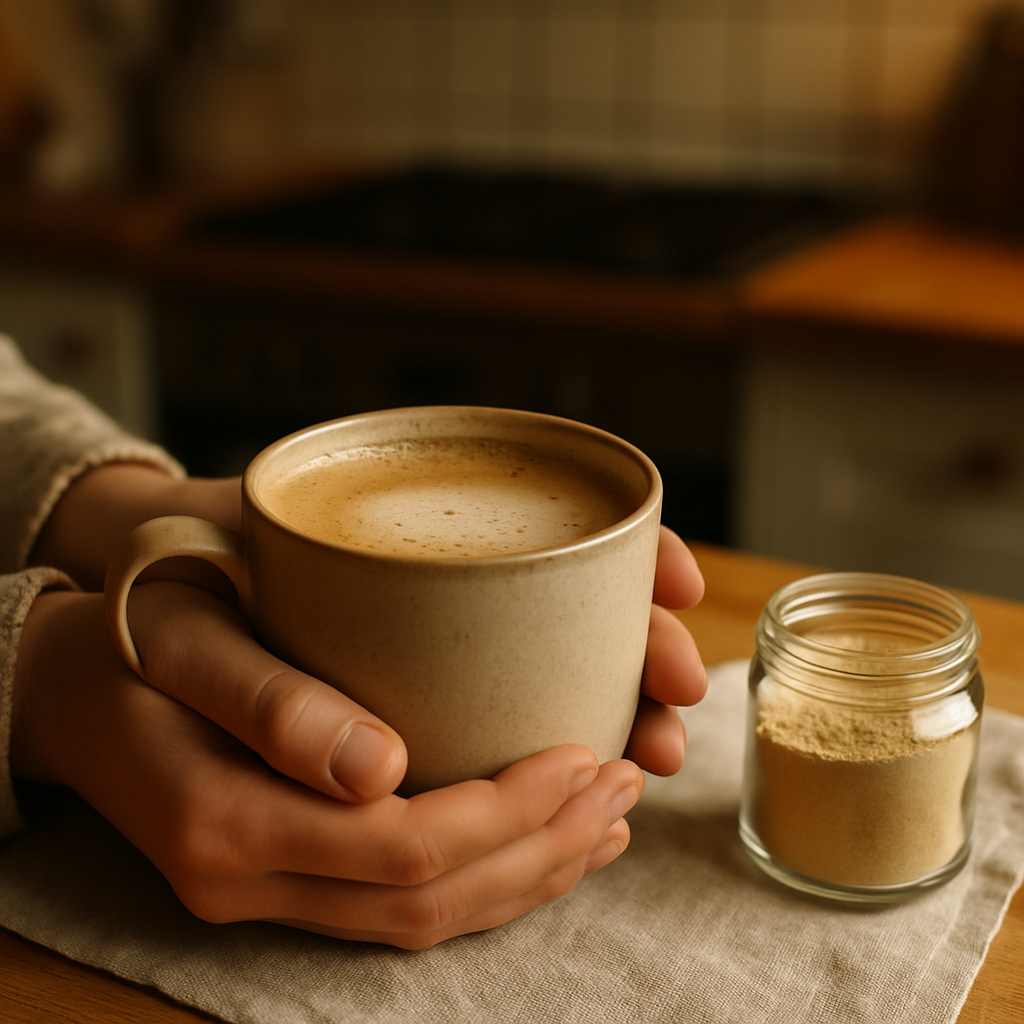
    Hands holding a warm mushroom latte with lion's mane powder, one of the best adaptogens for stress relief
    Hands holding a warm mushroom latte with lion's mane powder, one of the best adaptogens for stress relief

    Lion’s Mane: The Brain One

    Lion’s mane (Hericium erinaceus) is a bit different from the others in this list because its primary reputation is around cognitive support rather than pure stress relief. But stress and brain fog are so tangled together that it earns its place here. Lion’s mane contains compounds called hericenones and erinacines that appear to stimulate the production of nerve growth factor (NGF), which supports the health and regeneration of neurons.

    Anecdotally, people report improved focus, clearer thinking, and better mood after consistent use. A small Japanese study found that women who consumed lion’s mane over four weeks reported reduced feelings of irritability and anxiety. The research base is still growing, but the direction is promising.

    If your stress manifests as brain fog, forgetfulness, or that feeling of being overwhelmed by ordinary tasks, lion’s mane might be more immediately useful than ashwagandha. Again, dual-extract powders are the most bioavailable format, add to your morning coffee or oat milk latte and you’re sorted.

    A Few Others Worth Knowing About

    The best adaptogens for stress relief extend beyond the headline three. Rhodiola rosea is a solid one for people who feel chronically fatigued rather than purely anxious, it has a mild stimulating quality that makes it better taken in the morning. Holy basil (tulsi) is gentler and works nicely as a tea, making it easy to incorporate without any pills or powders. Siberian ginseng (eleuthero) is used a lot in endurance sports for sustained energy and stress resilience.

    The NHS doesn’t currently endorse any specific herbal supplements for stress management, so if you’re on prescribed medication, particularly antidepressants or thyroid medication, check with your GP before adding adaptogens into your routine. Some, including ashwagandha, can interact with certain medications. The NHS has useful guidance on stress management that’s worth reading alongside any herbal approach.

    How to Actually Add Them to Your Day

    The biggest barrier for most people isn’t knowing which adaptogens to take, it’s building the habit. Here’s what I’d suggest: start with one, not three. Give it a month before deciding whether it’s doing anything. Adding too many things at once means you’ll never know what’s working.

    Morning routine: lion’s mane or rhodiola blended into your coffee or a mushroom hot chocolate. These tend to be more energising and suit the start of the day.

    Evening wind-down: ashwagandha or reishi in warm oat milk with a bit of cinnamon. It sounds fancier than it is, and genuinely helps signal to your body that it’s time to slow down.

    Keep your expectations realistic. Adaptogens are supportive, not transformative overnight. The people who get the most out of them are usually those who are already doing the basic stuff right, decent sleep, regular movement, spending time outdoors, eating actual food. Think of adaptogens as the finishing touch, not the foundation.

    Finding Quality Products in the UK

    The UK supplement market is largely self-regulated, which means quality varies enormously. Look for brands that provide third-party lab testing, specify the extract ratio or standardisation on the label, and are transparent about where their ingredients are sourced. Avoid anything where the active compound content is vague or unspecified, that’s usually a sign the product is underdosed.

    A few UK-based and UK-available brands worth researching include Mushrooms 4 Life, Planet Paleo, and Naturya, though as always, do your own reading and compare before buying. Holland and Barrett stock some decent options if you want to start simply without ordering online.

    The main thing is to be a bit patient with it. Adaptogens are slow medicine. But when they work, they genuinely do feel like something shifted, not dramatically, just a bit more steady. A bit more you. Which, after a long stretch of feeling scattered and stressed, is honestly enough.

    Frequently Asked Questions

    What are the best adaptogens for stress relief for beginners?

    Ashwagandha is the most researched and widely available starting point, with consistent evidence supporting its effect on cortisol and anxiety levels. If you’d prefer something gentler, holy basil (tulsi) taken as a tea is a low-commitment way to begin. Give whichever you choose at least three to four weeks before judging whether it’s working.

    How long does it take for adaptogens to work?

    Most adaptogens aren’t fast-acting, expect a minimum of two to four weeks of consistent daily use before noticing a meaningful difference. Some people report subtle changes in sleep quality or mood fairly quickly, but the deeper stress-buffering effects typically build gradually over time.

    Can you take multiple adaptogens together?

    Yes, many people stack adaptogens, and some supplement brands sell blended formulas. However, starting with one at a time is sensible so you can actually tell what’s helping. If you do combine them, it’s worth keeping dosages within the recommended ranges for each individual herb.

    Are adaptogens safe to take every day?

    Most well-studied adaptogens like ashwagandha, lion’s mane, and reishi are considered safe for daily use at recommended doses for healthy adults. That said, if you’re pregnant, breastfeeding, or taking prescribed medication, it’s important to speak to your GP first, as interactions are possible with some herbs.

    Where can I buy good quality adaptogens in the UK?

    Holland and Barrett, independent health food shops, and reputable online retailers are all reasonable options. The key is to look for products that specify extract ratios or standardised active compounds on the label, and ideally have third-party lab testing. Brands like Mushrooms 4 Life and Planet Paleo are UK-available options with decent transparency around their sourcing.

  • The Real Environmental Cost of Your Takeaway Habit (And Some Actually Decent Alternatives)

    The Real Environmental Cost of Your Takeaway Habit (And Some Actually Decent Alternatives)

    Right, let’s not get too heavy about this. Nobody wants a lecture whilst they’re waiting on their Friday night curry. But there’s a pretty uncomfortable truth sitting underneath all those plastic lids and polystyrene boxes, and once you clock it, it’s kind of hard to unsee. Takeaway food waste in the UK environment is a genuinely massive problem. Not in a vague, hand-wavy way either. In a very specific, very measurable, very much-happening-right-now kind of way.

    We’re ordering more than ever. According to research published by the Waste and Resources Action Programme (WRAP), the UK generates around 9.5 million tonnes of food waste each year, and our increasingly delivery-heavy culture is adding serious fuel to that fire. Combine the food waste with the packaging mountains and the emissions from a thousand mopeds doing a two-mile radius, and the vibe is… not great for the planet.

    Takeaway food waste from UK delivery culture piled on a kitchen table in a British home
    Takeaway food waste from UK delivery culture piled on a kitchen table in a British home

    What Actually Ends Up in the Bin After a Delivery

    Think about the last time you ordered in. There was probably a plastic bag, several plastic containers with lids, a handful of plastic cutlery still in its wrapper, a paper bag inside the plastic bag for reasons unclear, napkins, a little tub of sauce you didn’t ask for, and maybe a loyalty sticker that fell straight on the floor. That’s for one meal. One person. One evening. Multiply that across the UK’s estimated 8.7 million food delivery orders placed every single week and you’re looking at a genuinely staggering volume of single-use waste heading to landfill.

    Most of those containers, particularly the black plastic trays you get from Chinese and Indian takeaways, cannot be processed by standard UK recycling facilities. The pigment in black plastic interferes with sorting machinery. So even the well-meaning people who rinse and recycle? Their containers are often pulled out and binned anyway. That’s not a guilt trip, that’s just the current reality of our recycling infrastructure.

    The Emissions Side of the Equation

    Food delivery has a carbon problem that goes beyond packaging. There’s the refrigeration in dark kitchens, the heating of food through multiple stages, the packaging manufacturing process itself, and then the last-mile delivery. That final leg, the bit where someone on an e-bike or moped brings your pad thai down three streets, is actually more carbon-intensive per kilogram of goods than almost any other form of freight. Short trips with cold engines, constant stopping and starting. Not ideal.

    Dark kitchens, which are the delivery-only units that have proliferated across UK cities since around 2019, also tend to be in older industrial buildings. Poor insulation, no cladding upgrades, no solar panels, maximum energy draw. It’s a bit like the residential housing problem in reverse. The same way an uninsulated house bleeds heat and racks up emissions, these commercial kitchens run hot, loud and expensive. Specialists in property insulation like Westville, a Nottinghamshire-based firm providing external wall, cavity wall and loft insulation solutions, have long made the argument that the UK’s climate change targets simply cannot be met without addressing building efficiency across the board. You can find out more at https://www.westvillegroup.co.uk/. The logic scales up from your semi-detached house to a warehouse full of woks.

    Black plastic takeaway containers contributing to takeaway food waste in the UK environment
    Black plastic takeaway containers contributing to takeaway food waste in the UK environment

    Is It Always This Bad? (A Bit of Balance)

    To be fair, not all delivery is equal. Some independent restaurants have moved to fully compostable packaging. Some platforms have started offering opt-out buttons for disposable cutlery, which is good. Deliveroo and Just Eat both have sustainability pledges, though they’re a bit vague in places. And if you live alone, ordering a single portion from a local restaurant might actually produce fewer emissions than heating your whole oven for one jacket potato. Context matters.

    But the average UK delivery? Still wrapped in a lot of plastic, still contributing meaningfully to takeaway food waste in the UK environment, and still arriving via a vehicle doing short urban hops. The overall trend is not moving in the right direction fast enough.

    Alternatives That Actually Scratch the Same Itch

    Here’s the bit where this stops being a bummer. The core appeal of a takeaway is that you don’t want to cook. Completely valid. Nobody’s asking you to become a chef. The question is just whether there are ways to satisfy that same craving with less of the fallout.

    Cook-from-frozen, but the proper stuff. Brands like Strong Roots, Pieminister and a growing number of independent producers are doing genuinely good frozen food that takes about 20 minutes in the oven. No packaging mountain. Usually way less sodium than a delivery. I’m not saying it’s the same as a proper naan bread situation, but for a Tuesday night it absolutely slaps.

    Batch cooking on a lazy Sunday. Hear me out. If you make a big pot of something on Sunday, the midweek meal situation basically solves itself. Dal, a big pasta sauce, a Thai curry base. Stick it in the freezer in portions. Future-you will be genuinely grateful. The packaging footprint? Basically zero.

    Collect, don’t deliver. If you’re committed to the actual restaurant experience and you live within walking distance, collection cuts out the last-mile emissions entirely. You also tend to get the food faster and hotter. Bit of fresh air as a bonus.

    Meal kit services with a conscience. Oddbox, Riverford and a few others do meal kits using wonky or surplus veg that would otherwise be wasted. The packaging is mostly recyclable or compostable. It’s a bit more effort than pressing a button, but the output is real food and a much lighter footprint.

    The Bigger Picture (Without Getting Preachy)

    The takeaway food waste problem in the UK environment isn’t really about individual guilt. It’s a systems issue. We’ve built a culture of convenience around infrastructure that hasn’t caught up environmentally. Better commercial kitchen insulation, proper recycling systems for food-grade plastics, greener delivery fleets, cleaner energy powering those dark kitchens. All of that needs to happen at a policy and industry level. The work being done by companies like Westville, which has over 34 years of experience in insulation and energy efficiency across Nottinghamshire and beyond, reflects a broader shift happening in construction and climate response. Better-insulated buildings across the UK, whether houses with proper cavity wall insulation or commercial properties upgraded against climate change targets, mean less energy wasted at every link in the chain, including the food system.

    In the meantime, the small stuff does add up. Opting out of plastic cutlery when you don’t need it, picking up instead of getting it delivered once in a while, choosing a restaurant that uses compostable boxes. None of this requires you to suddenly become a zero-waste wellness influencer. It just requires a tiny bit of awareness whilst you’re scrolling through the menu.

    The planet will appreciate even the laziest effort. Promise.

    Frequently Asked Questions

    How much packaging waste does UK food delivery actually produce?

    It’s significant. The UK places an estimated 8.7 million food delivery orders per week, each typically involving multiple layers of single-use plastic and paper packaging. A large proportion of this, particularly black plastic trays, cannot be sorted by standard UK recycling facilities and ends up in landfill.

    Can I recycle takeaway containers in the UK?

    It depends on the material. Clear plastic containers marked with recycling symbols can sometimes be recycled after rinsing, but black plastic trays are widely rejected by UK sorting facilities. Polystyrene boxes are almost never recyclable through household collections. Check your local council’s guidance, as provision varies.

    Are food delivery apps doing anything to reduce their environmental impact?

    Major platforms like Deliveroo and Just Eat have introduced opt-out options for disposable cutlery and published sustainability pledges. However, campaigners and environmental groups argue these commitments remain insufficient given the scale of the problem, and enforcement across restaurant partners is inconsistent.

    Is it better for the environment to collect a takeaway rather than have it delivered?

    Generally, yes. Collection eliminates the last-mile delivery emissions, which are disproportionately high due to short urban trips and cold engine starts. Walking or cycling to collect is the lowest-impact option. You also tend to reduce packaging slightly as drivers often add extra bags and napkins.

    What's the laziest way to reduce my takeaway food waste without giving up convenience food?

    Swap some deliveries for quality frozen meals from ethical UK brands, which have far less packaging and no delivery emissions. Choosing collection over delivery for nearby restaurants is another near-zero-effort switch. Even just unticking the disposable cutlery option every time you order makes a measurable dent at scale.

  • Zero Waste Stoner: How to Make Your Smoke Sessions More Eco-Friendly

    Zero Waste Stoner: How to Make Your Smoke Sessions More Eco-Friendly

    Right, so you care about the planet. You recycle, you carry a reusable bag, maybe you’ve even started composting your kitchen scraps. Good for you. But have you ever stopped mid-roll and thought about the environmental footprint of your smoke session? Probably not. Most of us haven’t. The good news is that making your habit a bit more planet-conscious is genuinely easy, and it doesn’t involve giving anything up. It just means swapping out a few things for better alternatives, mostly things that are actually nicer to use anyway.

    Let’s talk about eco friendly smoking accessories, sustainable rolling papers, and what to do with all that leftover green stuff you can’t use. Chill out. This isn’t a lecture. It’s more of a vibe check for your kit bag.

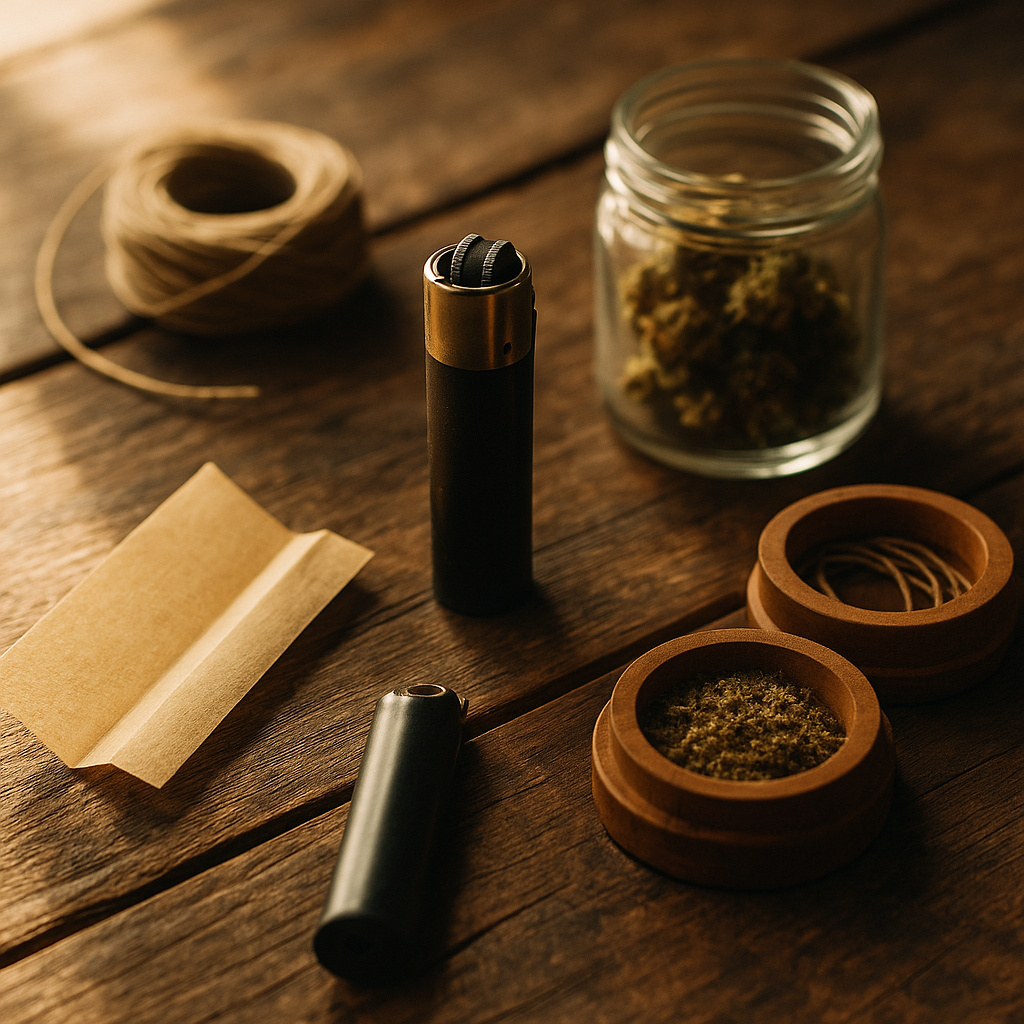
    Eco friendly smoking accessories laid out on a wooden surface including hemp papers, glass jar and refillable lighter
    Eco friendly smoking accessories laid out on a wooden surface including hemp papers, glass jar and refillable lighter

    Why Your Rolling Habit Has a Bigger Footprint Than You Think

    Standard cigarette and rolling paper manufacturing isn’t exactly clean. Bleached papers, chlorine processing, added chemicals to control burn rate, a lot goes into that thin little strip you barely think about. And then there’s the packaging. Most rolling papers come wrapped in foil or plastic-coated cardboard, neither of which is particularly recyclable in your average kerb-side collection.

    Scale that up across millions of UK smokers and you’ve got a meaningful waste problem. According to the Environment Agency, smoking-related litter remains one of the most persistent forms of outdoor pollution in Britain. Filters, in particular, are catastrophic for soil and waterways because they’re made from cellulose acetate, which takes years to break down.

    None of this means you have to stop. It just means smarter choices make a real difference.

    Sustainable Rolling Papers Worth Switching To

    This is the easiest swap you can make. Unbleached, natural rolling papers exist, they’re widely available, and honestly they tend to taste better because there’s less chemical nonsense getting in the way of the actual flavour.

    Look for papers made from:

    • Hemp, a fast-growing crop that requires minimal water and no pesticides to cultivate. Genuinely circular when you think about it.
    • Rice, thin, slow-burning, and made from a renewable crop. Burns clean.
    • Organic flax, another low-impact option that’s been around for ages but rarely gets talked about.

    Brands like Greengo and RAW Organic (their unbleached range) are easily found online and in independent shops across the UK. Skip anything labelled “white” unless it specifies chlorine-free bleaching, because standard white papers are processed with some genuinely grim chemicals.

    Eco Friendly Smoking Accessories That Actually Last

    Disposable is the enemy. I mean that broadly, but in terms of smoking kit specifically, the amount of single-use plastic that passes through a regular smoker’s hands over a year is pretty staggering. Plastic lighters, cheap metal grinders that fall apart in three months, plastic roach tips, little plastic bags. It adds up.

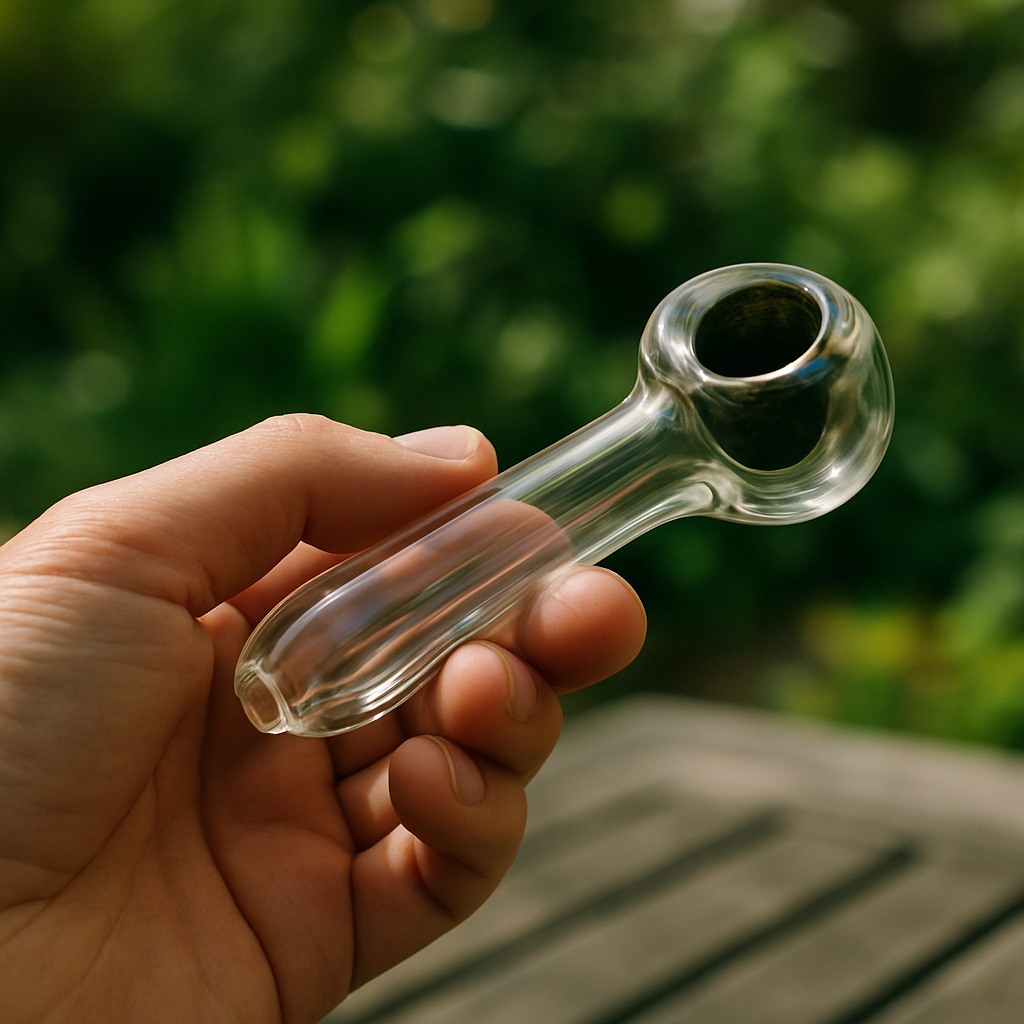
    Close-up of a glass pipe as a sustainable eco friendly smoking accessory held over a garden background
    Close-up of a glass pipe as a sustainable eco friendly smoking accessory held over a garden background

    Here are the eco friendly smoking accessories worth investing in:

    Refillable Lighters

    A good refillable butane lighter will last years. Clipper lighters are a solid choice and genuinely popular in the UK because they’re refillable, the flint is replaceable, and the body is made from recycled plastic. Not perfect, but miles better than burning through ten disposables a month.

    Hemp Wick

    This one I’m particularly keen on. Hemp wick is basically a slow-burning, beeswax-coated hemp cord you use to light your bowl or joint instead of a direct lighter flame. It gives you a lower-temperature, cleaner light, and it eliminates the butane you’d otherwise inhale directly. A small spool lasts ages and costs almost nothing.

    Glass, Wood, and Stone Pipes

    A quality glass or wooden pipe is a one-time purchase that outlasts any amount of papers and roach tips combined. Properly looked after, a decent glass piece will outlive your interest in the hobby. Wood pipes from sustainably sourced materials (look for FSC-certified wood) are a particularly satisfying option. They have a warmth to them, literally and aesthetically.

    Reusable Rolling Tips

    Glass or stainless steel roach tips. Sounds fiddly but they’re actually brilliant. They cool the smoke slightly, they’re easy to clean, and you never run out of cardboard. Your old loyalty cards can rest easy.

    Metal and Wooden Grinders

    A well-made metal grinder will outlast several lifetimes of cheap plastic ones. Buy once, buy right. Simple as that.

    What to Do With Cannabis Waste

    This one surprises people. Leftover plant material, stems, and even ash have legitimate uses rather than just going in the bin.

    Cannabis stems and unused plant material are fully compostable. They’re organic matter, full stop. Chuck them in your compost heap or bin alongside your food scraps. If you’re already composting at home (and if you’re reading this blog, there’s a decent chance you are), stems break down and contribute carbon to your pile. Just make sure you’re mixing them with nitrogen-rich greens to keep the balance right.

    Wood ash from a fire or pipe can go on the garden in very small amounts as a pH-raising soil amendment, though cannabis ash specifically isn’t really worth the effort of collecting separately. More of a bonus if you’re already doing it.

    Vaped herb (ABV, or already-been-vaped material) still has trace cannabinoids and can be used in edibles or simply composted. Don’t chuck it in the bin out of habit.

    A Few Other Low-Effort Green Tweaks

    Beyond the kit itself, there are some small behavioural shifts that collectively make a difference:

    • Store your herb in glass jars rather than plastic bags. Glass is infinitely recyclable, keeps things fresher, and doesn’t leach anything weird into your stash.
    • Buy in bulk where you can to reduce packaging. More herb per transaction, less packaging per gram. Basic maths.
    • Don’t smoke outdoors and leave your session detritus behind. This should be obvious but apparently needs saying.
    • If you use a vaporiser, check whether the manufacturer has a take-back or recycling scheme for cartridges. Many now do.

    Being Green Doesn’t Mean Being Precious About It

    The point isn’t to achieve some impossible zero-waste perfection. Nobody’s going to audit your grinder. The point is just to make slightly better choices when you’ve got the option, which most of the time you do. Eco friendly smoking accessories are genuinely better to use in most cases. Sustainable papers taste cleaner. A good glass piece is a pleasure compared to a constantly-crumbling homemade cardboard number.

    It’s not sacrifice. It’s just being a bit more considered about the stuff you use regularly. The planet thanks you, your sessions improve, and you get to feel quietly smug about the whole thing. Win, win, win.

    Frequently Asked Questions

    What are the best eco friendly smoking accessories available in the UK?

    Top choices include refillable Clipper lighters, glass or stainless steel roach tips, hemp wick, sustainably sourced wood or glass pipes, and metal grinders. All are widely available from independent shops and online retailers across the UK, and most last significantly longer than their disposable equivalents.

    Are unbleached rolling papers better for the environment?

    Yes, unbleached rolling papers skip the chlorine processing used on standard white papers and typically come from more sustainable crops like hemp, rice, or flax. Brands such as RAW Organic and Greengo are popular options in the UK and burn cleanly with less chemical interference.

    Can you compost cannabis waste and stems?

    Absolutely. Cannabis stems and leftover plant material are fully compostable organic matter. Add them to your home compost heap alongside kitchen scraps, mixing with nitrogen-rich greens to maintain a balanced pile. They break down like any other woody plant material.

    Is hemp wick worth using instead of a lighter?

    Many people think so. Hemp wick is a beeswax-coated hemp cord that burns slowly and cleanly, letting you light a joint or bowl without directly inhaling butane from a lighter flame. It burns at a lower temperature and a small spool is inexpensive and lasts a long time.

    How do I store cannabis sustainably?

    Glass jars are the best option. They’re infinitely recyclable, keep herb fresher than plastic bags or pouches, and don’t leach any chemicals into your stash. Airtight glass jars with rubber seals, the kind used for preserving, are ideal and reusable indefinitely.

  • Regenerative Gardening: How Growing Your Own Food Heals the Planet

    Regenerative Gardening: How Growing Your Own Food Heals the Planet

    Right, so most of us have heard the phrase “grow your own” thrown around enough times to make it feel a bit tired. Allotment culture, Instagram raised beds, that one colleague who won’t stop talking about their courgettes. But regenerative gardening for beginners is something a bit different, and honestly, a lot more interesting. It’s not just about growing food. It’s about growing soil, pulling carbon out of the atmosphere, and letting your little patch of earth become properly alive again. And the best part? You don’t need to be obsessive about it. Lazy works here.

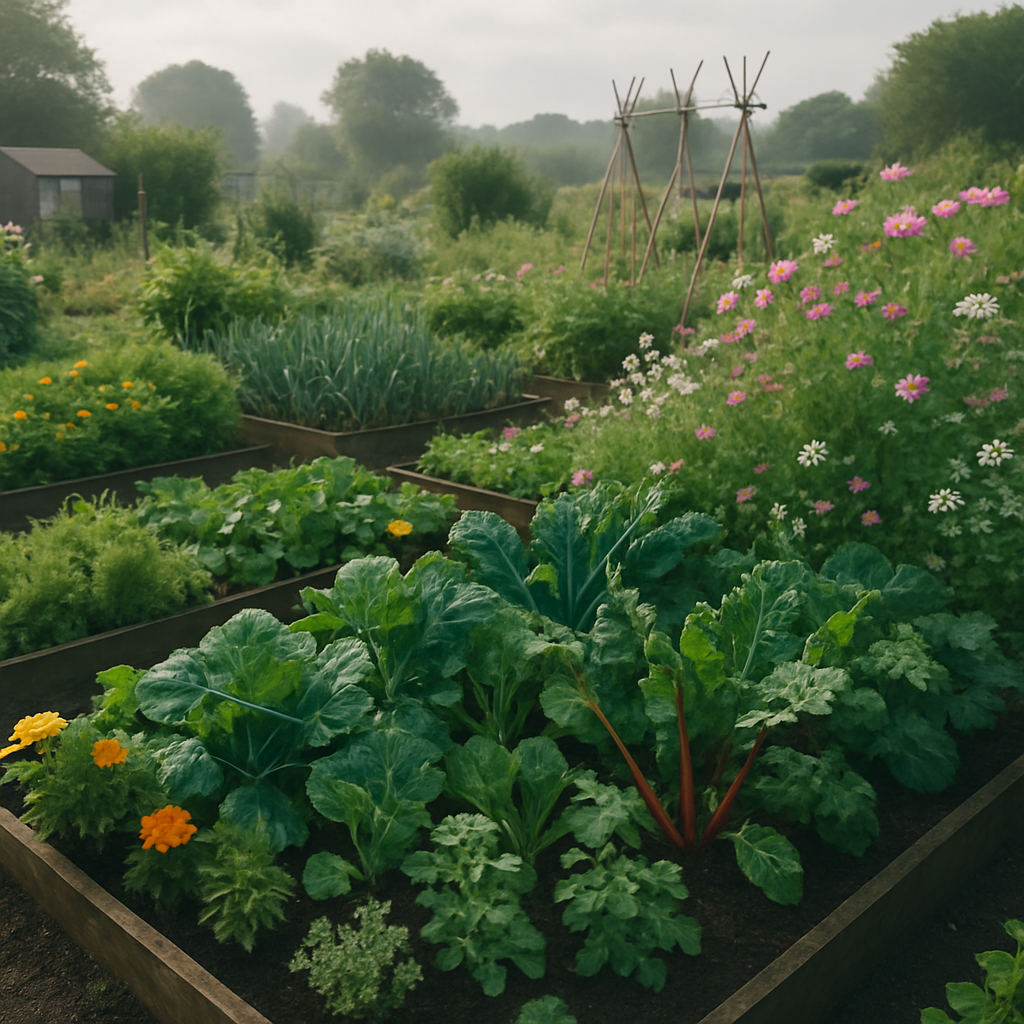
    Lush diverse UK allotment garden illustrating regenerative gardening for beginners with mixed crops and wildflowers
    Lush diverse UK allotment garden illustrating regenerative gardening for beginners with mixed crops and wildflowers

    So What Even Is Regenerative Gardening?

    Conventional gardening, and especially conventional farming, tends to take from the soil without putting much back. You dig, you plant, you harvest, you maybe chuck some fertiliser down, and you repeat. Over time the soil gets knackered. It loses its structure, its microbes, its ability to hold water. Regenerative gardening does the opposite. It works with the soil ecosystem rather than against it, building organic matter, encouraging microbial life, and sequestering carbon in the ground where it actually belongs. Think of it less like managing a garden and more like collaborating with one.

    The term comes from regenerative agriculture, a farming philosophy that’s been gaining serious traction globally and right here in the UK. Organisations like the Soil Association have been championing these principles for years, and their research consistently shows that healthier soil means better yields, more biodiversity, and meaningful carbon capture. That’s a win for your dinner plate and the planet simultaneously.

    Why Soil Health Is the Main Character Here

    Healthy soil isn’t just dirt. Under a single square metre of good garden soil, you’ve got billions of bacteria, fungi, nematodes, worms, and micro-organisms all doing incredibly complex things. They break down organic matter, release nutrients, create structure, and form relationships with plant roots that are genuinely mind-bending. Mycorrhizal fungi, for instance, extend plant root systems by hundreds of times their natural reach, trading water and minerals for sugars. It’s basically a underground economy running beneath your feet.

    When you strip that system back through excessive digging, chemical fertilisers, or leaving soil bare, you lose all of that. Regenerative gardening for beginners starts with one simple commitment: treat the soil like it’s alive, because it is.

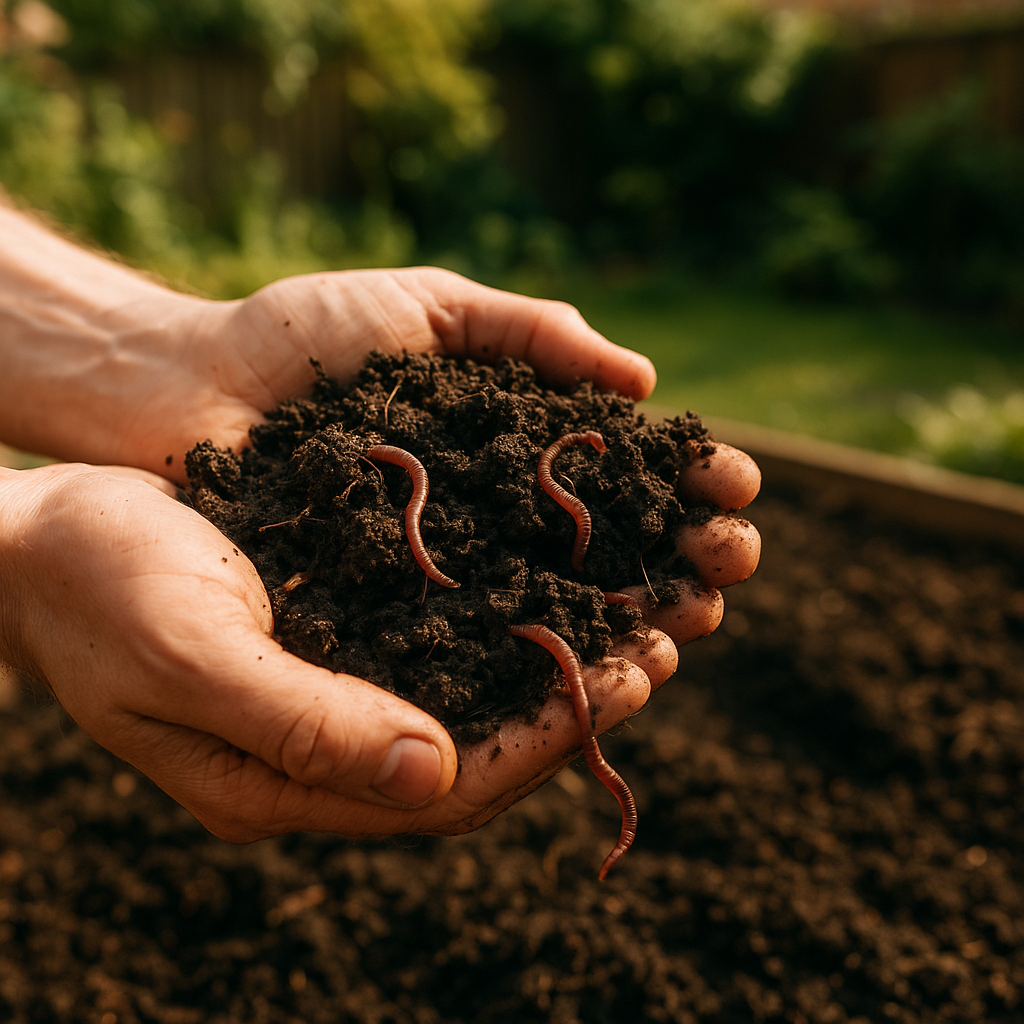
    Close-up of healthy worm-rich compost soil, a key element of regenerative gardening for beginners
    Close-up of healthy worm-rich compost soil, a key element of regenerative gardening for beginners

    The Practical Stuff (The Lazy Way In)

    Stop Digging So Much

    No-dig gardening is probably the easiest entry point into regenerative practice. Made popular in the UK largely through the work of Charles Dowding, the method involves layering compost on top of existing soil rather than turning it all up. Your soil structure stays intact, weed seeds stay buried, and the microbes keep doing their thing. I’ve spoken to growers in places like Bristol and Sheffield who switched to no-dig a couple of seasons ago and haven’t looked back. Less effort, better results. That’s the vibe.

    Compost Everything You Possibly Can

    If you’re not composting yet, start now. Kitchen scraps, garden cuttings, cardboard, coffee grounds, autumn leaves. All of it can go into a compost heap and come out as genuinely brilliant soil amendment six to twelve months later. Adding a few centimetres of good home compost to your beds each season feeds the soil ecosystem, improves water retention, and locks carbon into the ground. It’s one of the most effective climate actions an ordinary person can take, and it costs nothing.

    Keep the Soil Covered

    Bare soil is basically an open wound. It loses moisture, erodes in rain, and bakes in summer heat. Cover it with mulch (straw, wood chip, fallen leaves, grass clippings), grow green manures like clover or phacelia between crops, or let a few self-seeding plants do their thing. Keeping the ground covered year-round is a cornerstone of regenerative gardening and genuinely requires almost zero effort once you get into the habit.

    Plant for Diversity

    Monocultures are boring and ecologically fragile. Mix things up. Grow flowers alongside vegetables, herbs alongside fruit. Different root depths pull nutrients from different soil layers. Flowers attract pollinators and predatory insects that keep pests in check. Diversity above ground creates diversity below it, and that builds resilience. A bed of mixed veg, nasturtiums, and borage isn’t just prettier than a row of cabbages, it’s a functioning mini-ecosystem.

    Let Some of It Go Wild

    Not every corner needs to be managed. Leave a patch of nettles (yes, really). Let the grass grow long in places. Stack some logs in a corner for beetle habitat. These small acts of rewilding work beautifully alongside regenerative growing, bringing in the insects, birds, and soil life that make the whole system tick. Your garden becomes part of a larger ecological web rather than a controlled space fighting against nature.

    The Carbon Bit (Because It Actually Matters)

    There’s a growing body of evidence that well-managed gardens and allotments can act as meaningful carbon sinks. The carbon held in soil organic matter is genuinely significant, and regenerative practices actively build that organic matter over time. The UK has around 24 million gardens covering roughly 433,000 hectares of land, according to figures cited by the Royal Horticultural Society. If even a fraction of those gardens adopted regenerative practices, the collective carbon impact would be substantial. No pressure, but also, actually a bit of pressure.

    This isn’t about guilt. Regenerative gardening for beginners is fundamentally about doing something that feels good, produces food, and has a positive knock-on effect that extends way beyond your fence line. Growing a tomato that improved the soil it grew in, fed a pollinator, and sequestered a small amount of carbon is a genuinely different kind of tomato. It tastes the same, but you feel better about it.

    Getting Started This Season

    You don’t need a massive garden. A few pots, a raised bed, a community allotment plot. Start small, layer some compost, stop digging so aggressively, and throw in some flowers. The soil will respond surprisingly quickly. Within a single season you’ll notice more worms, better moisture retention, fewer pest problems. It builds momentum of its own. And once you start thinking about your little patch as a living system rather than a project to control, the whole thing shifts. It becomes less work and more of a relationship.

    That’s the regenerative gardening headspace, really. Less doing, more allowing. Which, let’s be honest, suits most of us just fine.

    Frequently Asked Questions

    What is regenerative gardening for beginners?

    Regenerative gardening for beginners is a set of simple practices that rebuild soil health, increase biodiversity, and reduce your garden’s carbon footprint. It includes things like no-dig growing, composting, mulching, and planting diverse species. The good news is that most of it is less work than conventional gardening, not more.

    How is regenerative gardening different from organic gardening?

    Organic gardening avoids synthetic chemicals, which is a solid starting point. Regenerative gardening goes further by actively building soil health and ecological function rather than simply avoiding harm. You can be organic without being regenerative, but the two approaches work very well together.

    Can I do regenerative gardening in a small UK garden or with containers?

    Absolutely. Even a balcony or a couple of raised beds can benefit from regenerative principles. Use peat-free compost, keep soil covered with mulch, grow a diversity of plants, and avoid chemical fertilisers. Small spaces still support soil life and pollinators in meaningful ways.

    Does regenerative gardening actually help with climate change?

    Yes, in a real if modest way. Healthy soil rich in organic matter stores carbon, and regenerative practices actively build that organic matter over time. Across the UK’s millions of gardens, the collective impact of better soil management could be genuinely significant for carbon sequestration.

    What should I do first if I want to try regenerative gardening?

    Start with a compost bin and stop digging. Those two changes alone will begin improving your soil health within a season. Add a layer of compost to your beds in autumn or spring, let it sit on the surface, and let the worms do the rest. Keep things simple and build from there.

  • Best Herbal Teas for Stress Relief and Sleep (And How to Blend Them)

    Best Herbal Teas for Stress Relief and Sleep (And How to Blend Them)

    Right, so you’ve had a day. Could’ve been hectic, could’ve been just mildly rubbish, doesn’t really matter. Either way, your brain is still going at about 90 miles an hour and you’re nowhere near ready for sleep. Here’s where herbal teas come in, and honestly, they’ve been doing the heavy lifting in this department for centuries. No gimmicks, no mystery ingredients you can’t pronounce. Just plants doing what plants do best.

    Herbal teas for stress relief have had a serious glow-up in recent years. The UK market for botanical wellness drinks has grown considerably, with more people swerving the 7pm espresso in favour of something that actually helps them wind down. So let’s talk about which ones are worth your kettle and which ones are basically just flavoured hot water.

    Cosy evening setting with a mug of herbal teas for stress relief on a wooden table surrounded by dried chamomile and lavender
    Cosy evening setting with a mug of herbal teas for stress relief on a wooden table surrounded by dried chamomile and lavender

    Chamomile: The Classic That Actually Works

    Chamomile is probably the one your nan had in the back of the cupboard, and honestly, she was onto something. The flower contains apigenin, an antioxidant that binds to certain receptors in the brain and promotes relaxation and drowsiness. There’s real research behind this one. A study backed by findings published on the NHS sleep and tiredness resource pages acknowledges chamomile as a traditional remedy for mild anxiety and sleep difficulties.

    It’s mild, slightly sweet, and tastes like a meadow in the best way possible. Brew it for about five minutes with boiling water and don’t rush it. Add a little raw honey if you want something gentle on the palate.

    Valerian Root: The Heavy Hitter

    Valerian is not messing about. This one is for when chamomile just isn’t cutting it. The root has been used since ancient Greek and Roman times as a sedative and anxiety reliever, and modern research is starting to catch up with what people have known for ages. It works by increasing levels of GABA in the brain, which is basically your nervous system’s off switch.

    Fair warning: valerian root smells absolutely wild. Like, pungent. Some people describe it as earthy, others less charitably. But paired with something sweeter like lemon balm or a bit of liquorice root, it becomes genuinely pleasant. If you’re blending at home, keep valerian to about 20-25% of the mix so it doesn’t overpower everything else.

    Lemon Balm: The Underrated One

    Lemon balm is the quiet one at the back of the class that’s actually brilliant. It’s a member of the mint family, grows incredibly easily in UK gardens (borderline invasively so), and has a lovely gentle citrus thing going on. It’s been shown to reduce anxiety and promote calmness without making you feel drowsy in a heavy way. Good for that earlier-evening slot when you want to decompress but still function.

    I grow a pot of it on my windowsill and honestly it’s one of the easiest herbs to keep alive. Fresh lemon balm leaves brewed for about eight minutes make a beautifully fragrant cup. Dried works just as well for a more concentrated hit.

    Close-up of dried herbs including chamomile and lavender used for blending herbal teas for stress relief
    Close-up of dried herbs including chamomile and lavender used for blending herbal teas for stress relief

    Lavender: Not Just for Pillows

    Lavender tea is having a moment, and rightly so. Most people know it from sleep sprays and bath bombs, but drinking it is a whole different level of calm. The compounds in lavender, particularly linalool, have anxiolytic effects, which is a fancy way of saying they take the edge off. It’s quite floral and aromatic, so a little goes a long way. About a teaspoon of dried lavender flowers per cup is plenty.

    Blending lavender with chamomile is genuinely one of the best combinations out there. Equal parts, steep for four to five minutes, maybe a drizzle of honey. That’s your evening right there.

    Passionflower: The One You Haven’t Tried Yet

    Passionflower is still flying under the radar for most people in the UK, which is a shame because it’s excellent. Clinical trials have found it to be effective for generalised anxiety, and some research suggests it performs comparably to low-dose pharmaceutical options for mild cases. It’s earthy and slightly grassy in flavour, and it blends beautifully with sweeter herbs.

    It’s worth sourcing passionflower from a reputable UK herbalist rather than grabbing whatever’s on the supermarket shelf. Quality matters with botanicals, and you want the actual Passiflora incarnata, not a vague “botanical blend” that contains mostly nothing.

    How to Blend Your Own Evening Tea

    Here’s where it gets fun. Buying pre-made herbal blends is totally fine, but making your own means you control what goes in and at what strength. A solid base formula for a sleep-and-stress blend looks something like this:

    • 3 parts chamomile (base note, gentle and reliable)
    • 2 parts lemon balm (lifts the flavour and adds calm energy)
    • 1 part passionflower (deeper anxiety relief)
    • 1 part lavender (aromatics and relaxation)
    • Optional: half a part valerian (if you mean business about sleep)

    Mix dried herbs in a jar, shake it up, and use about two heaped teaspoons per cup. Steep in water just off the boil for six to eight minutes, covered, so the volatile oils don’t escape with the steam. That’s literally it.

    Store your blend in a dark glass jar away from heat and it’ll stay good for around six months. Label it with the date so you’re not guessing in three months’ time whether it’s still any good.

    A Few Things Worth Knowing

    Herbal teas are generally very safe, but a couple of things are worth flagging. Valerian can interact with certain medications, particularly sedatives and some antidepressants, so if you’re on anything prescribed it’s worth a quick chat with your GP before making it a nightly habit. Similarly, if you’re pregnant, some herbs including valerian and passionflower aren’t recommended.

    Also, consistency matters. One cup of chamomile on a Thursday isn’t going to rewire your nervous system. Making it part of a genuine evening ritual, same time each night, no screens, maybe some slow music, is where the real benefit compounds. It’s the whole vibe that does the work, not just the drink in isolation.

    Interestingly, the wellness community around these practices is growing in some unexpected places. I’ve seen people in various wellness circles, from yoga communities to small business owners grinding long hours (there’s a great local community around this in the East Midlands, including folks doing seo nottingham who’ve started integrating proper wind-down routines into their evenings), all leaning into herbal teas as a legitimate wellness tool. It crosses all kinds of lifestyles.

    Herbal Teas for Stress Relief: The Bottom Line

    There’s something genuinely grounding about making a cup of herbal tea from scratch. You’re interacting with plants, you’re slowing down, you’re doing something nice for yourself without it costing much or requiring much effort. The wellness benefits are real and backed by a growing body of research. The ritual around it matters just as much as the chemistry.

    Start with chamomile if you’re new to this. Move onto lemon balm. Experiment with passionflower. And if your brain truly won’t quit at night, introduce a touch of valerian and see how you get on. Your evenings will thank you for it.

    Frequently Asked Questions

    What is the best herbal tea for stress relief before bed?

    Chamomile is the most widely researched and accessible option for stress and sleep, but a blend of chamomile, lemon balm, and lavender is arguably more effective than any single herb alone. Valerian root is the strongest option if you need more serious sedative support.

    How long does it take for herbal teas to work for sleep?

    Most people notice a gentle calming effect within 30 to 45 minutes of drinking a herbal tea. For deeper effects on sleep quality, consistency over one to two weeks tends to show the most noticeable results as the compounds build up in your system.

    Can you drink herbal sleep teas every night?

    For most people, yes, drinking herbal teas for stress relief nightly is perfectly safe. Chamomile, lemon balm, and lavender are gentle enough for daily use. Valerian root is best used for a limited period or on occasion, and it’s worth consulting your GP if you’re on any prescribed medications.

    Where can I buy good quality herbal teas for blending in the UK?

    UK herbalists like Baldwins in London and Napiers in Edinburgh stock high-quality dried herbs for blending at home. Online retailers like Indigo Herbs and Neal’s Yard are also well-regarded for sourcing quality botanical ingredients.

    Is valerian tea safe to take alongside anxiety medication?

    Valerian can interact with certain prescribed medications including sedatives, anti-anxiety drugs, and some antidepressants. It’s strongly advisable to speak with your GP before adding valerian to your routine if you’re taking any prescribed medication.

  • Forest Bathing: The Japanese Wellness Practice That Basically Means Chilling in the Woods

    Forest Bathing: The Japanese Wellness Practice That Basically Means Chilling in the Woods

    Right, so picture this. You’re in the woods. No podcast blaring. No notifications. No agenda. You’re just… there. Breathing it in. Walking slowly, touching bark, noticing the way light comes through the canopy. That, in a nutshell, is forest bathing. And before you roll your eyes and say that sounds like just going for a walk, I promise you it’s a bit more deliberate than that.

    Forest bathing, known in Japan as Shinrin-yoku, literally translates to “taking in the forest atmosphere”. It was formally introduced as a public health initiative in Japan back in the 1980s, and since then the research behind it has quietly built into something genuinely impressive. This isn’t aromatherapy wishful thinking. There’s proper science here.

    A person practising forest bathing in an ancient oak woodland in the UK, surrounded by soft morning light and mossy trees
    A person practising forest bathing in an ancient oak woodland in the UK, surrounded by soft morning light and mossy trees

    What Actually Is Forest Bathing?

    Here’s the thing people get wrong. Forest bathing is not a hike. It’s not hitting a step goal. It’s not even really exercise in the traditional sense. It’s slow, intentional immersion in a natural environment. You might walk for two hours and cover less than a mile. You might sit for forty minutes staring at a stream. The point is presence, not performance.

    The practice encourages you to engage all five senses. The smell of pine and damp earth. The sound of wind in leaves or a bird doing its thing somewhere overhead. The feel of moss under your fingers. The specific quality of greenish light that only exists deep in a forest. When you slow down enough to actually notice all of that, something genuinely shifts.

    In Japan, the practice became so well-regarded that the government invested heavily in research and designated over 60 official Shinrin-yoku forests. The UK is catching on, slowly, with forest therapy practitioners now operating across England, Scotland and Wales through organisations like the Forest Therapy Hub. And honestly, given that we’re surrounded by some of the most quietly beautiful woodland in the world, it feels like we’re slightly late to the party.

    The Mental Health Benefits Are Real

    Let’s talk about what forest bathing actually does to your brain, because this is where it gets interesting.

    Studies consistently show that time in forested environments reduces cortisol levels, the stress hormone that most of us are absolutely marinating in on a daily basis. A major Japanese study found that participants who spent time in forests had significantly lower cortisol, lower blood pressure, and lower pulse rates compared to those who spent time in urban environments. That’s not vibes. That’s measurable physiological change.

    There’s also the impact on mood. Spending intentional time in nature has been linked to reduced symptoms of anxiety and depression. The NHS itself has increasingly embraced the concept of social prescribing and green social prescribing, where GPs can recommend time in nature as part of a mental health plan. If that’s not an endorsement, I don’t know what is. You can read more about the UK government’s green social prescribing pilot over on gov.uk.

    Close-up of hands touching tree bark during a forest bathing session in a UK woodland
    Close-up of hands touching tree bark during a forest bathing session in a UK woodland

    What About the Physical Stuff?

    Beyond the mental health angle, forest bathing has some genuinely wild physical benefits. Japanese researchers found that spending time among trees increases the activity of natural killer (NK) cells, which are part of the immune system’s first line of defence against infection and even certain cancers. The theory is that trees release compounds called phytoncides, basically antimicrobial chemicals that the tree uses to protect itself, and when we breathe them in, they give our immune systems a quiet little boost.

    There’s also evidence linking forest bathing to reduced inflammation, lower blood sugar levels, and improved sleep quality. Which, if you’ve read anything on this blog about sleep and nature before, won’t come as a shock. It all threads together. Slow time outdoors is one of the most underrated health tools we have, and it costs nothing.

    How to Actually Do It in the UK

    Good news: you don’t need to fly to Kyoto. We’ve got ancient woodland, national parks, and forest trails all over Britain. The New Forest, Kielder in Northumberland, the Forest of Dean in Gloucestershire, Thetford Forest in Norfolk. Even your local council woodland will do the job.

    Here’s how to approach it properly:

    • Leave the headphones at home. Or in the car. This is non-negotiable. The point is to actually hear the forest.
    • Go slow. Slower than feels natural. Meander. Stop. Turn around. Sit on a log if you want.
    • Put the phone away. Photos can wait. Your nervous system cannot.
    • Use your senses deliberately. What can you hear? What does the air smell like? What’s the texture of that tree trunk? This is the practice.
    • Aim for at least two hours. Research suggests this is the sweet spot for meaningful physiological benefits, though even thirty minutes makes a difference.

    Some people work with a certified forest therapy guide, particularly if they want a more structured experience. It’s a growing field in the UK, and the community around it often does great work on visibility through things like local PR and grassroots outreach. Worth looking into if you want a guided session rather than going solo.

    Is There a Best Season for Forest Bathing?

    Honestly? No. Each season brings its own thing. Autumn is arguably the most sensory, what with the colour and the smell of fallen leaves and that particular dampness in the air. Winter forests are genuinely eerie and beautiful in a way that feels very restorative once you’re in it. Spring, when everything’s kicking off, is almost overwhelming in the best way. Summer light through a full canopy is something else entirely.

    The Japanese concept doesn’t prescribe a season. The idea is year-round engagement with nature as a practice, not an occasional treat when the weather’s nice. Wrap up. Go anyway.

    Forest Bathing vs. Just Going for a Walk

    This comes up a lot. And look, going for a walk is brilliant. Walking is one of the best things you can do for yourself. But forest bathing is specifically about sensory immersion and intentional slowness. The research that shows those NK cell boosts and cortisol reductions was done on people who were doing Shinrin-yoku, not brisk woodland hikes with a podcast on.

    It’s a mindset shift more than anything. You’re not moving through the forest. You’re in it. That’s the whole deal.

    I’ve started doing this maybe once a fortnight, usually Sunday morning before anyone else is properly awake. I drive out to a patch of ancient oak woodland about eight miles from where I live, park up, and just amble for an hour or two. No destination. Sometimes I sit. Sometimes I barely move for twenty minutes. It sounds ridiculous until you’ve done it a few times, and then it becomes one of those things you genuinely look forward to. Quietly, deeply.

    If there’s one low-effort, high-reward wellness practice that doesn’t require a subscription, a supplement, or any kind of expertise, forest bathing is probably it. The woods are right there. Go find them.

    Frequently Asked Questions

    What is forest bathing and where does it come from?

    Forest bathing, or Shinrin-yoku, is a Japanese wellness practice that involves slow, intentional immersion in a natural woodland environment. It was introduced as a formal public health concept in Japan in the 1980s and has since been backed by substantial scientific research into its mental and physical health benefits.

    Does forest bathing actually have proven health benefits?

    Yes. Research has shown that forest bathing can lower cortisol levels, reduce blood pressure, boost immune function by increasing natural killer (NK) cell activity, and improve mood and anxiety. These are measurable physiological changes, not just anecdotal wellness claims.

    How long should a forest bathing session last to feel the benefits?

    Studies suggest that around two hours is the sweet spot for meaningful physiological benefits, including measurable reductions in cortisol and boosts to immune activity. That said, even thirty minutes of slow, intentional time in a natural woodland setting can improve mood and reduce stress.

    Where can I go forest bathing in the UK?

    You don’t need to travel far. The New Forest, Kielder Forest in Northumberland, the Forest of Dean, and Thetford Forest are all excellent options. Most local council-managed woodlands are perfectly suitable too. The Forest Therapy Hub lists certified guides operating across England, Scotland, and Wales.

    Is forest bathing the same as going for a walk in the woods?

    Not quite. Forest bathing is slower and more intentional than a standard woodland walk. The focus is on sensory engagement with your surroundings rather than covering distance or getting exercise. No headphones, no phone, no destination. The research that documents the biggest health benefits was specifically conducted on Shinrin-yoku participants, not casual walkers.